Ferry Juliantono Urges Islamic Organizations to Unite Against Oligarchy
Syarikat Islam executive board president Ferry Juliantono has called on Islamic social organizations to unite against oligarchy ahead of Aksi Rakyat Bela Indonesia.
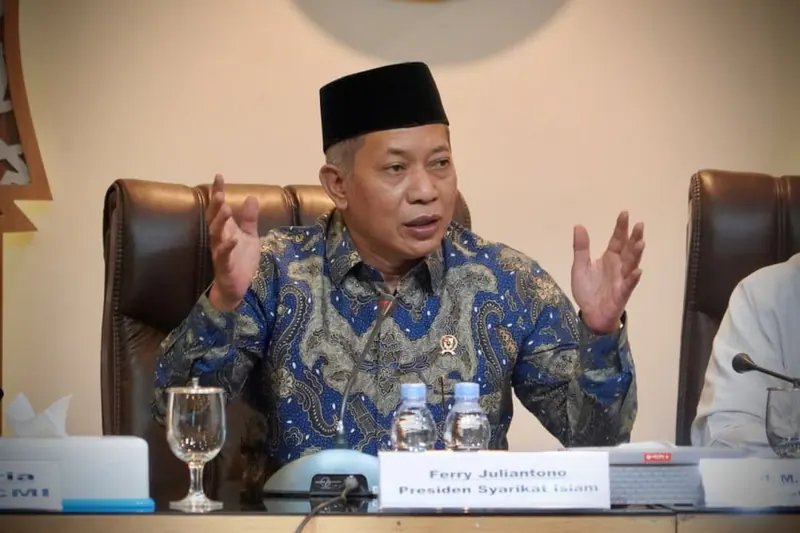
Ferry Juliantono, president of Syarikat Islam's executive board (Lajnah Tanfidziyah), has called on Islamic social organizations (ormas Islam) to unite against what he described as oligarchic forces eroding state finances. The call came during a meeting with leaders of the Indonesian Ulema Council (MUI) and several Islamic organizations in Jakarta on Thursday, as reported by SINDOnews, ahead of the Aksi Rakyat Bela Indonesia rally at the Proclamation Monument (Tugu Proklamasi) on Sunday 15 November 2026.
Ferry said the dominance of certain economic powers had created imbalances in control of resources. He also referred to alleged under-invoicing and transfer pricing practices that shift profits and place assets abroad, including in Singapore.
He said corporate restructuring, greater efficiency at state-owned enterprises (BUMN) and the revival of cooperatives were in line with Article 33 of the 1945 Constitution. He described steps taken by President Prabowo Subianto's government as efforts to strengthen national economic sovereignty.
“This is indeed the moment for us to bring our thinking together,” Ferry said.
Islamic organizations in Indonesia's public economy
Syarikat Islam has historical roots as an organization closely associated with trade and the economic empowerment of the Muslim community. In Indonesia's map of Islamic organizations, groups like this typically play social, educational and religious roles, but they also serve as deliberative spaces when economic policy issues are seen as affecting the interests of ordinary people. For that reason, Ferry's call for unity is not merely a political statement; it carries a hope that religious forces will not only appear on the pulpit but also help monitor the direction of the national economy.
MUI, which hosted the meeting, is known as a non-governmental body that provides religious and social guidance to the Muslim community and the government. On economic issues, MUI's involvement often signals that a religious statement is intended to be read as a moral appeal rather than a purely practical political agenda. The combination of Syarikat Islam, MUI and other Islamic organizations reflects a long-standing pattern in Indonesia's public life: religious groups enter policy debates when there is a perception that the state needs to be reminded of its constitutional mandate. Such moral appeals can serve as a bridge between community aspirations and formal policymaking.
The term oligarchy used by Ferry should be read in a political-economic context. In general, oligarchy refers to the concentration of economic power in a small group able to influence policy, regulation or access to resources. Practices such as under-invoicing and transfer pricing are technical issues that often appear in tax and international trade discussions. Under-invoicing usually involves reporting goods at values below their actual price, while transfer pricing is the setting of prices in transactions between affiliated companies to shift profits to jurisdictions that are more favorable for tax purposes. Both are normally handled by tax authorities, customs officials and investigators, with evidence tested in formal forums.
Article 33 of the 1945 Constitution is a frequent reference in debates of this kind. It frames the economy as a common effort based on the principle of kinship and gives the state a role in branches of production that are important to the livelihood of the people. Within that framework, cooperatives, state-owned enterprises and private corporations are not always positioned as opponents, but as parts of an ecosystem that must be directed toward welfare. Criticism of oligarchy therefore demands concrete oversight mechanisms, not only moral statements.
Links to parliamentary oversight
For Indonesian readers, the statement touches issues that affect the state budget and public services. If tax avoidance or profit shifting really occurs on a large scale, state revenue can be eroded. Shortfalls in revenue can eventually affect the fiscal space for subsidies, health care, education, infrastructure and social assistance. However, the SINDOnews report did not detail loss figures or specific evidence, so readers need to distinguish allegations, statements and official findings. Readers should also watch whether official agencies have made findings, because accusations without evidence can create noise without improving policy.
On the other hand, the call by Islamic organizations can be read as social pressure on parliament and the government. The House of Representatives (DPR) has legislative, budgeting and oversight functions, so issues of economic sovereignty, state-owned enterprises, cooperatives and tax compliance should have a clear space for discussion. What needs to be watched is whether the call is followed by studies, policy recommendations or remains only a statement ahead of a street action. For the public, the simplest measure is whether the resulting policies genuinely expand economic access, rather than merely increasing concentration of power. Outside parliament, regional governments, businesses and cooperatives can show whether the economic climate has become fairer for citizens. This is important so that the action does not lose its footing.