Dudung Abdurachman Hands Gibran Diploma Dispute to Indonesian Parliament
Dudung Abdurachman asks the public to give Indonesia's lower house space to decide its next steps over the controversy surrounding Vice President Gibran Rakabuming Raka's diploma.
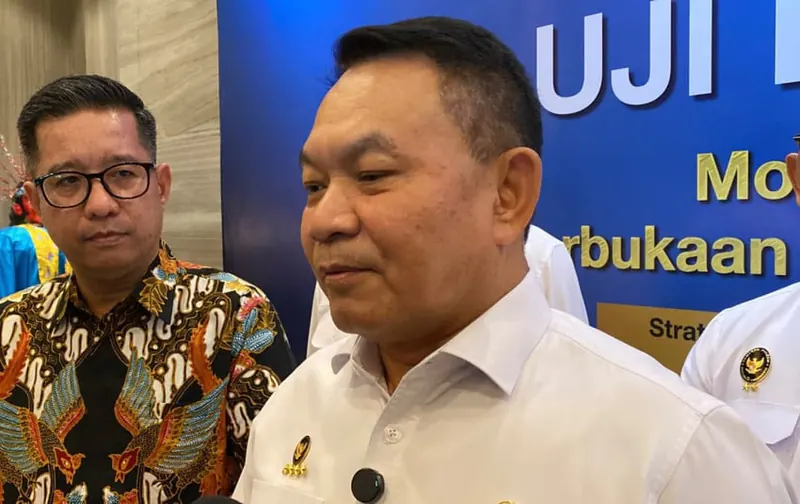
Coordinating Minister for Political Affairs, Security and Defense Dudung Abdurachman, a retired Indonesian Army general, said he would not comment on the diploma controversy surrounding Vice President Gibran Rakabuming Raka, which surfaced after rulings by the Constitutional Court (MK) and the Supreme Court (MA), including the vice president's intention to resign, and said the matter should be handed to the People's Representative Council (DPR), Indonesia's lower house. He asked the public to give the DPR space to determine its next steps. He made the remarks in Central Jakarta on Wednesday, 11 November 2026, as reported by SINDOnews.
Dudung said he had already heard an explanation from Minister of State Secretariat Prasetyo Hadi about Gibran's intention to resign from the vice presidency. He said the issue had entered the political realm and that the DPR needed to be given time to determine its next steps.
Earlier, DPR Deputy Speaker Saan Mustopa said the DPR would follow up on a proposal to exercise the Right to State Opinion (Hak Menyatakan Pendapat, or HMP) to initiate Gibran's impeachment. A decision on the proposal was planned to be taken in a plenary session.
Parliament's powers and impeachment path
The Right to State Opinion is one of the DPR's constitutional rights, alongside the right to interpellation and the right to investigate. Broadly, it is used when the DPR judges that there is a serious problem concerning the performance, validity or accountability of a state official. In the case of a president or vice president, the HMP can be the first gateway toward a removal process, but it is not a verdict. The DPR only expresses a political opinion and proposes a hearing to the People's Consultative Assembly (MPR). In other words, the HMP does not automatically remove someone from office; it only begins a long political process.
The MPR is the body authorised to remove a president or vice president during a term. It is therefore often described as the final decision-making institution in Indonesia's constitutional political mechanism. Before a final decision is taken, this path usually involves the Constitutional Court to examine alleged legal violations, so the process is not determined solely by the strength of votes in parliament. In parliamentary practice, proposals of this kind usually have to pass a meeting of the DPR's Deliberative Body (Badan Musyawarah) and a plenary session before an official letter is sent to the MPR. The public should read attendance and approval figures in the MPR as part of the rules, not as mere political cheering.
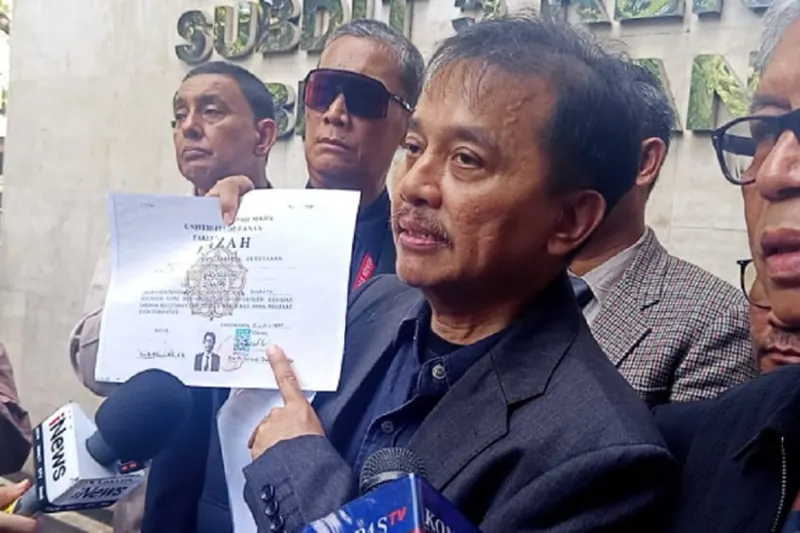
The diploma controversy falls within the administrative requirements for national leaders. Election rules set a minimum education level of senior high school or equivalent for presidential and vice presidential candidates. When education documents are questioned, the dispute can shift to the State Administrative Court or the Supreme Court, depending on the object of the lawsuit and the stage of the nomination process. A court ruling does not always mean an official is criminally guilty; it may concern only whether an administrative document is valid. The terms invalid and unlawful must therefore be read carefully.
The vice presidency also does not stand alone. The vice president assists the president in running the government and is part of national succession. As a result, debate over the vice president's status can quickly become an issue of political stability, especially when it touches impeachment proposals, resignation reports and the attitudes of state institutions. The coordinating minister's restraint also signals that the issue is being deliberately separated from executive affairs.
What the public should understand
For Indonesian readers, these developments matter because the vice presidency is directly linked to national policy, including political and security coordination. If an impeachment process moves forward, the public will face uncertainty for several months, especially as the DPR, MPR and judicial institutions must interpret their respective authorities. That uncertainty does not always change the prices of goods, but it can affect market confidence, the legislative agenda and the rhythm of governance. For citizens, the impact is most felt in the speed of policymaking, the direction of government communication and the government's image in the public eye.
The diploma issue is also a reminder that the education documents of prospective leaders are not merely formalities. The public has the right to monitor the process, but it must distinguish administrative disputes, political processes and criminal allegations. Without that separation, every court ruling or official statement can easily be read as a verdict, even though the presumption of innocence remains until there is a final and binding decision.
What should be watched next is whether the DPR brings the HMP proposal to a plenary session, whether the MPR accepts it, and how the Constitutional Court delivers its opinion. That sequence will determine whether the controversy stops as a political debate or moves into an official removal mechanism. If one institution takes a different path, the issue could again become a jurisdictional dispute.
Related coverage: a crowd in Surabaya urges the DPR to impeach Vice President Gibran; the presidential palace respects the DPR's HMP proposal on Gibran's impeachment; and 50 DPR members are said to have signed the proposal for the Right to State Opinion concerning Gibran.