Coordinating Minister Says Accountants Strategic in Overseeing Infrastructure Development
Coordinating Minister for Infrastructure and Regional Development Agus Harimurti Yudhoyono says the accounting profession is important for careful, transparent and accountable infrastructure planning.
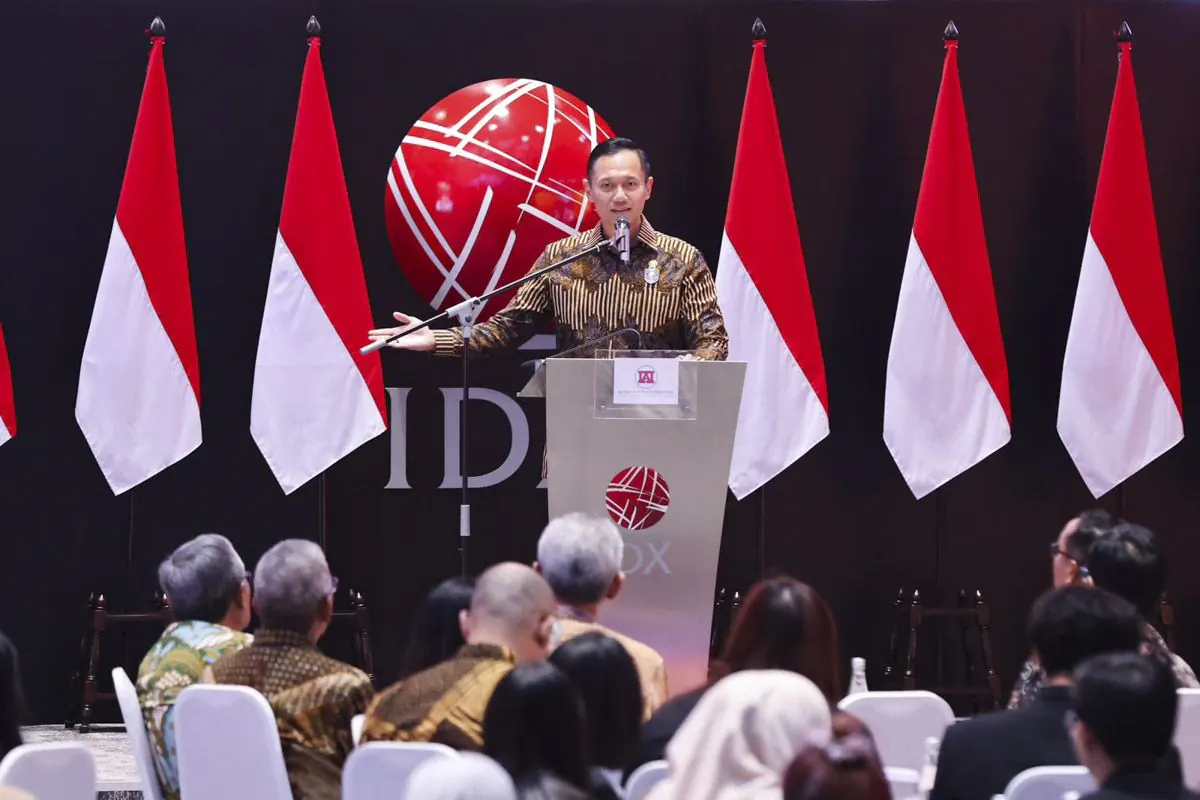
Coordinating Minister for Infrastructure and Regional Development Agus Harimurti Yudhoyono, known as AHY, said the accounting profession is an important part of overseeing infrastructure development, especially because cross-regional connectivity projects require careful, transparent and accountable budget planning. He made the remarks in Jakarta on Friday, as reported by ANTARA.
AHY described Indonesia as an archipelago with a population of about 280 million people that needs interconnected infrastructure. Partial planning is not enough, he said; the needs and potential of each region must be mapped so that state spending produces measurable impact.
The coordinating ministry, he said, coordinates many parties, from ministries and agencies, central and local governments, academics, businesses, industry and communities to the media. In that process, accountants are considered to play a role in maintaining the quality of planning, budget management and decision-making so that plans can be carried out realistically.
AHY also urged the Indonesian Accountants Association (IAI) and young accounting professionals to become involved earlier in strategic issues, including policy formulation and oversight of government programs.
Accountants' role in infrastructure planning
Infrastructure in Indonesia cannot be understood only as physical projects. Roads, bridges, ports, airports, dams, water networks and other public facilities are long-term assets whose value is embedded in state budgets, service tariffs and years of maintenance costs. Good planning therefore requires the ability to calculate risks, compare financing options and ensure projects do not remain construction promises that fail to deliver impact and sustainability.
Accountants sit at the point where numbers meet policy. In infrastructure development, they can help test the realism of cost estimates, structure budgets, monitor spending absorption and ensure project financial reports are auditable. The term prudent, mentioned by the Coordinating Minister, can be understood as avoiding haste in setting revenue, cost and benefit assumptions, so that decisions do not chase only spending targets or inauguration ceremonies. At this stage, accountants can also help ensure inflation, exchange-rate and maintenance-cost assumptions are not ignored when projects begin.
The position of accountants is also relevant in public budget governance involving many parties. Central government, local government, state-owned enterprises (BUMN), private partners and financial institutions often work through complex arrangements, from direct spending to public-private partnerships (PPP). Without orderly recording, control and reporting, the benefits of infrastructure can be eroded by extra costs, delays or maintenance that was not budgeted from the start. Arrangements such as PPP and regional debt financing require obligations to be recorded so that the fiscal burden is not hidden.
Meanwhile, the involvement of IAI and young professionals can broaden the base of oversight. Professional bodies can promote competency standards, ethics and continuing education for accountants working in both the public and private sectors. When young accountants are involved from the policy-drafting stage, they become not only counters but also guardians ensuring government programs have a clear financial basis and can be held accountable to the public. In that way, the accounting profession can bridge announced policy and inspectable financial evidence.
Governance impact for the public
For the public, the view that accountants play a strategic role in infrastructure development is not merely a professional matter. The quality of financial planning determines whether toll roads, ports, airports or clean-water networks truly lower logistics costs, open market access and improve basic services. If budgets are drawn up without careful calculation, the public can bear the consequences through stalled projects, delayed maintenance or unaffordable tariffs. Accountability is therefore not only the concern of accountants, but also of road users, city residents and small businesses.
Its relevance is also visible in the accountability of regional and central spending. The public can judge whether development funds are used according to priorities rather than on projects that are merely visible. Transparent financial reporting, audits and the involvement of accountants help people understand whether a program delivers benefits proportionate to its costs. The message also concerns public trust in institutions that manage large sums of money.
Going forward, the issue is whether the call to young accountants and IAI becomes a practical working mechanism, such as involvement in budget studies, project control and impact evaluation. Without that, accountability discourse risks remaining a normative message while the public continues to wait for infrastructure that truly works in everyday life.