Commission X Backs Senior High School Tracking Plan but Seeks In-depth Study
Commission X of the House of Representatives (DPR) backs a plan to restore senior high school tracks but calls for academic study, teacher mapping and equal facilities.
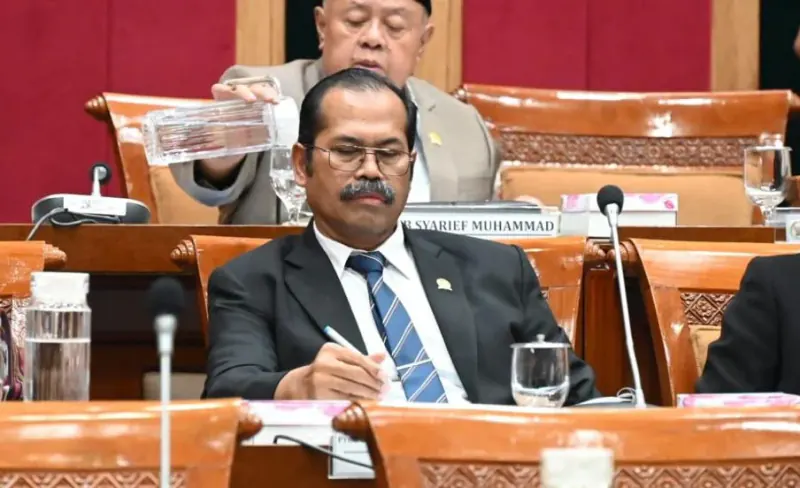
Furtasan Ali Yusuf, a member of Commission X of the House of Representatives (DPR), which oversees education, supports the government's plan to restore science (IPA), social studies (IPS) and language tracks in senior high schools (SMA), but stressed that the policy must be based on strong academic study. According to a report by Radio Republik Indonesia (RRI), Furtasan made the remarks during an RRI Pro3 dialogue on Sunday, 15 November 2026.
Furtasan said tracking can help students steer their studies toward their interests, talents and academic abilities, while also preparing them before choosing university programs. He urged the government not to rush the policy without a comprehensive evaluation.
The NasDem Party lawmaker said the tracks should not create a hierarchy among fields of study. He said graduates' success is determined not by the IPA or IPS label, but by individual potential and the learning process they go through.
Jejen Musfah, chairman of the central leadership of the Indonesian Teachers Association (PB PGRI), said school readiness was the main condition. Musfah called on the government to map teacher needs by subject, provide equal facilities and use a scientific approach to identify students' interests and talents before implementing the tracks. Commission X also plans to discuss the policy with the ministry.
Long history of senior high school tracking
Senior high school tracking groups students by field of study, such as science, social studies or language, and has for years been the common framework for secondary education. The model gives structure to the curriculum but also limits students' room to take subjects across fields. Changes to tracking policy therefore always touch two issues at once: the efficiency of running schools and students' freedom to learn. Overly rigid class structures can make it difficult for students who want to combine science and social studies interests.
In Indonesia, the direction of secondary education policy often shifts with changes to the curriculum and ministry priorities. When tracking is removed or relaxed, students gain more subject choices, but schools must prepare more complex administration, teachers and career guidance. When tracking is restored, the challenge is to ensure grouping does not become labeling that narrows opportunities. Flexibility without tracking, meanwhile, requires mature decision-making so students do not simply follow their friends.
The call for the policy to be built on academic study is not merely technical. An academic paper usually sets out the background of the problem, objectives, legal basis, impacts and feasibility tests before rules are applied. In the case of tracking, that study is important to answer whether the change would truly improve the quality of learning or only adjust policy preferences. Working meetings and public hearings in the DPR serve as oversight channels so the ministry's decisions can be explained openly.
Teacher readiness is also decisive. Under a tracking system, educator needs are calculated not only by the number of classes but also by the subjects that must be taught, the teacher-student ratio and equitable distribution across regions. Teacher professional organizations such as PGRI often warn that policies not accompanied by the provision of teaching staff risk widening the gap between schools in cities and those in resource-limited areas. Without such data, tracking could become only an administrative formality.
Challenges for students and schools
For students and parents, the plan concerns the direction of their studies, preparation for university entrance and additional education costs. If tracking is implemented again, families need to understand from the outset whether a chosen field matches the student's interests, rather than simply following a trend. Parents must also be alert to unnecessary extra tutoring if schools do not provide adequate career guidance. Students choosing a particular track also need to know the prerequisite subjects for their intended university programs.
For schools, the policy requires adjustments to schedules, classrooms, laboratories and teacher staffing. If teacher needs are not mapped, schools could lack teachers for certain subjects while having a surplus in others. That situation is most acute in regions that have long depended on non-permanent teachers or teachers who teach across fields.
The relevance of the policy also lies in certainty. Too frequent changes to tracking can confuse students, teachers and university entrance selection. In the period ahead, the points to watch are whether the academic study is truly published, whether facilities and teachers are prepared equitably, and whether the mechanism for assessing interests and talents is transparent. Without that, the policy risks only moving the problem from one curriculum to the next.