ATVSI and KPI push for regulatory fairness in broadcasting bill
ATVSI and KPI push for regulatory fairness in the Broadcasting Law update so the television industry remains competitive amid digital convergence.
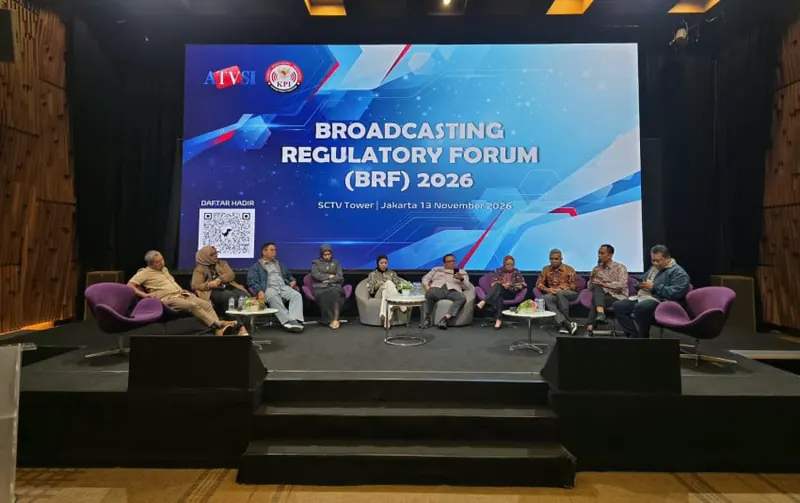
The Indonesian Private Television Association (ATVSI) and the Indonesian Broadcasting Commission (KPI) are pushing for regulatory fairness in the update of the Broadcasting Law. The push emerged at the Broadcasting Regulatory Forum in Jakarta on Friday, 13 November 2026, according to Indonesian news outlet SINDOnews.
ATVSI Secretary-General Gilang Iskandar said regulatory updates needed to protect the sustainability of the broadcasting business ecosystem, not just supervise content. He said national television was under pressure from the shift of audience consumption and advertising spending to digital platforms, while regulatory obligations were seen as disproportionate.
At the forum, ATVSI submitted 22 positions and proposals on the draft Broadcasting Law version prepared by the Indonesian House of Representatives (DPR RI), dated 14 September 2026. The proposals include relaxing advertising rules, reviewing domestic content quotas and local broadcasts, simplifying the Network Broadcasting System (Sistem Siaran Jaringan), and phased administrative sanctions.
The KPI central office also framed the update as an effort to maintain a healthy, public-oriented broadcasting ecosystem.
Why regulatory fairness is an issue
The issue of regulatory fairness arises because the state often treats traditional broadcasters and digital platforms differently. Private broadcasting institutions are subject to permits, content oversight, local broadcast obligations, advertising caps and administrative sanctions. Meanwhile, internet-based video services are often seen as operating under a lighter burden, even though both compete for viewers' attention and advertising budgets. The disparity has become a source of tension as advertising budgets shift and younger viewers spend more time on streaming apps.
In Indonesia, the Broadcasting Law is the main reference for regulating broadcasters, content, advertising and the role of regulators. The KPI is an independent body that carries out broadcasting oversight, while ATVSI represents the interests of private television stations. When rule updates are discussed, the debate usually covers not only freedom of expression but also business models, public protection and industry competitiveness. The update also touches on licensing, ownership and technical standardization. Yet such technical details should be read as tools to safeguard service quality, not merely as bureaucratic burdens.
The industry's proposed relaxation of rules can be read as an attempt to simplify operational burdens without eliminating oversight. Removing caps on commercial advertising, for example, would give television stations more room to seek revenue. Reviewing domestic content quotas and local broadcasts aims to align obligations with infrastructure readiness and audience consumption patterns. Simplifying the Network Broadcasting System is also relevant because many national television stations have regional networks that require permits and administrative coordination.
Phased administrative sanctions are an important part of legal certainty. In media regulation, sanctions are not only punitive but also meant to correct behavior. A phased approach allows regulators to issue warnings, guidance and proportionate measures before imposing severe sanctions. For the industry, such certainty reduces the risk of operational disruptions that could affect production, employment and information services to the public.
What it means for the public and media workers
For readers in Indonesia, the update to the Broadcasting Law is not only a matter for television stations and regulators. Rules on advertising, content quotas and administrative sanctions can affect the types of programs produced, media operating costs and the sustainability of jobs in production, journalism and broadcast engineering. If the regulatory burden is too heavy without adjustment, the industry could cut local programs or shift resources to more flexible businesses.
On the other hand, regulatory fairness must not be understood as removing public protections. The public still needs broadcasts that are accurate, safe for children, respectful of diversity and open to local content. The debate in the House of Representatives and industry forums should therefore be directed toward proportionate rules: giving television room to breathe while ensuring that digital platforms reaching the public also carry equivalent responsibilities in line with their risks.
What needs to be watched going forward is how the draft Broadcasting Law balances business competitiveness with the public interest. The public needs to see whether proposed relaxations are accompanied by transparency mechanisms, content oversight and consumer protection. For media workers, clarity of rules will determine industry stability and the quality of information services. Without that, the update could be perceived as benefiting only capital owners, even though the main purpose of broadcasting is to serve the public interest.