Analyst: Party Vice Presidential Pick Safer, Professionals More Rational
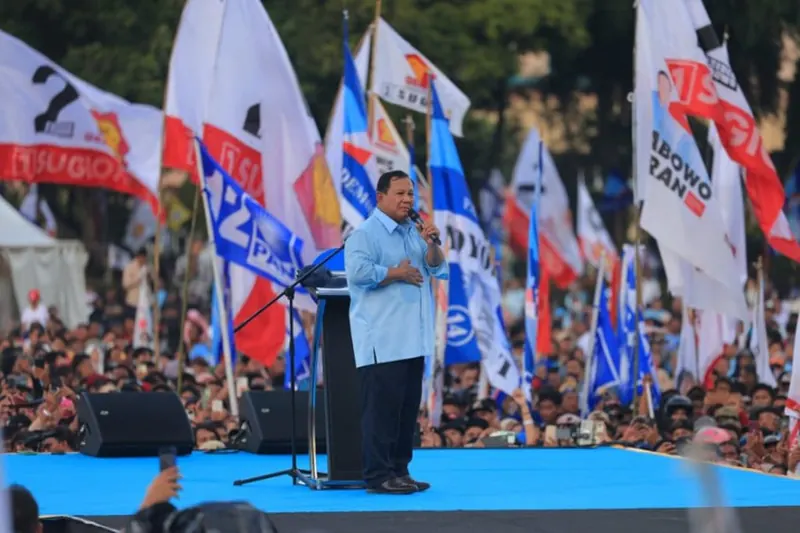
Political analyst Teguh Yuwono says President Prabowo Subianto can choose vice presidential candidates from coalition parties or his own party. He assesses that a more rational choice would be nonpartisan or regional representatives.
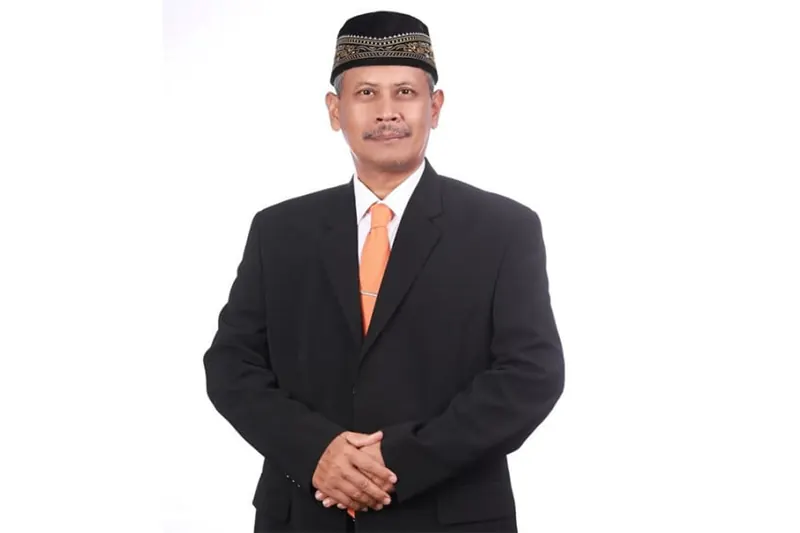
The two vice presidential candidate names that President Prabowo Subianto will submit to the People's Consultative Assembly (MPR) remain unknown. Diponegoro University political analyst and professor Teguh Yuwono said the choice will shape the government's future direction.
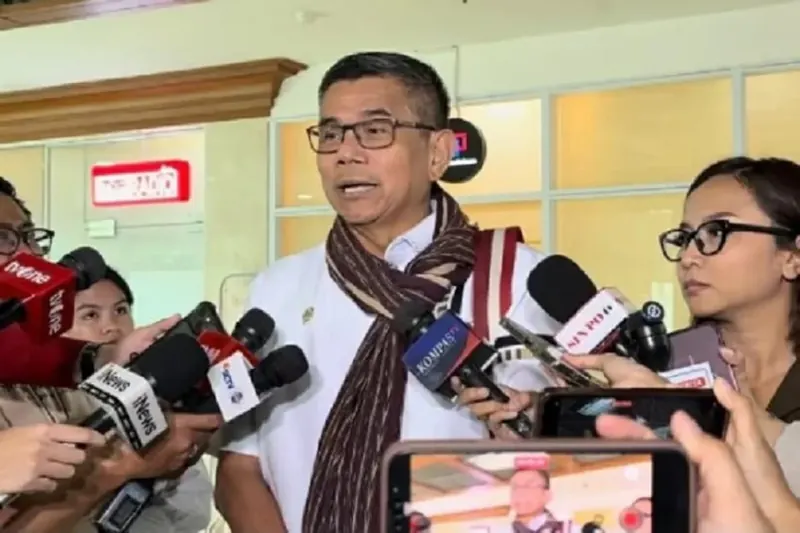
According to a report by SINDOnews, Teguh said the president can take two paths. If he prioritises political comfort, Prabowo can choose from a coalition party or his own party. He assessed that the more rational choice would be nonpartisan or a representative of regional interests.
Constitutional Mechanism for Replacing a Vice President
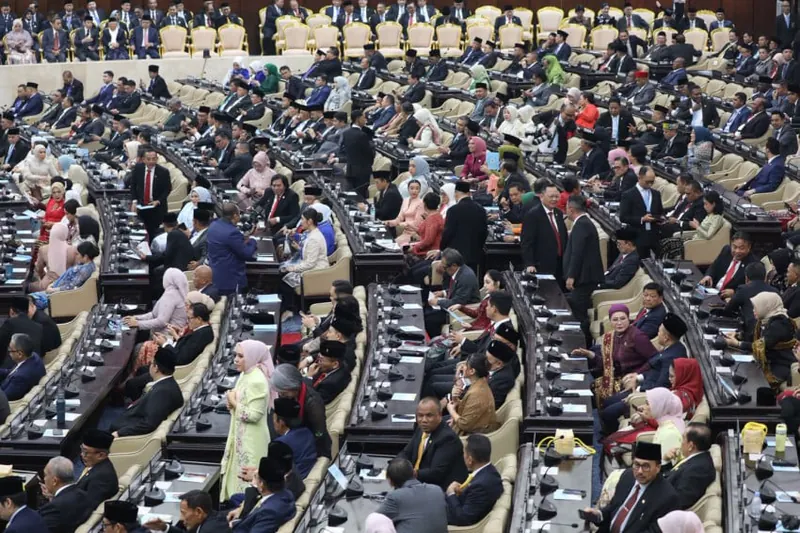
In Indonesia's constitutional system, filling a vice presidential vacancy is governed by Article 8 of the 1945 Constitution. The provision states that if the vice presidency becomes vacant, the president must submit two candidates names to the MPR for election in the next MPR session. The process grants the MPR constitutional authority to decide who will serve as vice president until the end of the term.
Historically, vice presidential candidates submitted by the president usually come from political party circles, either from the nominating party or supporting coalitions. The main consideration is maintaining stability in executive-legislative relations and keeping parliamentary political support consolidated. In this context, vice presidential figures often function as markers of interparty power balance, not merely as candidates for executive leadership.
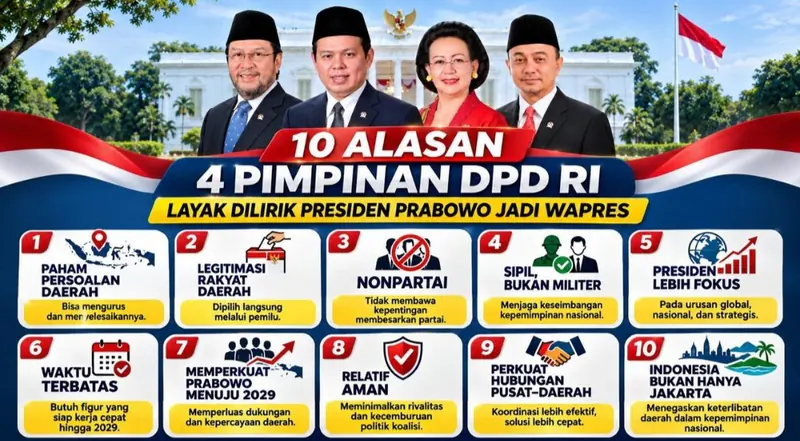
On the other hand, there is a tradition of selecting regional representatives, especially through the Regional Representative Council (DPD). The DPD is a legislative body representing provincial aspirations, with a role in safeguarding development interests outside Java. The four current leaders Sultan Baktiar Najamudin, GKR Hemas, Yorrys Raweyai, and Tamsil Linrung are often described as figures rooted in regions and familiar with problems outside the centre of government. However, the source does not describe them as official candidates, but rather as options of regional representation.
Impact of the Vice Presidential Choice on the Public
For Indonesian readers, the debate over vice presidential shortlists is not merely an elite affair in the parliament complex in Senayan or the presidential palace. The president's choice will affect cabinet composition, direction of regional policy, and development priorities outside Java. If the vice president comes from a party, the public tends to expect political stability that allows government programmes to run without obstacles in parliament. Conversely, if the vice president comes from a professional or regional background, the expectation is for evidence-based policy that is responsive to local problems.
It is important to note the MPR session mechanism on 25 November 2026. The public needs to scrutinise whether the two names submitted by the president will be discussed openly, how the election process will be carried out, and whether there is space for civil society to provide input. Without transparency, this process risks being perceived as a closed deal among parties. The choice also affects regional representation. Indonesia has large development disparities between Java and areas outside Java. A vice president who understands regional issues can bring a broader perspective into national decision-making. However, the extent of that influence depends on the vice president's constitutional authority and the division of duties set by the president.
Another consideration is fiscal and budget policy. Vice presidents often coordinate cross-ministry programmes, including poverty reduction and infrastructure development. If the vice president comes from regions, there is hope that budget allocations for areas outside Java will receive more consideration. Conversely, the vice president comes from a major party, coordination with the DPR on the state budget (APBN) may be smoother, but regional priorities risk being neglected.