132 regencies and cities waive or reduce land acquisition tax to speed land registration
132 regencies and cities across 26 provinces are waiving or reducing BPHTB, a regional tax on land and building acquisitions, to accelerate land registration and provide legal certainty.
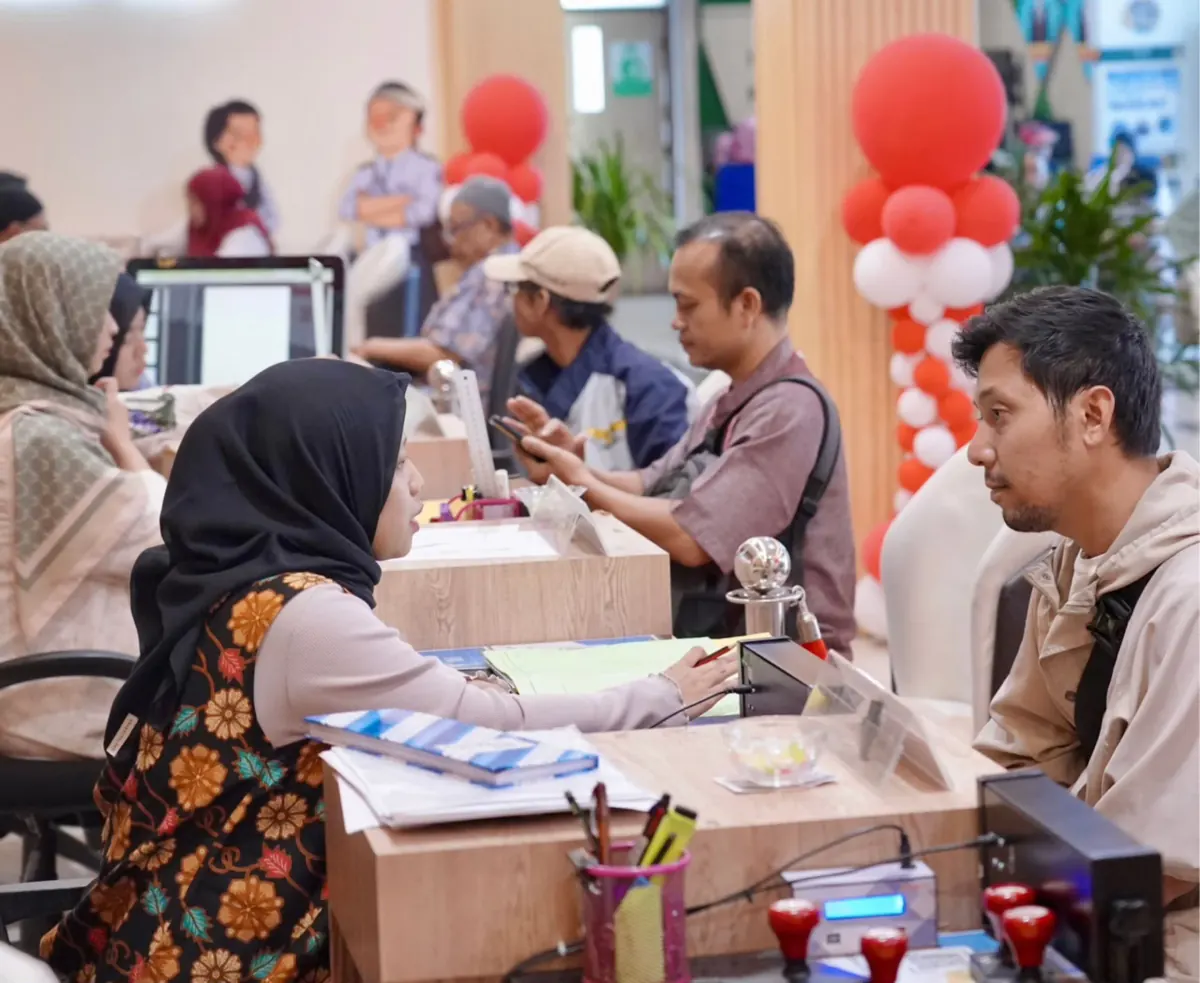
Radio Republik Indonesia (RRI) reported from Jakarta on Friday, 13 November 2026, that 132 regencies and cities across 26 provinces are waiving or reducing BPHTB, a regional tax on the acquisition of land and building rights, to speed land registration and provide legal certainty.
Uunk Din Parunggi, head of the Bureau of Public Relations and Protocol at the Ministry of Agrarian Affairs and Spatial Planning/National Land Agency (ATR/BPN), said the support made it easier for residents to register land for the first time.
Uunk Din Parunggi detailed that 90 local governments granted full BPHTB exemptions and 42 granted reductions, bringing the total number of land parcels recorded as registered to 129 million by 2026.
BPHTB payments are made to local governments through designated regional tax channels.
The move was described as collaboration between the central and local governments. For local governments, the relief also serves as a tool to tidy land data while maintaining access to services for residents.
BPHTB and barriers to land certification
BPHTB is a regional levy that arises when rights over land or buildings are acquired. As a result, the tax cost is often felt in transactions such as sales, gifts, inheritances, or other acquisitions that require a change of title. For households that have long relied on old letters, girik, an older land document, or customary statements, the obligation to pay the tax upfront can become a reason to delay certificate processing. The inability to pay even one cost component can halt the process, even when the land has been held for years.
Land registration is not merely an administrative matter. A certificate becomes proof that reduces boundary disputes, overlapping claims, and the risk of double sales. When people feel the process is long, expensive, and not guaranteed to finish, they tend to leave land unregistered. The policy of waiving or reducing BPHTB targets that point: lowering cost barriers so the intention to register land does not stop at the counter. The impact is not only on one family, but also on spatial planning order and property transaction security in an area.
The role of local governments is important because BPHTB is a regency or city tax. That means decisions on granting relief lie with regional heads and local legislatures (DPRD), not solely with central ministries. This kind of collaboration also shows that speeding land services does not depend only on the number of surveyors, map updates, or digitized files. It also depends on fiscal incentives that encourage residents to come, complete documents, and pay other remaining costs. Without fiscal support, land registration targets can run into the economic reality facing communities.
In land practice, a common term is legal certainty. That certainty does not only mean the owner's name is recorded, but also that the right can be used as collateral, inherited, and protected by the state. Before certificates are issued, many residents rely on land statements from village or subdistrict offices. Those documents are useful as initial indications, but are not as strong as certificates issued by the land agency. This difference in status is why processing costs and time are often considered disproportionate to the benefits, especially for small owners without complete archives.
Impact for landowners and local governments
For landowners, BPHTB relief means direct savings at the most sensitive stage: when rights must be formally recognized. Those savings can be redirected to survey costs, document preparation, transport, or time lost going back and forth to process files. For families living in growing towns, the difference between registered and unregistered land also affects sale value and access to financing. For farmers or owners of simple homes, small savings can be the difference between processing a certificate now or delaying it indefinitely.
For local governments, the policy requires more careful calculation. BPHTB is one source of own-source regional revenue. When many local governments choose to waive or reduce the levy, there is potential for short-term receipts to fall. But if more land is registered, the tax database becomes tidier, property transactions become safer, and other tax potential can grow over the medium term. Local governments also need to ensure the relief does not create new queues at land offices, because a surge in applications requires adequate staff, systems, and service times.
What needs attention is consistent implementation on the ground. Residents need to know whether relief applies to all types of acquisition, how long it lasts, and what documents must be prepared. Without clear information, a policy designed to make things easier can instead cause confusion and hidden costs. Therefore, simple outreach and open complaint channels are as important as the fiscal decision itself.