US midterms raise chances of easing Iran and Ukraine wars
Results of the US midterm elections reported by ANTARA, Indonesia's state news agency, are said to strengthen the chances of easing the Iran and Ukraine wars that have pressured global energy prices.
The outcome of the US midterm elections on 3 November 2026 is reported to have strengthened the chances of easing two major conflicts that have pressured global energy markets: the war involving Iran and the war in Ukraine. According to ANTARA, Indonesia's state news agency, the Democrats' success in winning control of the US legislature led President Donald Trump to soften his rhetoric on Iran and push more actively for an end to the war in Ukraine.
The report said both wars had disrupted energy supply chains, unsettled price balances and triggered volatility in the global pricing system. The Center for American Progress, as quoted by ANTARA, estimated that Americans would have to bear an additional cost of US$141 billion in total, or about US$2,000 per household, because of the war involving Iran. That economic pressure is seen as having pushed voters away from the Republican Party. Vice President JD Vance even called the war the main reason for his party's midterm defeat.
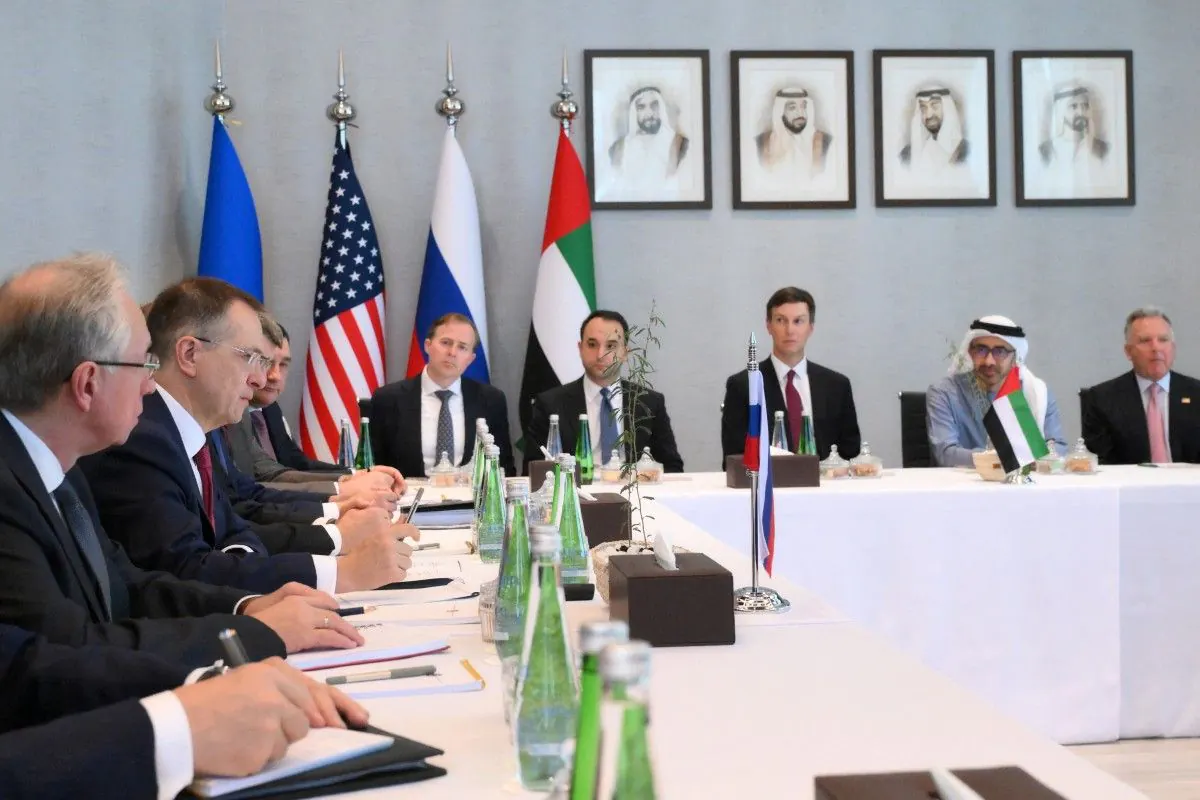
ANTARA also quoted the Middle East Institute as saying Iran's losses from the war against the United States and Israel reached US$270 billion, equivalent to 57 percent of gross domestic product. Trump said the United States no longer intended to attack Iran, and Gulf states called for the war to be stopped. Efforts to end the war in Ukraine intensified from Monday to Tuesday this week in Abu Dhabi, United Arab Emirates.
Congress's power to restrain war
The change in the composition of the US Congress should be read not only as a party victory but as a shift in the balance of power in foreign policy. The president retains control over the military and diplomacy, but the legislature controls the budget, approval of major operations and oversight functions. When the opposition controls one or both chambers, the president's room to pursue policies that are politically and fiscally costly becomes narrower. In such a system, war rhetoric can persist as long as legislative support and public opinion remain available; once both thin out, governments tend to seek negotiation.
In practice, members of Congress are often more sensitive to pressure from voters in their own districts. Midterm elections usually become a referendum on the government's performance, especially when energy prices, inflation and living costs rise. If a war is seen as adding to the budget burden or disrupting markets, the push to find a way out can emerge from both parties, not just one ideological camp. Members facing re-election also have an incentive to present themselves as defenders of voters' economic interests, not merely supporters of distant foreign policy.
The conflicts in Eastern Europe and the Middle East also touch the same node: energy supply. The war in Ukraine affects gas, grain and regional logistics, while tensions in Iran can affect shipping routes, insurance and oil prices. Markets do not always wait for the first bullet; political signals from Washington, Tel Aviv, Tehran or Moscow alone can shift expectations. When businesses doubt supply stability, they tend to raise prices, hoard stocks or switch contracts, so inflationary pressure spreads faster than direct military impact.
Therefore, a president's statement that appears to soften after political pressure rises can be read as an adjustment to domestic realities. Without solid legislative support, the cost of war is measured not only in ammunition but also in the price the government must pay before voters. In that context, changes in Washington, coalition dynamics among allied countries and Gulf states' calls to restrain escalation form a single chain: all parties are looking for ways to reduce economic risk without losing political leverage.
What Indonesia should watch
For readers in Indonesia, signals that the two wars may ease are relevant because the domestic economy is highly sensitive to energy prices and logistics costs. Indonesia imports part of its crude oil, fuel products and liquefied petroleum gas (LPG) needs, so global price volatility quickly feeds through to selling prices, transport fares and the energy subsidy burden in the state budget. If markets judge conflict risk to be falling, oil and gas price premiums usually fall too, giving the government room to contain inflation without adding heavy spending.
Stability is also important for trade flows. The Strait of Hormuz, the Red Sea and Eastern European shipping routes are not merely names on a map; they determine vessel speed, insurance costs and delivery schedules. Disruption at those nodes can raise Indonesia's import and export costs, especially for commodities moving in large volumes. Conversely, when tensions ease, businesses find it easier to draft long-term contracts and plan production.
Of course, one political statement does not automatically change the situation. Readers need to see whether a change in the US government's stance is followed by concrete steps: reduced military operations, opening diplomatic channels and agreements that can endure. Until that happens, the most tangible impact for Indonesia remains on prices and supply chains, not on victory for one side.