South Ogan Komering Ulu Police Deploy 300 Personnel to Secure Grand Fondo 2026
South Ogan Komering Ulu police have assigned about 300 combined personnel to secure the Grand Fondo 2026 route and manage traffic.
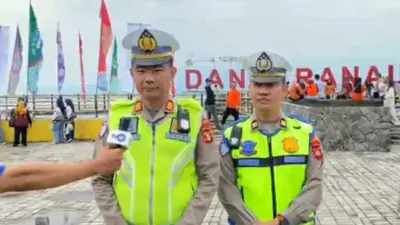
The South Ogan Komering Ulu Regency Police (Polres OKU Selatan) has assigned about 300 combined personnel to secure Grand Fondo 2026 on Saturday, 14 November 2026, according to TVRI News.
The security operation involves the regency police, police substations (Polsek), the Indonesian National Armed Forces (TNI), local government and community volunteers. The focus is keeping the race route safe, orderly and free from interference by residents' vehicles.
Hendri Rozin, the head of the traffic unit at Polres OKU Selatan with the rank of AKP, said officers had prepared a route sterilization and traffic management scheme along the course. The sterilized stretch covers the route from the Ikon area toward Simpang Sender and onward to Simpang Pusri, including the reverse direction.
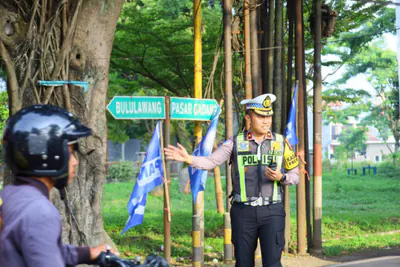
Officers have been stationed at road junctions, alley entrances and connecting access points. Residents have been asked to adjust their routes, follow officers' instructions and watch from safe points.
Security Pattern for Road Cycling Events
Grand Fondo is generally understood as a long-distance cycling race or event involving many participants, both from communities and athletes. Because it is held on public roads, the main challenge is not only participants' speed but also safety. Participants move in large groups, pass through hazardous points and share space with other vehicles before the route is fully closed. In such conditions, security cannot rely solely on the organizing committee. Participants also need information on the route, road conditions and time limits so they do not force officers to reopen the route too early.
Joint security usually places traffic police in charge of managing flow, while other personnel help close access points, monitor road junctions and prevent residents from entering the course. The involvement of TNI and local government is often used to strengthen coordination because the race route can cross several areas, residential neighborhoods or busy economic corridors. Without a clear scheme, road closures can trigger congestion, accidents or residents' protests. In areas with narrow roads, such coordination becomes more important because vehicles have limited maneuvering space.
In this context, route sterilization means the course is cleared of vehicles and pedestrians for a set period. Traffic management complements it: officers prepare alternative routes, schedule opening and closing times, and place signs or guides at points that could become entry gaps for vehicles. In cycling events, a small gap at an alley entrance or intersection can be fatal because participants arrive at high speed with limited visibility. Sterilization also helps medical personnel move quickly if a fall or exhaustion occurs.
Therefore, the presence of personnel at strategic points is part of risk management, not merely maintaining order. They must ensure the route remains clear, inform residents and handle disruptions quickly. Safety standards for sporting events also require the organizers to provide medical services, communication among personnel and evacuation procedures. All these elements complement one another so participants can cycle without endangering other road users in the area. For organizers, the success of security is often measured by minimal incidents and smooth traffic flow after the race ends.
Impact of Road Closures on Daily Activities
For residents living around the route, the event means temporary adjustments to daily routines. Trips to markets, schools, offices or health facilities can be disrupted when the course is closed. Therefore, residents need to check closure schedules, choose alternative routes and allow extra travel time before setting off. Residents with emergency needs should arrange communication with officers so they can still access routes that are opened on a limited basis.
The impact also touches local economic activity. Arriving participants and spectators can boost sales of food, drinks, lodging or transport services. However, during the race, vehicle access to some points may be restricted, so traders and business owners need to adjust opening hours, stock and delivery services. For small businesses, late information about closures can reduce customers, while good promotion can expand the market.
For readers in other regions, this security pattern shows that road sports events require orderly public communication. Announcements of road closures, parking points and spectator routes should be delivered earlier through media, information boards or field personnel. Without clear information, residents can be trapped in congestion while participants face safety risks. Therefore, coordination among organizers, authorities and surrounding communities determines whether the event runs safely or instead triggers complaints.