Semarang Mayor Eyes City as Central Java Coffee Business Hub
Semarang Mayor Agustina Wilujeng aims to make the city a Central Java coffee business hub through collaboration between micro, small and medium enterprises and industry.
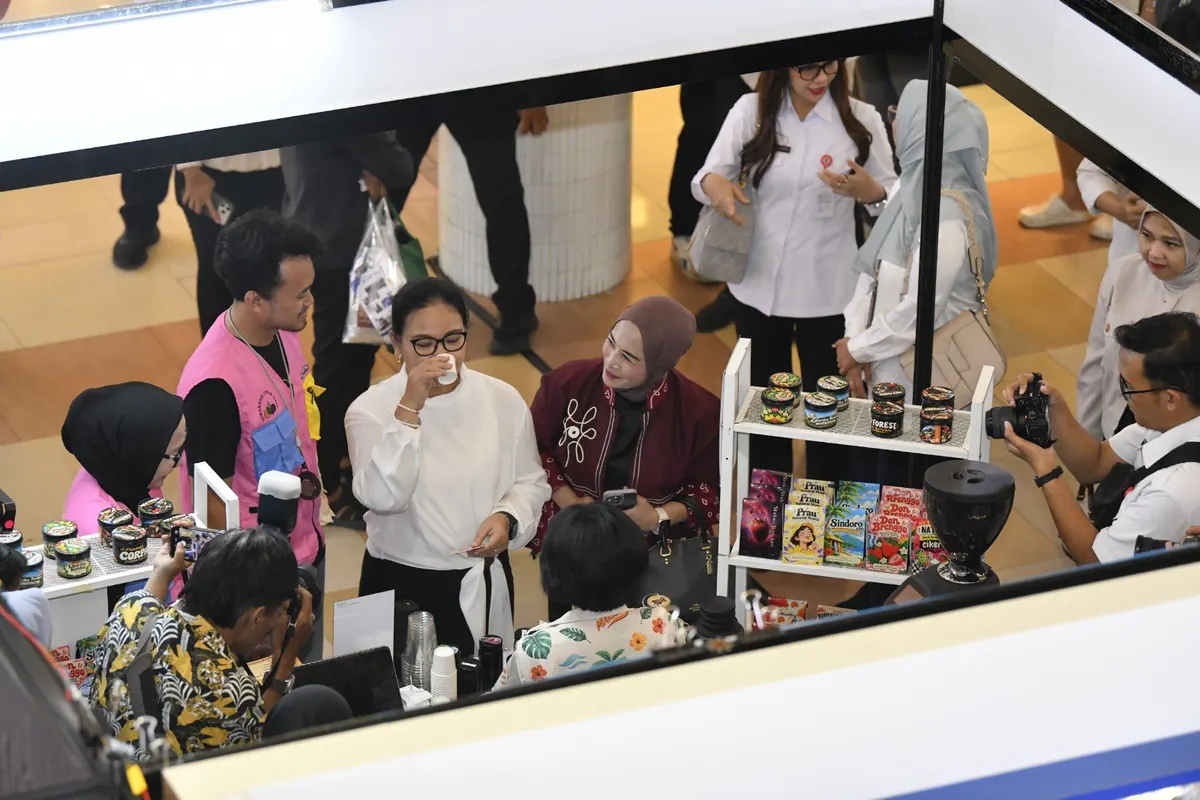
Semarang Mayor Agustina Wilujeng said Semarang has the opportunity to become a hub connecting coffee businesses in Central Java. The city is expected to serve as a meeting point between coffee-producing centers, business operators, trade networks and a wider market. She made the remarks at Semarang Coffee Week (SCW) #2 at Ciputra Mall Semarang on Wednesday, 11 November 2026, as reported by Jateng Pos.
She said Indonesia's main strength is the availability of coffee raw materials from many regions, but that potential must be followed by quality improvement and product differentiation to compete, as reported by Jateng Pos. She urged collaboration among government, businesses and experts, including expanded access to graders, or professional coffee quality assessors. The event, themed “Beyond The Brew,” runs from 11 to 15 November 2026. SCW #2 features 48 coffee and supporting-product booths, including six Japanese coffee brands, as well as brewing, mixology and latte art competitions. “Coffee is the future of Indonesia,” said Agustina.
In the WARAS EKONOMI program, as of early October 2026, 1,038 accounts for micro, small and medium enterprises (MSMEs) had been registered, 609 verified, and 43 processed food products from small and medium industries (IKM) had been curated for modern retail. Agustina also linked the coffee industry to tourism, saying cafes sell not only taste but also atmosphere, service and experience. She hopes coffee growth will benefit hotels, the culinary sector, transport and trade. She praised the organization of SCW and said she hoped the event would be sustainable.
Coffee's Place in the Regional Economy
Indonesia has long been known as one of the world's major coffee-growing countries. The commodity is grown from Aceh to Papua, with arabica and robusta varieties that have different characteristics. Arabica generally comes from highlands and is sold with a more complex flavor profile, while robusta is widely grown in lowlands and used as raw material for instant coffee and beverage blends.
In the coffee chain, major cities often serve as distribution hubs, trading venues and promotion centers. Farmers in mountainous areas usually do not sell directly to end consumers. They depend on collectors, exporters, roasters, cafes and retail markets. Therefore, a city that can bring these players together can accelerate the flow of information on quality, prices and consumption trends.
The modern coffee industry also does not stop at green bean production. Roasters, baristas and quality assessors are important parts of the ecosystem. Cupping refers to a standardized coffee-tasting method used to assess aroma, flavor, acidity, balance and defects. Latte art, brewing and mixology are service skills that add value at cafes. Such expertise makes coffee a lifestyle product, not just a drink.
The role of local government in this sector is usually facilitative. Policies can be directed toward training, business data collection, access to financing, promotion and infrastructure improvement. In the context of MSMEs and IKM, product curation is important because modern retail markets demand consistent packaging, distribution permits, labels and stable production capacity. As a port city and Central Java's administrative center, Semarang has access to logistics, banking and business meetings. In creative sectors, such a city can serve as a market-testing ground before local products scale nationally. The success of a coffee hub is usually determined by quality, supply consistency and clear buyer networks.
What It Means for Consumers and Local Businesses
For readers in Central Java and other cities, the idea of making Semarang a coffee business hub is not only about festivals. If the hub grows, local farmers and roasters gain places to meet buyers, while cafe owners gain access to quality information and financing. The most tangible impact for consumers is a wider choice of local coffee, with clearer taste and service standards.
The opportunity also requires business readiness. MSME coffee businesses cannot rely on trends alone. They need to maintain supply consistency, improve packaging, obtain permits and understand the preferences of retail and tourist markets. For workers, growth in cafes and coffee events can open opportunities as baristas, roasters, quality assessors, event organizers or support service providers. But those opportunities depend on purchasing power and increasingly crowded competition.
What needs attention going forward is whether collaboration among government, stakeholders and businesses truly produces sustainable transactions, not just exhibitions. Without that, the status of “coffee business hub” will remain only a label for an annual event.