Riau provincial government strengthens equal access to health services on National Health Day
Riau's provincial government reaffirmed its commitment to equitable access and quality health services during the 62nd National Health Day commemoration in Pekanbaru.

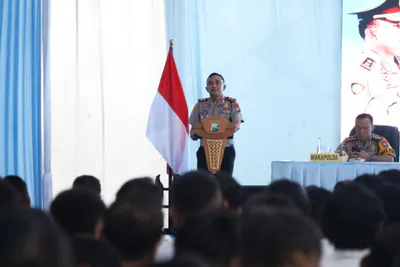
The Government of Riau Province reaffirmed its commitment to expanding equal access and improving the quality of health services during the 62nd National Health Day (Hari Kesehatan Nasional, HKN) commemoration in the courtyard of the Riau Governor's Office in Pekanbaru on Thursday, 12 November 2026.
The ceremony was led by Syahrial Abdi, the provincial secretary, under the theme “Healthy for All”. According to state broadcaster TVRI News, a written address from Minister of Health Budi Gunadi Sadikin was read and emphasised: “Health services must be felt by all members of society.” The provincial government also used licensed digital screens to spread information about hospital facilities and strengths, involving the provincial health office, hospital associations and the Indonesian Medical Association (IDI).
National Health Day and the challenge of equal access
National Health Day is observed every 12 November and serves as an annual moment to measure the performance of the health system rather than a purely ceremonial event. Success in health development cannot be judged only by the number of facilities or the budget, but by the state's ability to ensure that residents can obtain the right, timely and high-quality services. In Indonesia, that message remains relevant because geographic challenges, shortages of health workers and differences in purchasing power across regions still create access gaps. Promotive and preventive efforts, such as nutrition education, immunisation and control of communicable and non-communicable diseases, form part of the foundation that determines whether people can live healthily without constantly depending on curative services.
Equal access to health care usually rests on three pillars: primary facilities, referral services and financing. Community health centres (Puskesmas), clinics, integrated health service posts (Posyandu) and regional hospitals serve as residents' first entry points, while referral systems connect basic services with specialist care. The National Health Insurance (JKN) programme, managed by the state health insurance agency BPJS Kesehatan, helps reduce cost barriers but still requires ready infrastructure, medical personnel and clear service pathways. The availability of doctors, nurses, midwives and pharmacy staff in remote areas also determines whether the promise of equal access is felt in everyday practice. When one pillar is weak, residents may face long queues, delayed referrals or confusion about which facility to use.
In local governance, orderly public information is also part of service delivery. Digital screens, social media and official government channels can be used to explain service types, referral procedures or reminders about health programmes. However, such messages must be managed so they do not turn into misleading promotion. Health offices, professional organisations, hospital associations and facility managers should coordinate to ensure that information received by the public is accurate, current and easy to understand.
The National Health Day commemoration can also be read as a statement that the health system is built not only by the central government. Local governments have authority to run most services, while communities, professional organisations and the private sector also shape outcomes. In the push for equal access, that collaboration appears in the provision of health workers, quality supervision, public education and the adjustment of policies to local needs. For this reason, the annual ceremony should be followed by measurable steps: mapping facilities, improving referrals and making information transparent so that residents do not have to rely on unverified reports.
What information means for Riau residents
For readers in Indonesia, and especially residents of Riau, equal access does not only mean constructing new buildings. It also means narrowing the gap between knowledge and action: whether people know where to go during a prolonged fever, what referral procedures are, what services are available at the nearest hospital, or whether a facility is accredited and adequately staffed. Accurate information can help people choose services according to their needs, reduce unnecessary visits and speed up care in cases that genuinely require referral.
Efforts to spread information through public media also need to be balanced with digital literacy. Not all age groups have the same access to screens, internet networks or the ability to verify health claims. Information channels should therefore include simple explanations, regular updates and complaint mechanisms when data are inaccurate. The 62nd National Health Day can be read as a reminder that collaboration among government, health workers and the public must produce services that are genuinely easy to reach, not just an annual slogan.
Going forward, residents can judge whether the programme has a real impact through clarity of information, speed of service and ease of making complaints. If public channels only display claims without updates, their usefulness will diminish. Oversight of information media content and coordination across agencies therefore become part of accountability.
Related news
Central Java women and child protection reaches 576 subdistricts; Jember police help residents affected by windstorm; and Marines harvest corn on 18-hectare land in Pasuruan.