Ray Rangkuti Says Prabowo Has Three Options for Vice Presidential Nominees to MPR
Ray Rangkuti says President Prabowo Subianto has three possible formulas for vice presidential nominees to be proposed to the People's Consultative Assembly (MPR).
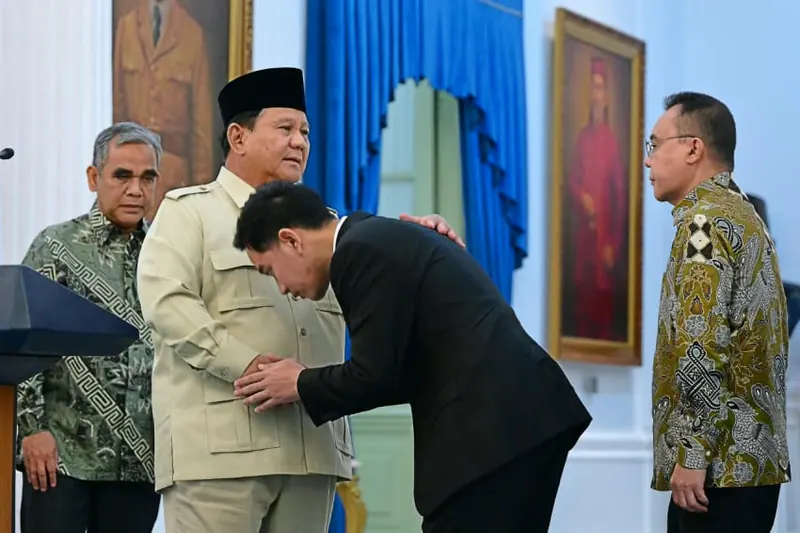
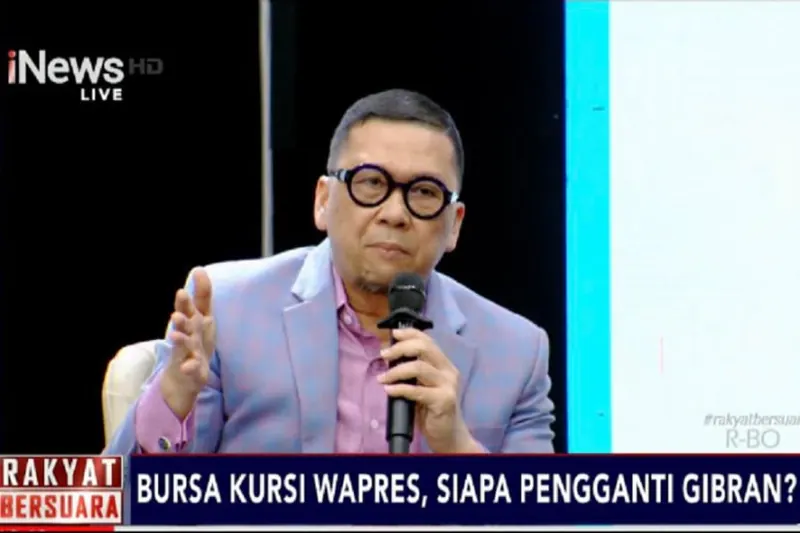
President Prabowo Subianto will propose two vice presidential candidates to the People's Consultative Assembly (MPR) to elect a replacement for Gibran Rakabuming Raka, according to a report by the Indonesian news outlet SINDOnews on Friday, 13 November 2026. Ray Rangkuti, executive director of the civil society group Lingkar Madani Indonesia, said the proposal remains open to three possible formulas.
The three formulas are that both nominees come from Prabowo's coalition, that Prabowo's coalition be paired with opposition groups, or that Prabowo's coalition be paired with an independent figure.
Ray did not name the candidates most likely to be chosen. He said an independent figure could serve as a compromise if parties in Prabowo's coalition have not reached agreement.
MPR Chair Ahmad Muzani said earlier that the assembly had scheduled a plenary session to elect a vice president for Wednesday, 2 December 2026.
Rules for filling the vice presidential vacancy
Under Indonesia's constitutional system, the vice presidency cannot be filled unilaterally by the president when it falls vacant. The 1945 Constitution gives the MPR the power to elect a new vice president after the president submits two candidates. That makes the process both a constitutional requirement and a political exercise, because MPR members drawn from the House of Representatives (DPR) and the Regional Representative Council (DPD) must choose in the assembly's highest forum. The procedure also differs from the appointment of ministers, since candidates must win the approval of a constitutional body rather than simply receive the president's decision.
The requirement to submit two names gives the president room to prepare alternatives, but also forces him to read the balance of power in the MPR. Because the vote is held in a plenary session, the proposed names should be acceptable to a majority of members. In political practice, the two names often are not ordinary candidates; they are the product of negotiations with parties, regional groups and forces that sustain the government. In that sense, they reflect the president's strategy for managing support.
The labels coalition, opposition and independent matter because they shape the legitimacy of the next vice president. Coalition refers to parties supporting the government; opposition refers to groups outside it; an independent figure is usually understood as someone not tied to a party structure. Each carries a different consequence: a coalition choice can strengthen political discipline, an opposition choice can broaden support, and an independent choice can reduce friction among parties. An election by the MPR also requires a candidate who can communicate across factions, not one who is popular only within a single group.
The election of a replacement vice president is also often read as a political signal from the president about the future of the government. The figure chosen can affect regional balance, governing experience, relations with parliament and public perception. The debate over candidate formulas is therefore not only about who is most qualified, but also about how the vice presidency can preserve coalition stability and public trust in a peaceful, lawful, credible and open transition. For that reason, the public has the right to judge whether the names put forward meet constitutional requirements and the country's leadership needs.
What the public should watch
For readers in Indonesia, the election of a replacement vice president is not merely the replacement of a state official. The office is tied to the government's agenda, policy formulation and the president's relations with parliament. A vice president from the coalition can strengthen government solidity, while a figure from outside the coalition or from independent circles can broaden the support base and reduce public suspicion that the office is simply a vehicle for power sharing.
The impact may also be felt in everyday issues the government is working on, such as economic policy, public services and national priority programs. If the new vice president has a governing background or specific expertise, the public can assess whether the position will help coordinate policy or become a symbol of political compromise. Conversely, if the process is closed, public trust in parliament and the presidency risks declining.
The points to watch in the coming days are the two names officially proposed by the president to the MPR, the positions of parliamentary factions and the course of the plenary session. The public also needs to see whether the candidates have a track record relevant to the duties of the vice presidency, rather than merely meeting short-term political needs. In that sense, the news is a reminder that succession to high state offices remains subject to constitutional oversight and citizen oversight.