Papua Immigration Office Backs Central Papua Regional Office Plan in Nabire
Papua's immigration regional office supports creating a Central Papua office in Nabire, but says at least two local technical immigration units must be in place.
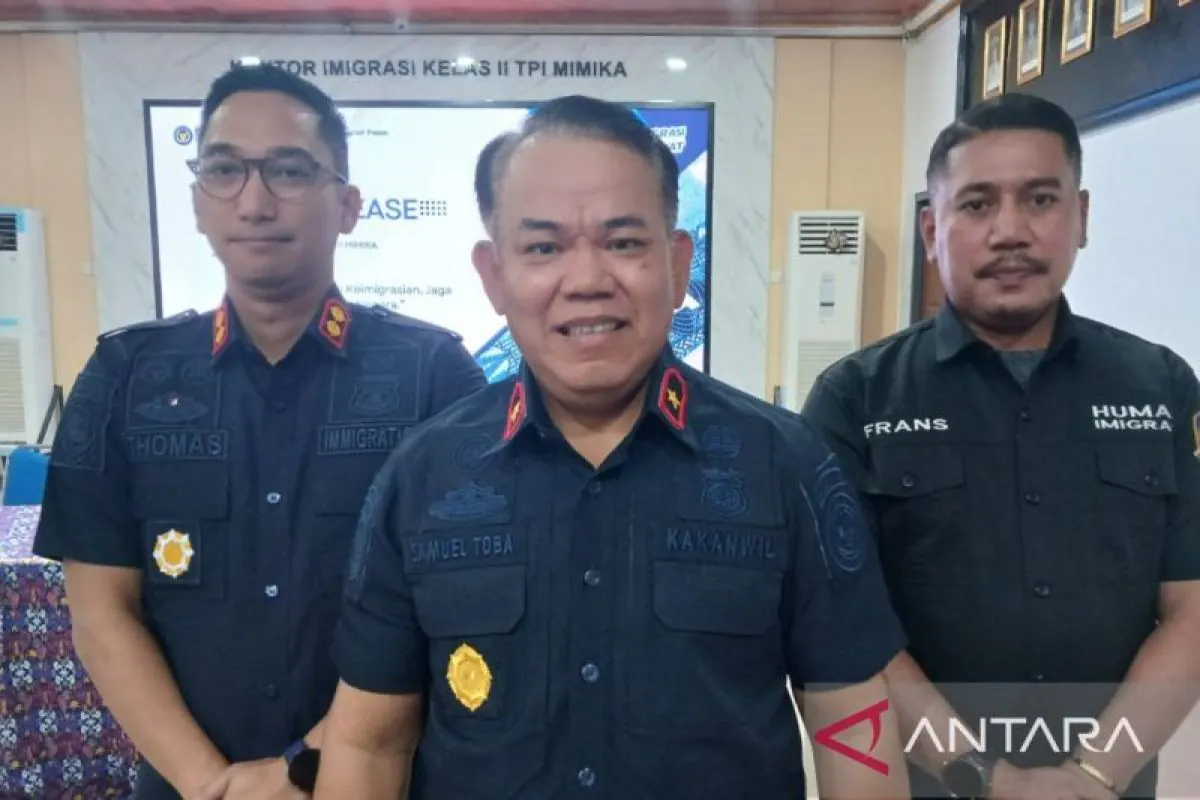
The Papua regional office of the Directorate General of Immigration has voiced support for a plan to establish a Central Papua regional immigration office in Nabire Regency, as reported by ANTARA on Saturday.
Samuel Toba, head of the Papua regional office, said the new office would have to meet several requirements. A key condition is the availability of at least two technical immigration units (Unit Pelaksana Teknis Kantor Imigrasi, or UPT) in Central Papua.
According to ANTARA, the Papua immigration regional office plans to open one new UPT Kantor Imigrasi in Nabire City. The proposal is now with the Directorate General of Immigration at the Ministry of Immigration and Corrections before it is forwarded to the Ministry of Administrative and Bureaucratic Reform (Kemenpan-RB).
Samuel said the Central Papua provincial government had expressed support and had already prepared a site for the regional office, which was shown on a map.
Requirements for an immigration regional office
In Indonesia's immigration structure, regional offices usually serve as coordination hubs at provincial level, while technical units operate in regencies and cities to provide direct services such as passports, residence permits and oversight of foreigners. A new regional office therefore cannot stand on its own; it depends on the readiness of the offices beneath it. Regional offices can also monitor compliance and report immigration data more systematically. In practice, they process reports across technical units, guide staff and coordinate with local governments.
The requirement for at least two UPT Kantor Imigrasi, as stated by Samuel, shows that the state is not simply adding a building but ensuring that service demand is already spread across the territory. That matters in areas with long distances between regencies. Without adequate technical units, a regional office risks becoming an administrative structure without an operational base. If the units are in place, the office can bring together staff guidance, reporting and service policy within one work area.
The bureaucratic process also shows a long path: a technical proposal from the Directorate General of Immigration goes to the parent ministry and then requires consideration by Kemenpan-RB. That stage usually covers nomenclature, staffing needs, organizational structure and budget certainty. Without approval, physical construction alone is not enough. Budget and human resource readiness must also be discussed early so that services do not merely wait for a building. Local government support is therefore important, especially for land and supporting facilities.
Central Papua is also a new province still organizing state services. When a province is split, many affairs previously handled from the parent office need to be brought closer. Immigration is relevant because residents' mobility, project workers and foreigner traffic can rise as government and economic centres grow. More evenly distributed service offices can reduce travel costs for residents who previously had to travel long distances to process documents. Better access can also help local governments monitor foreigner movements routinely and reduce potential violations in their areas.
What it means for document processing
For residents of Central Papua, the plan means that passport and residence permit applications may no longer have to depend entirely on offices in the parent region. If a Nabire immigration office is established and a regional office follows, queues can be divided, travel time can be reduced and transport costs can be more manageable. The effect is not on passport fees, which are set by the state, but on the indirect costs applicants have long borne. Passport demand usually rises when people study, work, seek medical treatment or travel abroad. With closer services, residents can also prepare documents faster when urgent family needs arise.
For businesses, a closer immigration office can improve certainty of service for foreign workers, business visits and projects that require residence permits. Oversight of foreigners can also become more orderly. For local governments, a regional office can strengthen coordination on population data, employment and regional security. But those benefits will only be felt once the organizational structure, staff and service system are truly in place. Readers should watch whether the proposal to Kemenpan-RB is approved and when technical units and the regional office begin operating. Without that certainty, the plan remains at the administrative stage.