Motorcyclist swept away in Pasaman Barat found dead
Taufik Anwar, 62, was found dead after a culvert current swept him away in Simpang Empat, Pasaman Barat, on Sunday, 15 November 2026.
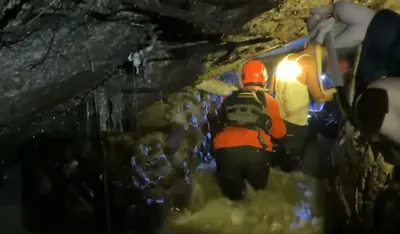
A motorcyclist named Taufik Anwar, 62, was found dead after being swept away by a culvert current in Simpang Empat in Kecamatan Pasaman, Pasaman Barat (West Pasaman), Sumatera Barat (West Sumatra), on Sunday, 15 November 2026. According to a report by TVRI News, a joint Search and Rescue (SAR) team found the victim at 20:35 WIB (Western Indonesian Time), about five metres from the point where he was swept away, and evacuated him to the Pasaman Barat Regional Public Hospital (RSUD Pasaman Barat).
The incident began when heavy rain caused water in a road culvert, a drainage channel beneath or beside a road, to overflow onto the carriageway at about 18:05 WIB. Abdul Malik, head of the Padang Search and Rescue Office (Kantor Pencarian dan Pertolongan Padang), said the search was launched quickly after a report was received at 18:11 WIB from Afrizal, head of the emergency and logistics division (Kabid KL) at the Pasaman Regional Disaster Management Agency (BPBD Pasaman).
A rescue team from the Pasaman Rescue Post arrived at the scene at 18:35 WIB and swept the area alongside BPBD personnel, police, the Indonesian National Armed Forces (TNI) and residents. The operation used rubber boats, water SAR equipment, communication equipment and medical support.
Culvert flooding on main roads
Culverts are drainage channels built beneath or beside roadways, often made of concrete pipes, stone or simple structures, to carry rainwater from one side of a road to the other and keep the surface clear. During intense rainfall, however, the volume of water can exceed the channel's capacity. The overflow can spread across asphalt or paving blocks, creating a flow that may look shallow but is strong enough to push small vehicles aside.
Such conditions are especially dangerous for motorcyclists because riders have no protective vehicle body around them. Tyres that lose grip on wet surfaces can make a motorcycle wobble, while water surging from a full culvert can drag a rider toward lower ground. In many parts of Indonesia, these floods often occur at night, when street lighting is limited and fast-moving water is hard to recognise from a distance.
Sumatera Barat has varied terrain, ranging from hills and valleys to coastal areas. Heavy rain in upstream areas can accelerate water flow toward settlements and transport routes in lower-lying plains. Roads passing through rice fields, plantations or points where watercourses meet often have prone spots. Culverts blocked by rubbish, sediment or no longer suited to surrounding development can make overflow worse.
In responses to similar incidents, the term “quick action” refers to rapid steps taken after a report is received. Rescue teams usually identify the starting point, the direction of flow and the nearest search areas. Water SAR equipment, rubber boats and field communications are used to reach difficult locations. The involvement of disaster agencies, security forces and local communities is important because local knowledge of waterways, terrain and road access can speed up the sweep.
The starting point, often called the LKP, or lokasi kejadian perkara (incident location), is used to narrow the search area. If a victim disappears on a road carrying water, teams typically check downstream, shoulders, drains and larger channels. Rain, currents and debris can shift a victim quickly, so searches cannot afford to wait too long.
Lessons for road users in rain
For readers in Indonesia, incidents like this show that a small flood on a road can turn into a serious danger within minutes. Motorcyclists should slow down when they see standing water, especially near culvert openings or channels with fast flow. If the current feels strong, it is safer to stop on higher ground and wait for help than to force a way through.
Road users also need to understand that water that looks shallow can hide potholes, stones or debris. At night, vehicle lights can make the surface appear flat, while a current moves beneath it. For that reason, safe distances and low speeds matter more than relying on past experience.
The impact also reaches local policy. Road drainage needs regular cleaning, especially before the rainy season. Local governments, road managers and residents can work together to reduce rubbish blocking channels. Hazard signs at prone spots, adequate lighting and patrols during heavy rain are simple but important preventive measures. Quick reports from residents can help authorities close or mark dangerous areas.
Going forward, the public should check local weather forecasts and road conditions before travelling at night. For families and road users, the main lesson is that caution toward water that looks ordinary can save lives.