Ministry of Industry Expands Vocational Cooperation with China on Digital and AI Talent
The Ministry of Industry (Kemenperin) is expanding vocational education cooperation with Chinese institutions to prepare talent for industrial digitalization and artificial intelligence.
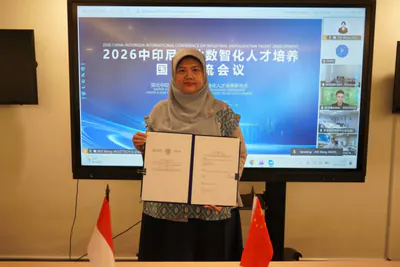
The Ministry of Industry (Kemenperin) in Jakarta has expanded vocational education cooperation with institutions in China to develop talent for industrial digitalization and artificial intelligence, as reported by Indonesian state broadcaster TVRI News on Tuesday. The International Cooperation Alliance for Industrial Digitalization and Artificial Intelligence Talent Development, or ICAID-AITD, is being used as a platform for exchanging expertise among schools, polytechnics and universities from the two countries.
Industry Minister Muhammad Sarmuji said industrial vocational education must follow technological developments and business needs. The link and match approach and strengthening of the dual system were deemed important so graduates have competencies suited to the labor market.
Adie Rochmanto Pandiangan, acting head of the Kemenperin Human Resources Development Agency for Industry, said the alliance provides a means for educational institutions in the two countries to build collaboration. According to TVRI News, ICAID-AITD was launched in April 2026 by Kemenperin's Industrial Vocational Education Development Center and iROOTECH Technology from China, and has already brought together more than 100 member institutions.
Alliance members include educational units under Kemenperin, such as Politeknik STMI Jakarta, Politeknik ATK Yogyakarta and SMK-SMTI Yogyakarta. Membership also involves Universitas Indonesia, Universitas Gadjah Mada, Guangzhou Polytechnic and Wuhan Software Engineering Vocational College. Kemenperin, together with iROOTECH Technology and the China Machinery Industry Education Development Center, also signed a memorandum of understanding on the development of industrial vocational human resources. The programme covers online classes for teachers, students and university students from both countries, with topics on smart manufacturing and artificial intelligence.
Preparing Vocational Education for the Smart Manufacturing Era
Digital transformation in industry does not require new machinery alone; it also requires workers who can read data, operate automated systems and maintain software on the production floor. In global practice, technologies such as artificial intelligence, the internet of things and machine analytics often enter factories gradually, so competency needs shift from manual skills to the ability to combine technical knowledge with digital literacy.
That issue puts vocational education under double pressure. Schools and polytechnics must adjust curricula quickly, while companies seek graduates who can work immediately. The link and match concept therefore becomes important: curricula, internships, certification and practical teaching are designed together with industry. The dual system, common in countries with strong manufacturing traditions, has students learning in classrooms and working in workshops or factories in a structured way.
Cooperation with China also needs to be read in the context of technology competition and manufacturing supply chains. China has a large industrial base, many vocational polytechnics and technology companies developing smart manufacturing solutions. For Indonesia, collaboration of this kind can open access to training, module exchange and teaching practices, but results depend on the ability of local institutions to absorb materials, train teachers and ensure the standards used match domestic industry needs.
Adoption of artificial intelligence in factories also raises ethics and labor questions. Systems for predicting machine failure, visual inspection and energy optimization can improve productivity, but they require workers to understand the limits of automation, data quality and safety procedures. Without strengthening teachers and laboratories, international cooperation risks stopping at online seminars, training certificates or document exchanges that do not change teaching practice in classrooms and workshops.
Impact on Young Workers
For vocational high school students, polytechnic students and engineering university students, the cooperation can become an entry point to material closer to industry needs. Online training on smart manufacturing and AI can help them understand the tools, terms and processes now used in factories. But real benefits will be felt only if schools turn them into practice: laboratory projects, measured internships and assessments that evaluate the ability to use technology, not merely attendance.
For companies, especially those increasing automation, talent with industrial digital literacy can speed up technology adoption and reduce retraining costs. For workers already on the production floor, programmes like these are also relevant for retraining so they are not left behind as machines and software systems take over some routine tasks. Going forward, the priorities are training quality, competency recognition and whether graduates can work in sectors that truly need those skills.
For general readers, the development marks that vocational education can no longer stand alone. Parents and prospective students need to look at the track record of industry cooperation, not only programme names, before choosing an education pathway oriented toward employment.