Main road in Golak hamlet paved as residents gain safer access
The main road in Golak hamlet, Bandungan, Semarang Regency, which had been damaged for years, has been paved using Central Java’s 2026 provincial financial assistance (Bankeu).
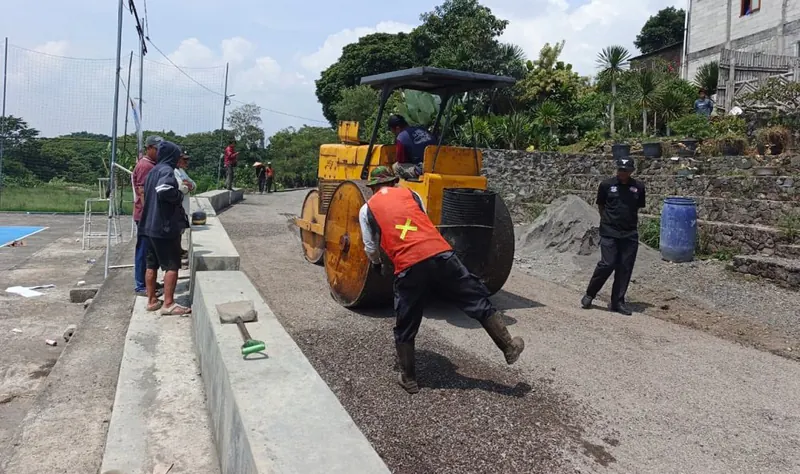
Residents of Golak hamlet in Kenteng village, Bandungan district, Semarang Regency, can now travel along a smoother main road after years of damage, gravel and dust. The road was paved along a 150-metre stretch that is four metres wide, as reported by Jateng Pos.
Hamlet head Bagus Maulana said the repair answered complaints about a road that had previously been only cement-plastered. He said the damage had worsened over the past two years, becoming especially difficult in the rainy season because of the gravel surface and in the dry season because of dust. “This road used to be only cement-plastered because there was no Dana Desa,” he told Jateng Pos, referring to the Village Fund.
Handika Gusni Rahmulya, a member of the Semarang Regency Regional Legislative Council (DPRD), said the paving was funded by Central Java provincial financial assistance (Bankeu) for the 2026 fiscal year, worth Rp100 million (about US$6,000). He said the stretch was the main route to Golak Sport Center, a hub for sports, arts and social activities.
Handika said he had received several reports of the dangers posed by the damaged road, including children falling from bicycles. The repair was therefore prioritised to make school, work and daily movement safer, he added.
From village self-help to provincial assistance
Road repairs at the hamlet level, such as the one in Golak, usually follow a long chain of proposals. Residents report infrastructure problems to village officials, the village head or lurah (head of an urban village) includes the needs in annual planning, and the proposals can then be taken to a village deliberation forum (musyawarah desa). If the Village Fund (Dana Desa) cannot fully cover the cost, village governments may seek assistance from the regency, the province or other available sources. In Golak, Jateng Pos reported, the work was financed through Bankeu from Central Java’s 2026 budget, a mechanism commonly used to cover village development needs not met by the village budget.
Bankeu, or financial assistance, is essentially a transfer from the provincial government to village governments or community groups for specific activities. It can be used for road construction, drainage, small bridges and other public facilities. Because it comes from the provincial regional budget (APBD), spending is subject to strict planning, reporting and accountability rules. The Rp100 million spent on the 150-metre road in Golak is therefore not just a project figure, but the result of a proposal, site selection and oversight process involving many parties.
Hamlet roads may seem simple, but their impact is close to daily life. Village and hamlet roads are usually not provincial or national routes, so their repair rarely becomes a major project. Yet in areas such as Bandungan, where residential, sporting and business activity is active, small roads can serve as essential links. When routes to schools, workplaces or activity centres are damaged, the social cost appears in lost time, faster vehicle wear, accident risks and disrupted community activities.
Impact on mobility in Bandungan
For Golak residents, the 150-metre paving can be seen as shortening the distance between complaints and services. For years, the gravel road forced residents to move slowly, especially in the rain. Dust in the dry season disturbed both homes and road users. With a smoother surface, children travelling to school, workers moving in and out of the hamlet and residents heading to Golak Sport Center now have a safer, more comfortable route.
Another important benefit is the continuity of social activity. A hamlet-level field or sport centre is often a public space for exercise, arts practice, meetings and community events. When access to that space is damaged, collective activities suffer. Repairing the road means restoring a social space, not just laying asphalt. In an area with active residential and social life, a decent route also supports the movement of people and goods, especially at weekends or during events.
Maintenance will be the next concern. Paved hamlet roads still need periodic care, such as fixing small cracks, clearing drainage channels and restricting heavy vehicles that exceed the road’s capacity. Without maintenance, a new surface can deteriorate quickly. The success of the Bankeu project should therefore be measured not by how smooth the road is on the first day, but by how long it remains safe, clean and usable for daily life.