KPK Uses Stand-Up Comedy for Anti-Corruption Campaign
The Corruption Eradication Commission (KPK) closed its Benar-Benar Komika competition in Jakarta with a stand-up comedy stage as a space for integrity campaigning.
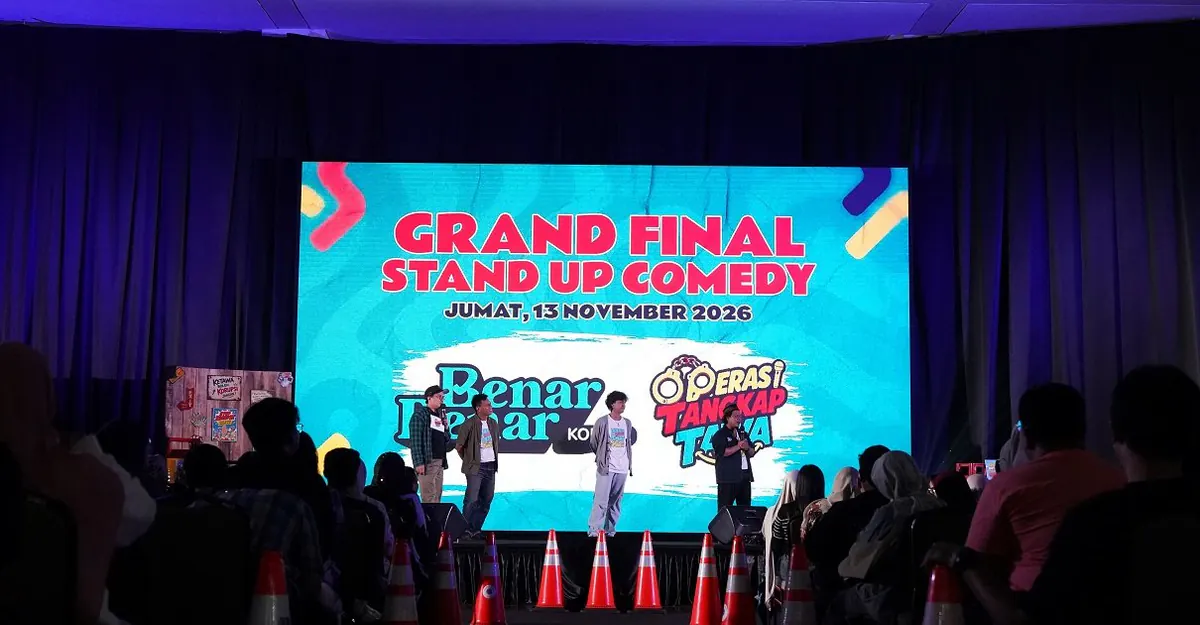
The Corruption Eradication Commission (KPK) closed the Benar-Benar Komika competition, titled Operasi Tangkap Tawa, with a grand final night at the KPK's Merah Putih building in Jakarta on Friday, 13 November 2026. The event used a stand-up comedy stage to deliver messages on integrity and social criticism of corruption practices.
According to a KPK report, Director of Socialization and Anti-Corruption Campaigns Amir Arief said comedy could be a channel for citizens to voice concerns in a light-hearted way. He hoped anti-corruption messages would not only be delivered in formal settings. Head of the KPK Socialization and Campaign Task Force Dotty Rahmatiasih added that the competition was aimed at making integrity messages easier for communities, especially young people, to accept. One finalist, Rifky Dira, said comedy could bring anti-corruption issues closer to the younger generation.
Selection was conducted online from 12 August to 12 September 2026 and offline through open mic events at six locations, including the KPK's Merah Putih building, Jakarta, Bekasi, Bogor, Tangerang and Samarinda. The theme Korupsi di Sekitar Kita, or Corruption Around Us, gathered 188 entries from various backgrounds. Nine komika, or stand-up comedians, advanced to the grand final after a bootcamp from 10 to 13 November 2026. Matius Purba took first place, Eki second and Luthfi third. The performances were judged by Amir Arief, Adjis Doa Ibu, Gilang Bhaskara and Inayah Wahid.
Anti-Corruption Campaigning Through Popular Culture
Anti-corruption messages have often been associated with formal spaces: trials, investigations, seminars or law-enforcement announcements. That approach is important for deterrence, but it may not be enough to shape everyday habits. For that reason, anti-corruption agencies in various countries also use preventive approaches, from character education and social media campaigns to cooperation with arts communities. The aim is to make integrity values easier to understand, not merely to memorize. The approach fits the logic that law enforcement alone is not enough without cultural change.
Stand-up comedy has an interesting position in that approach. The stand-up comedy stage is usually close to daily experience, uses simple language and relies on social observation. Good jokes often come from criticism of injustice, cumbersome bureaucracy or deviant behavior that is treated as normal. In the anti-corruption context, comedy can open public conversation without making audiences feel lectured. The approach is relevant when the public is already tired of hearing legal terms or state loss figures.
One term needs to be understood by readers: integrity means consistency between words and actions, especially in small matters that are not supervised. Corruption is not always large sums of money; it can also appear in nepotism, gratification, illegal levies or abuse of authority. When integrity messages enter entertainment spaces, the public can learn to recognize the boundary between social habits and ethical violations. At that point, comedy is not only laughter, but a social tool for changing norms.
The success of campaigns like this is usually measured not by a single event but by consistency. If creative communities, campuses and the public continue to use their own language, anti-corruption messages can last longer than banners or slogans. Social media also expands reach, allowing clips of comedy material to be shared again. The challenge is to ensure humor does not demean victims, does not normalize violations, and still leaves room for responsible criticism.
What the Public Should Watch For
For readers in Indonesia, campaigning through comedy does not directly lower the price of goods or improve public services. But corruption is a hidden cost that can make development more expensive, services slower and job opportunities unfair. When the public becomes more sensitive to gratification, nepotism or illegal levies, social pressure to correct those practices grows. Here, laughter can become an entry point for changing everyday habits.
Another relevance lies in public participation. Young people accustomed to seeing social criticism through creative media may be more willing to report problems, reject deviant practices on campuses or workplaces and demand transparency. For communities, events like this show that integrity issues can be discussed without rigid language. Going forward, what should be watched is whether campaigns like this continue, involve more regions and are accompanied by safe complaint channels for citizens.
The practical challenge is to keep the message from stopping as one-night entertainment. If comedy material prompts audiences to ask questions, examine issues and dare to reject small fraud, its impact on public integrity becomes more tangible. Citizens can assess whether the message encourages real action, not just applause.