KPK Strengthens Global Cooperation to Drive Recovery of Corruption Assets
The Corruption Eradication Commission says cross-border recovery of corruption proceeds is a priority at United Nations Convention against Corruption (UNCAC) meetings in Vienna, as Indonesia seeks faster asset tracing and return.
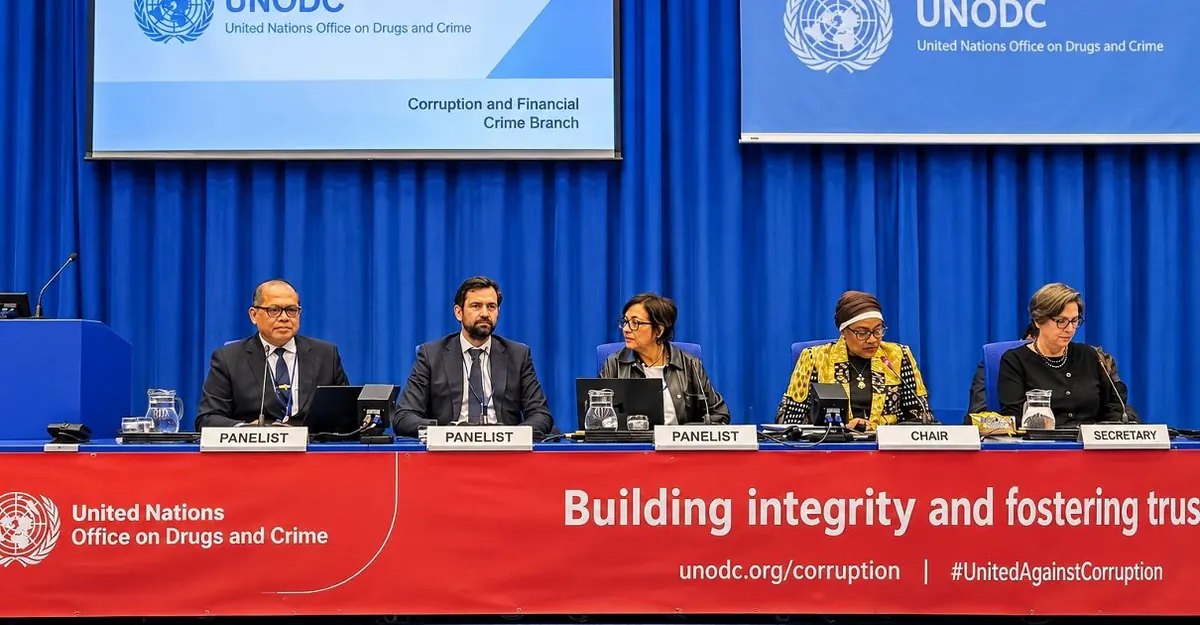
The Corruption Eradication Commission (KPK) has placed the recovery of corruption proceeds hidden abroad at the center of its international cooperation agenda, as outlined in a series of meetings under the United Nations Convention against Corruption (UNCAC) in Vienna, Austria, on 2–6 November 2026. KPK Deputy Chair Agus Joko Pramono led Indonesia's delegation.
According to a KPK report, Indonesia brought to the forum an agenda to accelerate the tracing and return of assets scattered across multiple jurisdictions. Agus said corruption increasingly involves the movement of perpetrators, assets and money flows across borders, making international cooperation essential to hold perpetrators accountable.
The delegation took part in several sessions, including the Second Resumed 17th Session of the Implementation Review Group (IRG) on 2–5 November 2026, the Fifteenth Open-Ended Intergovernmental Expert Meeting to Enhance International Cooperation (EMIC), the Open-Ended Intergovernmental Working Group on Asset Recovery (WGAR), and a special session of the Conference of the States Parties (CoSP) that ran until 6 November 2026. The discussions focused on how effectively the convention was being implemented, technical assistance, international cooperation and asset return.
The KPK said Indonesia has 16 memoranda of understanding (MoUs) with partner agencies in various countries. In 2026, the agency handled 22 international cooperation requests, comprising eight inbound and 14 outbound requests, processed through mutual legal assistance (MLA) mechanisms or direct interagency coordination. One good practice shared at the forum was the repatriation of a fugitive wanted under an Interpol Red Notice in a corruption case, carried out through cooperation between the KPK, Indonesian immigration authorities and Thailand's National Anti-Corruption Commission (NACC).
Tracing Corruption Assets Across Borders
UNCAC is the United Nations anti-corruption convention adopted in 2003 and entered into force two years later. Indonesia ratified it through a law in 2006. The convention provides a multilateral legal framework for prevention, criminalization, international cooperation and asset recovery. Its chapter on asset recovery is often considered the most important because corruption is not only about punishing individuals, but also about restoring losses to the state.
Cross-border asset recovery is difficult because perpetrators hide proceeds in different jurisdictions, using shell companies, nominee accounts or layered financial transactions. Each country has its own rules on evidence, bank secrecy and confiscation. Mutual legal assistance, or MLA, therefore acts as a bridge: one country can ask another to gather evidence, freeze accounts or seize assets under local law. The process can take years and depends on the political will and bureaucratic capacity of both sides.
The UNCAC review mechanism is run by the Implementation Review Group, in which states parties assess how far the convention has been implemented. A long-standing criticism is that the process focuses too much on whether laws exist, rather than on tangible results such as the amount of assets returned or court rulings carried out. As a result, calls for the review to assess practical effectiveness have been a recurring theme at the forums. Outside multilateral meetings, bilateral cooperation is also an important route. Countries with different legal systems often find it easier to act through direct agreements. In Thailand, the NACC is the national anti-corruption agency that serves as a cross-border coordination partner, allowing information sharing to cover both immigration administration and law enforcement.
An Interpol Red Notice should also be distinguished from an international arrest warrant. A Red Notice asks the national central bureau of a member country to locate and temporarily detain a wanted person on the basis of a notification from the issuing country, usually related to interpolation or extradition. The notice does not by itself mean that the person is guilty; the presumption of innocence remains until a court decides.
What It Means for Returned Public Money
For readers in Indonesia, asset recovery is not merely numbers in law-enforcement reports. Assets that are successfully returned can enter the state treasury and be used for public spending, from education and health to infrastructure. Assets held abroad, by contrast, keep state losses open and continue to burden the budget.
International cooperation also affects everyday practice. When cross-jurisdictional tracing is strengthened, officials or businesspeople who try to move corruption proceeds abroad face a higher risk. The effect can be seen in prevention: anyone planning to hide funds in foreign accounts, foreign property or shell companies knows their financial trail is now easier to monitor.
What matters next is the speed of execution, not simply the number of MoUs or forums attended. Concrete indicators will show how much is actually returned: how many assets come back, how long MLA processes take to complete and whether recommendations from the UNCAC review produce real changes in state institutions. Without such measures, cross-border cooperation risks remaining a diplomatic ceremony.