KPK steers revision of Indonesia's anti-corruption law to meet OECD anti-bribery standards
The Corruption Eradication Commission (KPK) is steering revisions to Indonesia's anti-corruption law to align with OECD anti-bribery standards, including criminalising the bribery of foreign officials.
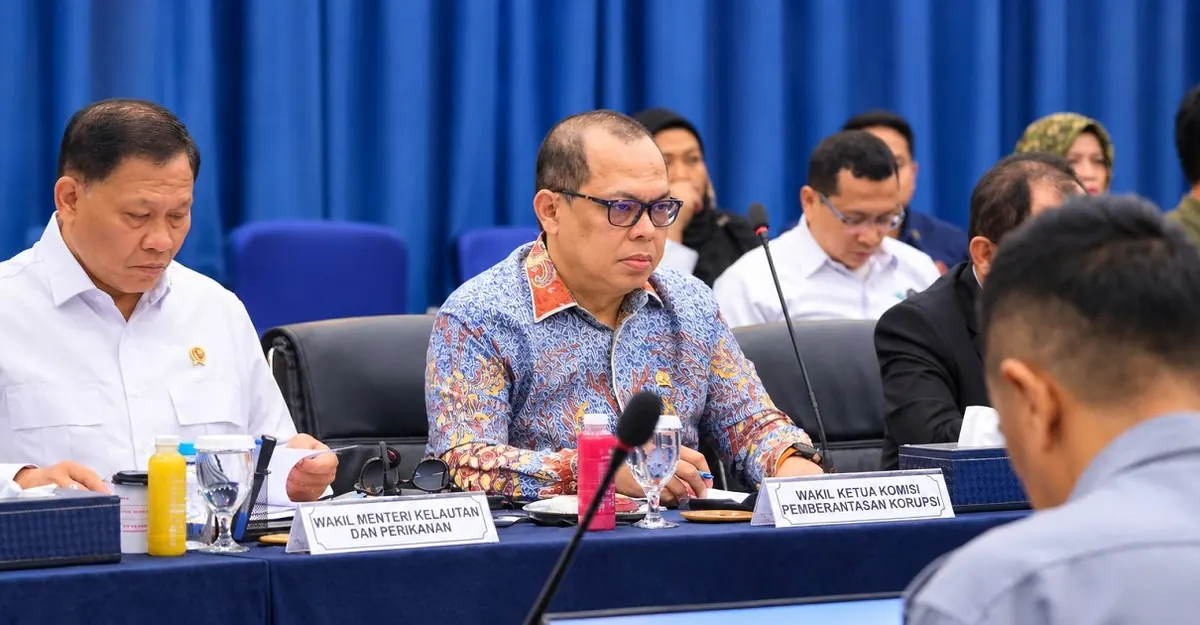
The Corruption Eradication Commission (KPK) has been designated as the lead for the anti-corruption portfolio in the National Team for the Preparation and Acceleration of Indonesia’s Membership in the Organisation for Economic Co-operation and Development (OECD), according to a KPK report on Monday, 9 November. The role was discussed in a coordination meeting at the Ali Wardhana Building of the Coordinating Ministry for Economic Affairs in Jakarta, which reviewed progress and evaluated Indonesia’s accession process.
KPK Deputy Chair Agus Joko Pramono said accession to the OECD Anti-Bribery Convention was not only a membership requirement but also a moment to strengthen Indonesia’s anti-corruption system against transnational corruption. “This step shows Indonesia’s readiness to implement global integrity standards,” Agus said. He urged the acceleration of the academic draft and the bill to amend the Anti-Corruption Law (UU Tipikor) so they can enter the 2027 National Legislative Program (Prolegnas) priority list.
In the report, the KPK said bribery of foreign public officials or officials of international organisations, known as foreign bribery, must be regulated and criminalised in the revision of the Anti-Corruption Law. The KPK, together with the OECD Secretariat, is preparing a Comprehensive Gap Analysis, a follow-up to the initial gap analysis of 2025, to map gaps between national law and the convention. The KPK urged accelerating the amendment as part of the National Medium-Term Development Plan (RPJMN) 2025-2029 and placed the Ministry of Law as the regulatory coordinator.
The OECD sent experts from Brazil, Australia and Romania to Jakarta on 9-11 June 2026 for a fact-finding mission, confirming answers to a questionnaire and assessing readiness for ratification. An initial draft of the Gap Analysis Report received by Indonesia in August 2026 highlighted corporate liability, a ban on tax deductions for bribes, accounting oversight and whistleblower protection. The OECD also recommended strengthening mutual legal assistance and extradition. Coordinating Minister for Economic Affairs Airlangga Hartarto said progress toward full OECD membership was about 80 percent, with a target of 2028; accession also requires regulatory adjustments in corporate governance, the investment climate, national statistics, public governance and business competition.
OECD rules and cross-border bribery
The OECD is a forum of countries generally oriented toward market economies, public governance and policies that can be compared across jurisdictions. Full membership is not only a matter of political status but also acceptance of the standards used by member states, ranging from the integrity of public institutions and legal certainty for investors to verifiable statistical reporting. For that reason, accession usually proceeds gradually through policy dialogue, evaluation and regulatory adjustment.
The OECD Anti-Bribery Convention is an important reference in combating transnational corruption. It encourages member states to have rules covering the bribery of foreign officials, not only domestic officials. The logic is that transnational corruption often involves companies, intermediaries and officials in more than one jurisdiction. If national law only reaches domestic bribery, offenders can exploit gaps when transactions occur abroad or involve international organisations.
Gap analysis is a tool for comparing legal texts, enforcement practices and available institutions. The term is not merely a list of shortcomings; it maps provisions that need amendment, institutional authority that needs strengthening and mechanisms that need to be built. In the context of foreign bribery, countries are usually expected to prepare definitions of the crime, jurisdiction, corporate liability, evidence and international cooperation. Ratifying the convention also requires administrative and political readiness, because legal changes often touch laws whose deliberation involves the People’s Representative Council (DPR).
Corporate liability is a key issue because cross-border bribery is often carried out through company networks, consultants or third parties. Without clear rules, corporations can avoid sanctions by claiming that the acts were committed by individuals. For that reason, many legal systems set fines, licence revocation, compliance oversight and accurate bookkeeping requirements. Whistleblower protection is also important so that information from inside companies or bureaucracies does not stop because of threats of dismissal, criminalisation or stigma.
What the public and business world should watch
For Indonesian readers, the revision of the Anti-Corruption Law is not a distant diplomatic issue. Rules on foreign bribery can affect companies participating in overseas tenders, state-owned enterprises, importers and third parties working with foreign officials. If definitions and sanctions are clarified, corporate compliance must be strengthened through internal audits, due diligence on agents and safe reporting channels. Compliance costs may rise, but legal risks from past practices also become more measurable.
The broader public impact is visible in governance. When foreign bribery is curbed, procurement and licensing decisions are less likely to be distorted by illicit payments, allowing public funds and market competition to work more fairly. But the effect on prices or jobs depends on whether the law is passed, implementing regulations are ready and enforcement is consistent. Readers should monitor the 2027 Prolegnas, the Ministry of Law’s draft, parliamentary deliberations and the KPK’s follow-up.
Another area of relevance is whistleblower protection. If whistleblower mechanisms are strengthened, workers, contractors or citizens who see irregularities will have safer channels to report. But protection must come with clear procedures so that whistleblowers are not protected only on paper.
Related coverage
KPK appoints seven strategic anti-corruption officials; KPK strengthens global cooperation to push recovery of corruption assets; anti-corruption comic by students of the Indonesian Institute of the Arts (ISI) Bali and the KPK in 2026.