KPK Questions BNPB Witnesses in Probe into Ready-to-Use Disaster Fund Corruption
The Corruption Eradication Commission (KPK) questioned three witnesses in a procurement corruption case at the National Disaster Management Agency (BNPB), focusing on use of the Dana Siap Pakai, or Ready-to-Use Fund.
The Corruption Eradication Commission (KPK) questioned three witnesses in a suspected procurement corruption case at the National Disaster Management Agency (BNPB) on Friday, 13 November 2026, in Jakarta. According to a report by SINDOnews, the questioning focused on the use of the Dana Siap Pakai, or Ready-to-Use Fund (DSP), budget in procurement processes within BNPB.
The witnesses called were two BNPB civil servants, Donny Immanuel and Tri Hartatiningsih, and a retired civil servant, Ibnu Asur. KPK spokesperson Budi Prasetyo said all witnesses attended.
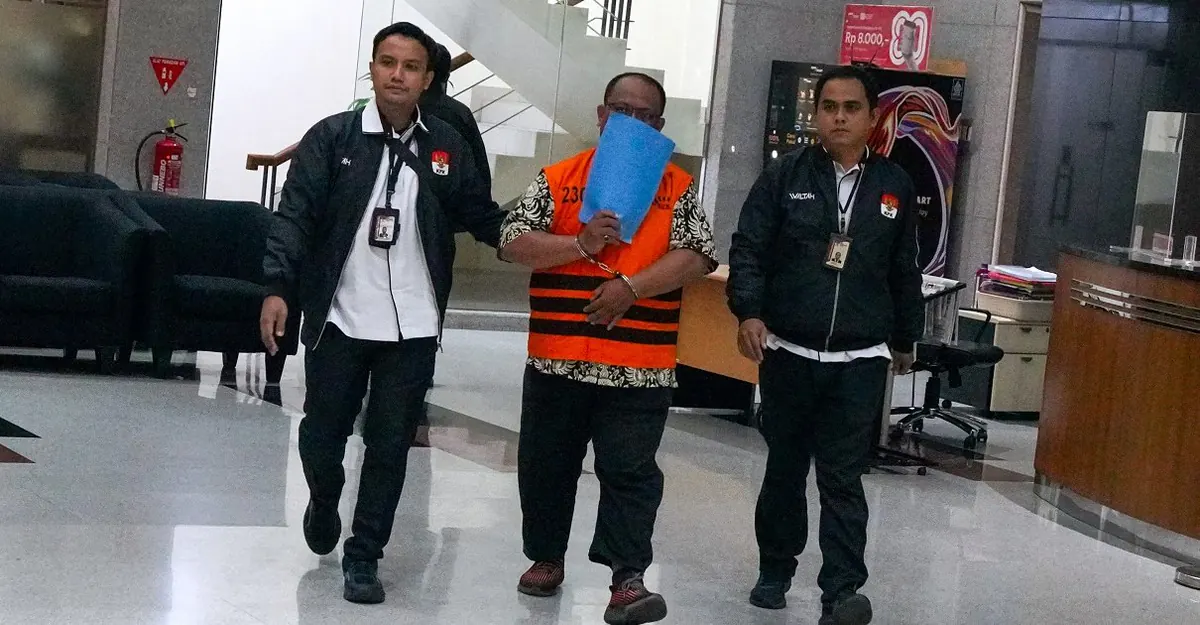
Investigators explored their knowledge of procurement stages funded by the DSP. The case began with a sting operation on 13 October 2026 and continued with the naming of five suspects a day later.
The five suspects named are Bima Setiawan, Richard Erlangga, Gabriel Purwaka Sigit, Gery Prasetiawan, and Syifa Nrika Ghifarin. Their roles included expert staff, commitment-making officials, and private-sector parties.
Dana Siap Pakai and Procurement Risks
The Dana Siap Pakai, or Ready-to-Use Fund, is a budget item set aside for urgent needs during disasters. Its main characteristics are rapid disbursement and rapid use, because it can cover evacuation, logistics, heavy equipment, tents, medicines, and basic necessities. In emergency conditions, procurement rules may be accelerated so that aid is not delayed by administration. However, that acceleration still requires a price trail, specifications, beneficiaries, and evidence of accountability.
BNPB sits at the hub of national disaster management coordination, from preparedness and emergency response to recovery. The agency works with local governments, the Indonesian National Armed Forces (TNI), the Indonesian National Police (Polri), humanitarian organizations, and the business sector. As a result, procurement at BNPB can involve many parties: goods suppliers, consultants, commitment-making officials, and civil servants preparing documents. When budgets move quickly, gaps for error can appear at three points: determining needs, selecting providers, and inspecting results.
Public procurement is generally governed by principles of efficiency, effectiveness, transparency, and accountability. In emergencies, those principles are not erased but adjusted through special mechanisms. Investigators typically compare planning documents, contracts, minutes, and payment evidence. If there is a discrepancy between field needs and budget realization, that is where suspected deviations may arise. In cases still at the investigation stage, status terms must be read carefully. A witness is a person who gives testimony about events they heard, saw, or experienced. Questioning a witness does not mean the witness was involved. A suspect is a person suspected of committing a criminal act based on at least two pieces of evidence. A suspect is not declared guilty before a court verdict becomes final and binding. Therefore, the names in this report should be read as part of a law enforcement process, not as a verdict.
Sting operations and witness questioning are usually entry points for mapping budget flows. Investigators trace who proposed needs, who signed contracts, who received goods, and whether payments matched market prices. In disaster cases, the key question is not only whether goods were delivered, but whether the delivery was correct, necessary, and reasonably priced.
Impact on Disaster Response
For the public, this case touches a very practical issue: whether emergency funds actually reach affected residents. When disaster procurement is questioned, the effect is not limited to one contract; it can affect the speed of aid, the quality of logistics, and public trust. Residents in disaster-prone areas are entitled to appropriate assistance, while the state must ensure that every rupiah from the emergency budget does not turn into unsuitable goods or unreasonable prices.
What needs to be watched going forward is whether witness questioning produces clarification of documents and money flows, rather than serving as mere administrative formality. The public also needs to see whether BNPB improves emergency procurement mechanisms, such as needs recording, price validation, field supervision, and open reporting. If those systems are strengthened, cases like this can become a lesson so that emergency response remains fast without losing accountability.
The impact is also felt by donors and humanitarian institutions. They tend to demand clearer proof of fund use before channeling additional aid. For supplier companies, this investigation is a reminder that disaster contracts are not simply quick projects, but work that must be accountable until goods are received and used. For readers, the signals to watch are whether questioning continues to the naming of new suspects, whether related assets are recovered, and whether emergency response financial reports are opened to the public.