KPK Prosecutors Welcome Nine-Year Sentence for Former Customs Official Rizal
KPK prosecutors said the nine-year sentence for former customs enforcement director Rizal strengthened the proof in a bribery and gratification case at Indonesia's customs directorate
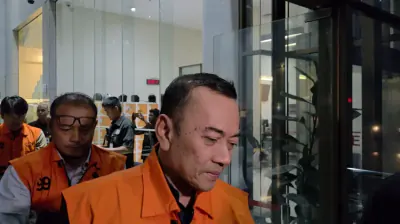
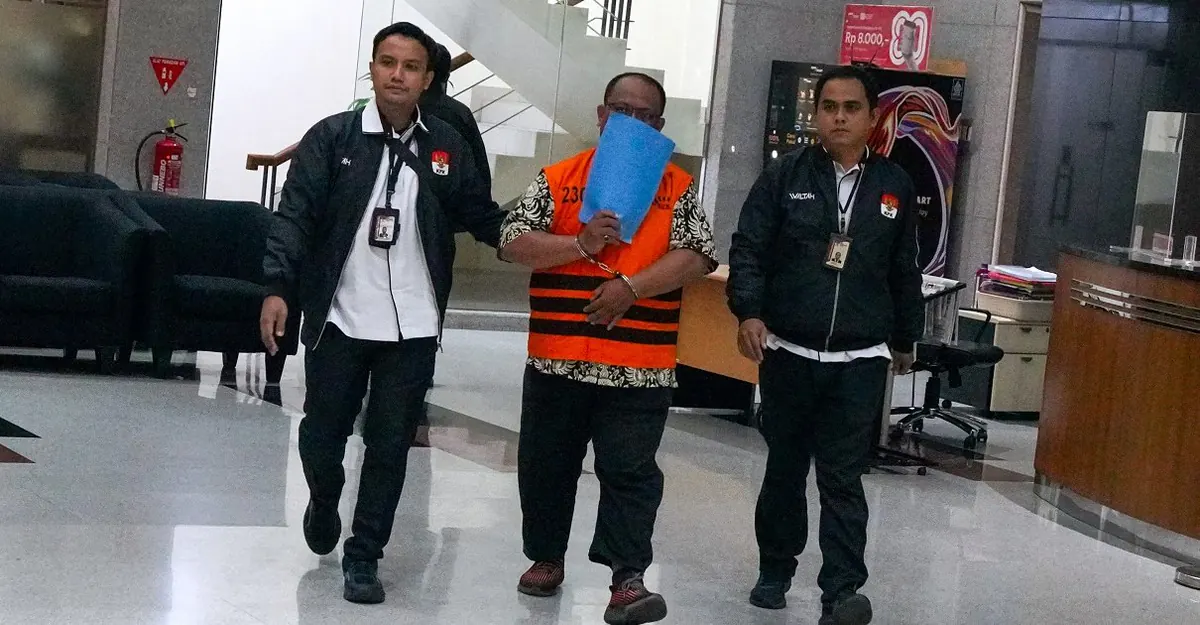
The prosecutors of Indonesia's Corruption Eradication Commission (KPK) welcomed the verdict by the panel of judges at the Jakarta Corruption Crimes Court (Pengadilan Tindak Pidana Korupsi Jakarta) against Rizal, the former director of enforcement and investigation at the Directorate General of Customs and Excise (Ditjen Bea Cukai), who was sentenced to nine years in prison on Thursday, 12 November 2026, in a bribery and gratification case within the customs directorate.
Prosecutor Takdir said, according to a report by public broadcaster Radio Republik Indonesia (RRI), that the judges' reasoning strengthened the prosecution team's analysis in the bribery and gratification case at Ditjen Bea Cukai.
Rizal was sentenced to nine years in prison, a fine of Rp1 billion, with 190 days' detention in lieu of payment, and a restitution payment of Rp15.7 billion. If the restitution is not paid after the verdict becomes final and binding, the defendant's assets may be confiscated; if they are insufficient, the unpaid portion would be replaced by two years in prison.
The judges also referred to financial records for Blueray's Sales 2, which showed money flows from Jhon Field. The code BC1 was said to have received Rp3 billion each month. “We are confident that this was one of the pieces of evidence that also strengthened the case,” Takdir said.
He urged further legal action against other parties mentioned in the judges' considerations, including Djaka Budhi Utama, after Jhon Field's verdict became final and binding.
The role of the Enforcement and Investigation Directorate in customs law enforcement
The Directorate General of Customs and Excise operates under the Finance Ministry (Kementerian Keuangan) and carries out two functions that can conflict: facilitating trade and supervising compliance. Its officers inspect import documents, assess goods, calculate import duties and excise, and detain goods suspected of violating rules. Because administrative decisions can determine the cost and speed of goods movement, posts in this environment are vulnerable to becoming objects of transactions. At ports and airports, an officer's decision can determine whether goods leave within hours or are held for days.
The Directorate of Enforcement and Investigation, commonly known as P2, is the internal unit that handles customs and excise violations. The unit can investigate suspected smuggling, document falsification, or misuse of import facilities. When investigators themselves are suspected of accepting bribes, the damage is not limited to a particular case; it undermines trust in the oversight mechanism that should be the institution's last safeguard.
In corruption cases, judges may impose an additional penalty in the form of a restitution payment. The aim is to recover value considered enjoyed by the defendant or to close state financial losses. The amount of restitution is determined by proof of money flows, assets, and testimony from related parties. If the convicted person does not pay after the verdict becomes final and binding, prosecutors may seize and auction assets; if that is insufficient, a detention penalty specified in the verdict is imposed.
The term “inkracht” is also important to understand. A first-instance verdict is not automatically final and binding as long as the defendant or prosecutors can still appeal. Therefore, a defendant convicted at first instance remains protected by the presumption of innocence until there is a final decision. In bribery cases, the use of code names or internal records is often a tool for tracing the recipients of funds, but it must be proven in court. Without that, the mention of other parties remains only an allegation. The KPK may also investigate possible money laundering if the flow of funds is structured.
The impact of customs integrity on prices and revenue
For businesses and consumers, customs integrity is not an abstract issue. Non-transparent inspections can raise compliance costs: importers who do not go along with the arrangement may face delays, storage costs, or the risk of goods being held. Conversely, bribery can allow illegal goods or goods that do not match their documents to enter more quickly, squeezing compliant industries and potentially flooding the market with products of uncertain quality. This can ultimately lead to higher prices for buyers.
From the state revenue side, import duties and excise are important components for financing public programs. If officials who are supposed to take enforcement action instead receive flows of money, the potential loss does not stop at the funds involved in the case; it also extends to goods that escape charges. Court rulings that require restitution payments are one way to recover part of those losses.
What the public should watch is the continuation of legal proceedings against other parties mentioned in the judges' considerations. Until suspects are named or a final and binding verdict is issued, those names remain allegations. However, pressure to improve the system — such as the digitalization of services, internal oversight, and transparent inspections — is becoming more relevant so that similar practices do not recur.