KPK probes alleged money flows and vendor appointments at BNPB
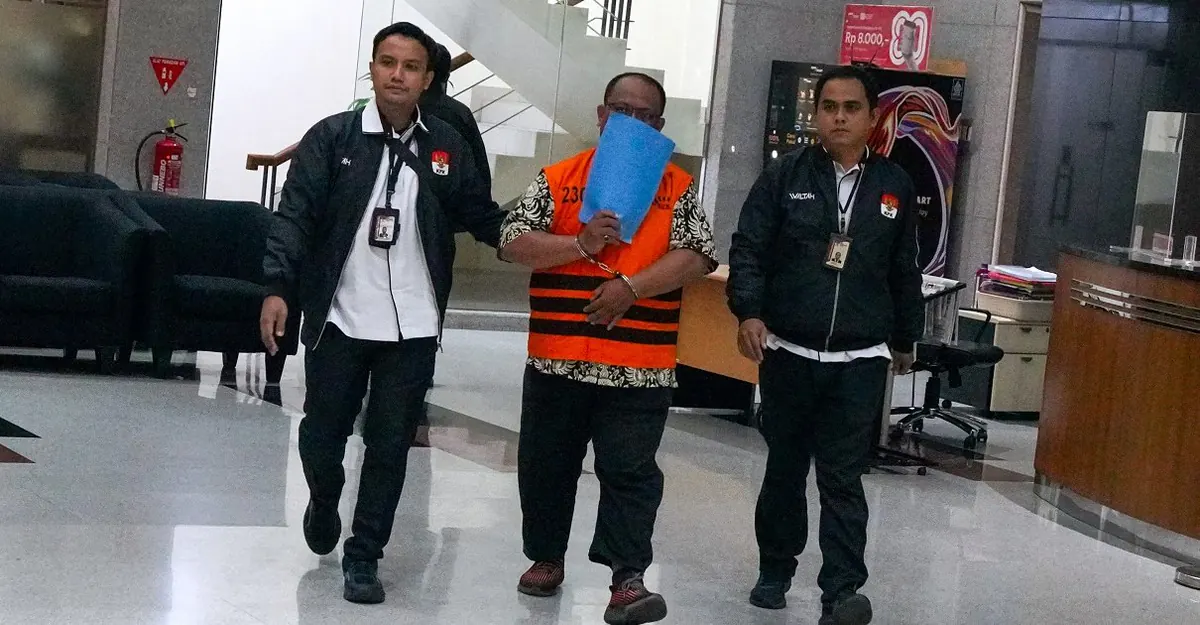
The Corruption Eradication Commission (KPK) questioned witnesses from the National Disaster Management Agency (BNPB) and the private sector to trace alleged money flows and vendor appointments in disaster procurement.
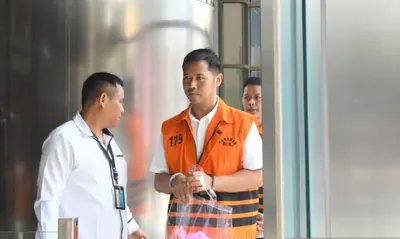
The Corruption Eradication Commission (KPK) is tracing allegations of money flowing to rogue officials at the National Disaster Management Agency (BNPB) in disaster procurement, according to a report by TVRI News.
Witness examinations involving state civil servants (ASN), former BNPB officials and private-sector parties were held from 9–12 November 2026 to trace procurement mechanisms, including the direct appointment of vendors. The projects under scrutiny related to forest and land fires (karhutla), hydrometeorological disasters and other disaster-response needs funded by the Ready-to-Use Fund (Dana Siap Pakai, DSP).
KPK spokesperson Budi Prasetyo said direct appointment was permissible in emergency conditions, but the mechanism was allegedly misused and raised suspected conflicts of interest. Investigators are also examining allegations that private parties repeatedly gave money to rogue BNPB officials, while calculating the value of the projects and the amount of kickbacks.
As part of that process, the KPK summoned several company directors and private-sector figures, including a commissioner of the company PT Trans Lintas Selaras with the initials IRF and a former BNPB deputy for logistics and equipment with the initials PD. Some witnesses appeared, while the attendance of others was not known.
Ready-to-Use Fund mechanism in disaster response
The Ready-to-Use Fund is a budget line designed for urgent needs when a disaster strikes. In emergencies, the government cannot always wait for normal procurement procedures because evacuation, logistics, health services and initial recovery must move quickly. For that reason, rules on government goods and services procurement allow shorter methods, including direct appointment, when emergency conditions are met. Without orderly records, the public can find it hard to distinguish needs that truly cannot be delayed from those made to appear urgent so competition can be avoided.
Such flexibility becomes a vulnerable point when urgency is equated with the need to choose a vendor without comparison. In normal procurement, price competition and technical selection serve to screen providers that are capable and suitable. In direct appointment, that function can be reduced if requirement documents are unclear, specifications are made too narrow, or close relationships between officials and companies are not supervised. Internal oversight also needs to record the reason for selecting a vendor, the work history of the company and potential conflicts of interest among the officials involved.
Kickback practices usually emerge when providers feel they must give rewards to keep projects flowing or to accelerate payments. The amount allegedly given is not always one large transaction, but can be a percentage of several jobs. Investigators therefore generally trace contracts, cash flows, communications and whether prices for goods or services match market conditions.
BNPB, the national disaster management agency, works across sectors, from equipment and logistics to emergency services. That complexity makes procurement in the disaster sector easy to test in public: on one hand the state must move quickly, while on the other every rupiah must be accountable. Alleged misuse of emergency funds often draws scrutiny because it concerns residents' safety, not only state losses. Audits of the DSP therefore usually require a clear separation between genuinely urgent technical needs, price compliance and proof that the selected vendor could supply goods or services within emergency deadlines.
What it means for the public and emergency services
For readers in Indonesia, the case touches public money that should become tents, food, medicine, evacuation equipment and fast services for people affected by disasters. If procurement is not clean, victims may receive goods that do not meet specifications, arrive late or are not distributed evenly. The impact can also be felt by taxpayers because emergency funds come from the state budget and must be accounted for.
For businesses, the case is a reminder that the speed of emergency tenders must not be used as a reason to ignore compliance. Companies working with BNPB need to ensure specifications, contracts and payments can be audited. For the public, the points to watch going forward are whether the KPK determines further legal status, whether BNPB improves governance of direct appointments, and whether DSP audit results are disclosed proportionally.
It must be emphasized that witness examinations do not mean a person is criminally involved. As long as there is no suspect designation and no court ruling with permanent legal force, all parties named in the report must be treated according to the presumption of innocence. The important value of this tracing is to provide certainty that emergency funds really reach residents, rather than ending as profit for certain parties.