Kemendikdasmen Pushes Education and Health Integration to Improve Human Capital Index
Kemendikdasmen says integrating education and health is key to raising Indonesia's human capital index, which the Statistics Agency recorded at 0.562 in 2025.
The Ministry of Primary and Secondary Education (Kemendikdasmen) is placing the integration of education and health as the entry point for improving Indonesia's human capital index. According to TVRI News, Indonesia's state television news service, the Statistics Agency (BPS) recorded the index at 0.562 in 2025, making it a cross-sector agenda.
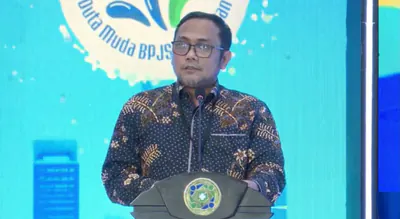
Abdullah Faqih, Expert Staff to the Minister for Talent Management at Kemendikdasmen, described raising the human capital index as a challenge that must be answered by preparing a generation that is healthy, educated and strong in character. He spoke at the Grand Final and Awarding of the BPJS Kesehatan Youth Ambassadors 2026, a programme under Indonesia's Health Insurance Agency (BPJS Kesehatan), on Thursday, 12 November 2026.
Faqih said the BPJS Kesehatan Youth Ambassadors programme could serve as a platform for shaping young people's character, solidarity and health literacy. He linked the agenda to the Seven Habits of Great Indonesian Children (Tujuh Kebiasaan Anak Indonesia Hebat) movement, which encourages waking up early, praying, exercising, eating healthily, loving to learn, engaging with society and going to bed early.
He referred to reports by the Organisation for Economic Co-operation and Development (OECD) and the World Economic Forum's Future of Jobs Report 2025. In those reports, 69 percent of employers place analytical thinking among core skills, together with resilience, flexibility and adaptability.
He urged the 12 finalists to serve as role models for a healthy lifestyle and to improve health literacy through various platforms. According to TVRI News, Faqih hoped the activities could be curated into the Student Talent Management Information System (SIMT) and linked to the Integrated Database for National Talent Management (BDT MTN).
Why the Human Capital Index Matters for the State
The human capital index is usually used to read the quality of the productive-age population in terms of health, education and skills. In that framework, schools are not only places for chasing graduation numbers, while health services are not only a hospital matter. The two meet in one goal: preparing people who are able to work, learn and contribute throughout their productive age.
For a country with a large population, this measure is important because economic growth does not depend only on the number of workers, but also on their quality. Children who are often sick, drop out of school or do not receive adequate nutrition will carry consequences for productivity later on. Conversely, healthy living habits and meaningful learning can extend a person's capacity to adapt to changes in technology and the labour market.
The issue also relates to how the government arranges cross-ministry policy. Education, health, employment and social protection are interconnected. When student talent data, health programmes and industry needs are not integrated, efforts to improve human resources quality can easily become fragmented into symbolic activities. National talent management therefore needs to be understood as a system for collecting data, developing and channeling potential, not merely competitions or awards.
In global education discourse, 21st-century competencies are often discussed as a combination of knowledge, skills, attitudes and values. This arises because jobs change faster than curricula. Digital literacy, the ability to work together and social awareness are part of readiness for life, not additions that can be ignored. In Indonesia, the same challenge is complicated by regional gaps. Access to quality schools, health facilities and safe learning spaces is not evenly distributed. Therefore, the integration of education and health cannot stop at slogans; it needs to be measured through learning outcomes, nutritional status, student attendance and the capacity of referral systems.
What Parents and Students Should Watch For
For Indonesian readers, the integration of education and health means daily habits become part of state policy. Getting enough sleep, eating a nutritious breakfast, exercising and accessing health services can no longer be seen only as private matters. When schools and community health centres (puskesmas) work more synchronously, children have a better chance of learning with bodies that are more ready.
The impact also touches the labour market. The reports referenced by Kemendikdasmen show that analytical ability, resilience and adaptability are valued by employers. This means students and parents need to look at achievements beyond report card grades: practising critical thinking, teamwork and health literacy can be preparation for finding work in the future.
Going forward, what needs to be watched is whether student talent data are truly used for development, not just record-keeping. If health and education programmes stop at ceremonial activities, the human capital index will be difficult to move. Transparency in outcomes and simple measurement tools in schools need to be ensured periodically so that policies do not add administrative burdens without clear benefits.