Indonesia's Foreign Ministry checks contracts of citizens said to have joined Russian army before repatriation
Indonesia's Ministry of Foreign Affairs (Kemlu) will review work contracts of Indonesian citizens suspected of serving as Russian soldiers before arranging their return.
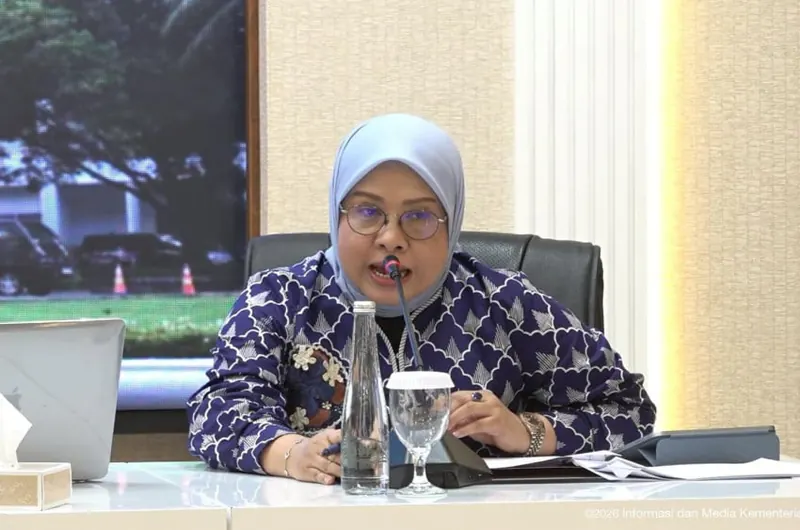
Indonesia’s Ministry of Foreign Affairs (Kemlu) will review the work contracts of Indonesian citizens suspected of having served as Russian soldiers before repatriating them to Indonesia. According to a report by SINDOnews, Heni Hamidah, the Foreign Ministry’s director of protection of Indonesian citizens, made the remarks at a press conference in Jakarta on Wednesday, 11 November 2026.
The government wants to ensure that the return does not violate the rules of the host country. Heni said, “We will first check the contracts they have signed.” If repatriation is possible, the contractual ties must be ended so that no contractual obligations stand in the way. The review is also being coordinated with domestic and foreign authorities. The Indonesian embassies (KBRI) in Moscow and Kyiv have been involved to ensure that the rights of Indonesian citizens are protected throughout the process.
Consular protection in cases involving workers abroad
Protecting citizens abroad is one of the Foreign Ministry’s routine tasks, carried out through its Directorate of Protection of Indonesian Citizens. When an Indonesian citizen is in a conflict area or becomes involved in a matter touching on local law, the state cannot simply bring the person home without taking sovereignty, administrative procedures and the individual’s rights into account. Checking the contracts is therefore the starting point for understanding the citizens’ legal position: whether they are bound by a work agreement, whether the agreement is valid, and whether repatriation can be carried out without creating new problems. Without such a review, the state risks bringing home citizens who remain bound by legal obligations, or leaving behind citizens who should receive consular assistance.
In cases involving migrant workers, a contract is not merely a formal document. Work contracts usually set out the position, duration, place of assignment, salary, prohibitions on leaving before the contract expires, and sanctions if either party fails to meet its obligations. If the contract was signed in unclear circumstances or does not match conditions on the ground, the worker may still be legally bound. That makes repatriation complicated, because the government must distinguish between the right to return, contractual obligations and the law of the host country.
The involvement of the Indonesian embassies in Moscow and Kyiv also shows that the response is not limited to a single country. Indonesian citizens in Russia or in areas around the conflict may have arrived through different routes: some left as prospective workers, some through agents, and some may have been affected by job promises that did not match reality. In consular protection practice, Indonesian missions abroad serve as the government’s eyes and ears: recording cases, facilitating communication, reaching those who need help and coordinating with local authorities.
The issue also touches on parliamentary oversight. The House of Representatives (DPR) can monitor whether policies for placing workers abroad, protection at vulnerable points and the budget for protecting Indonesian citizens are working effectively. When cases involving Indonesian workers emerge in conflict zones, the questions raised are not only about rescuing individuals but also about prevention: whether the recruitment system, education for prospective workers and enforcement against those who abuse job vacancies are strong enough. In the legislative arena, discussions could cover strengthening placement rules, sanctions for illegal recruiters and faster reporting mechanisms when Indonesian citizens are detected in countries experiencing conflict.
What prospective migrant workers should watch for
For readers in Indonesia, the news is a reminder that job offers abroad, especially in conflict areas, should not be judged only by the size of the salary or promises of a return on investment. Contracts that are not read, disguised job purposes and irresponsible agents can bind a person to a situation that is difficult to leave. Prospective migrant workers therefore need to ensure that the position offered matches their skills, that the place of assignment is clear, and that there are official channels for reporting irregularities.
The impact is also felt by families and communities. A worker who loses contact, is detained or is trapped by contractual obligations can cause psychological and financial burdens for the family. At the same time, cases like this push the government and parliament to tighten oversight of recruiters, improve public education and ensure that the state is present when citizens face legal problems abroad. For general readers, the most practical lesson is simple: do not sign an overseas work document before understanding its contents, rights and risks. Families sending a member to work abroad should also keep a copy of the contract, the address of the place of assignment and the official contact numbers of the Indonesian mission so they can trace the situation quickly if problems arise. Local governments, schools and migrant worker communities can also serve as entry points for education, so that job offers are not circulated unilaterally without verification.
Related coverage
Related coverage: The parliamentary group of the National Awakening Party (PAN) urges the government to improve public outreach and fairness in the Tapera housing savings scheme; the National Democratic Party (NasDem) marks its 15th anniversary, with Lola Nelria highlighting a commitment to change; and Arun urges Commission III of the House of Representatives (DPR) to accelerate the Asset Forfeiture Bill.