Indonesian National Police Chief Emphasises Brimob Professionalism at 81st Anniversary
National Police Chief General Suyudi Ario Seto stressed professionalism, solidarity and integrity at the 81st anniversary of the Mobile Brigade Corps (Brimob) in Depok, West Java, on Monday, 16 November 2026.
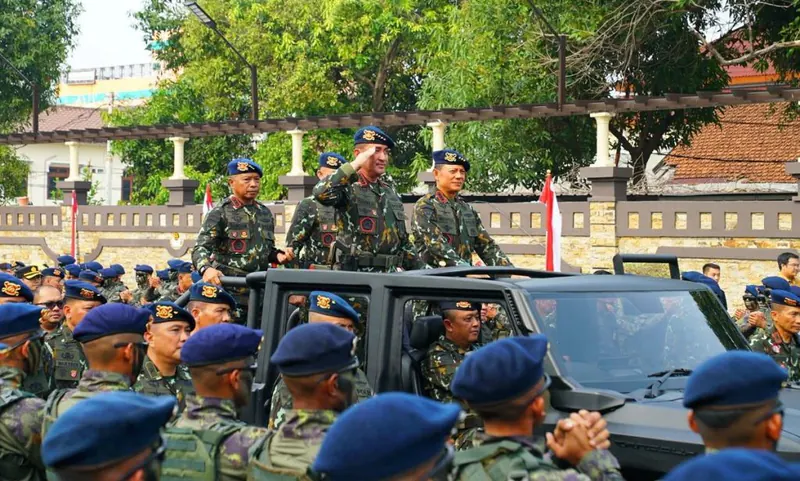
Indonesian National Police Chief (Kapolri) General Suyudi Ario Seto marked the 81st anniversary of the Mobile Brigade Corps (Brimob) of the Indonesian National Police at the Satya Haprabu Building, Brimob Corps Command Headquarters (Markas Komando Korps Brimob Polri), in Depok, West Java, on Monday, 16 November 2026, with a central message on professionalism, solidarity and integrity.
According to a report by InfoPublik, the government’s public information portal, the theme “Brimob with the Community” was used for the peak celebration, which falls every 14 November. The police chief praised Brimob’s dedication and loyalty over 81 years in safeguarding state security, responding to changing operational demands and protecting the public.
On the occasion, the police chief also urged Brimob personnel to strengthen ties with the community and to promote a humanist approach. He called on the wider Brimob family to protect the institution’s honour and build public trust through professional, humanist and responsible service.
The celebration included the conferral of honorary citizenship of the Brimob Corps on 32 figures drawn from state officials, police personnel and the public. The police chief also presented a Gold Pin and educational assistance to selected personnel, before continuing the programme with the cutting of a tumpeng, a traditional cone-shaped rice dish.
Before the thanksgiving ceremony, the police chief and other officials inaugurated four plaques, including the naming of the Bhayangkara Brimob Hospital, a police hospital, as “dr. Hadiman”.
Brimob’s Role in Domestic Security
Brimob is a special corps of the Indonesian National Police established for high-risk tasks beyond the capacity of ordinary police units. It combines paramilitary capability with police functions. Its personnel are organised in mobile units and can be deployed across regions when public order, terrorism, hostage situations or disaster response require rapid reinforcement. The term paramilitary does not mean operating outside the law; Brimob personnel remain subject to police regulations, internal oversight mechanisms and criminal accountability.
Within the Indonesian National Police structure, Brimob is usually led by a corps commander at the rank of commissioner general. The corps is distinct from the sabhara, or public order and security, function, which focuses more on maintaining local public order and safety. Brimob is deployed when threats escalate, such as large-scale riots, counter-terrorism operations or the securing of national vital objects. For that reason, its personnel training emphasises discipline, tactics, weapons use, as well as negotiation and rescue skills.
Brimob’s long history also explains why anniversary commemorations are often used as moments for internal consolidation. The corps traces its roots to the formation of the Mobile Brigade on 14 November 1945, in the early years of the Republic of Indonesia, when the state needed a mobile force to maintain security in unstable areas. From that history, Brimob has become a symbol of the police’s readiness in operations demanding speed, firmness and coordination across agencies. It is now also involved in humanitarian operations, including disaster evacuation and the recovery of basic infrastructure.
The values of professionalism, solidarity and integrity emphasised at such commemorations are not merely organisational slogans. In modern policing, professionalism means personnel have competencies suited to the threats they face. Solidarity relates to chain of command and cooperation between units, while integrity concerns public trust. Without all three, the Indonesian National Police’s use of armed force can raise legal, social and political questions. In practice, a humanist approach acts as a balance: professional force must remain publicly accountable to citizens, not only to the state, and must be acceptable to society.
Impact on Public Trust and Security Services
For citizens, the emphasis on professionalism and integrity within Brimob touches everyday concerns: feeling safe while going about daily life, the presence of security forces during disasters, and how the state handles demonstrations or social conflict. This matters for workers, students and road users who depend on security stability. If units equipped with paramilitary capabilities act in line with procedures, the public can more easily judge that police actions are proportionate and subject to oversight.
Another relevance is seen in domestic security policy. Brimob often serves as a rapid enforcement force, so its training standards affect the quality of counter-terrorism, the security of vital objects and humanitarian operations. In disaster-prone areas, these capabilities also determine the speed of evacuation and aid distribution. The public is entitled to demand transparency when such a unit is deployed, because the use of armed force carries major legal and social consequences.
Going forward, what matters is not only anniversary ceremonies but the implementation of those values in every operation. Internal oversight, public complaint mechanisms and human rights training are the measures of whether Brimob truly serves as a protector of citizens. For Indonesian readers, the main message is simple: professional security forces make public spaces safer and make it easier to restore trust in the state.