Indonesia's security affairs coordinating minister urges police intelligence to prepare sharp plan for 2024 regional elections
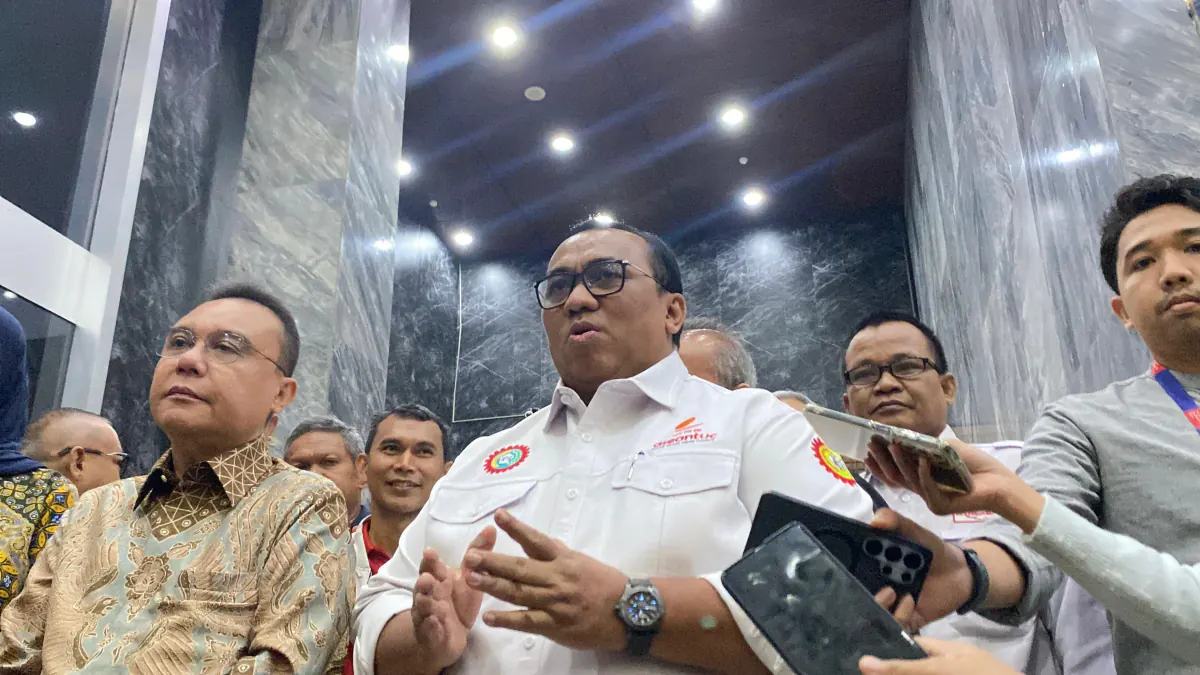
Coordinating Minister for Political, Legal and Security Affairs Hadi Tjahjanto has asked Baintelkam Polri, the police security intelligence agency, to prepare a sharp plan to anticipate risks in the 2024 regional elections.
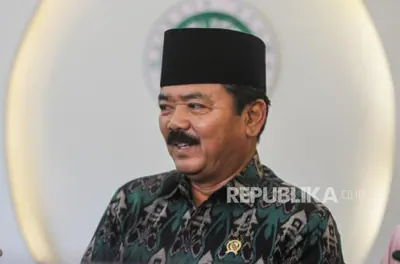
Coordinating Minister for Political, Legal and Security Affairs Hadi Tjahjanto, a retired air marshal, has asked the Indonesian National Police's Security Intelligence Agency (Baintelkam Polri) to draw up a sharp intelligence plan to anticipate threats and disturbances in the 2024 regional head elections, or Pilkada, at the agency's 2024 technical coordination meeting in Jakarta on Tuesday, as reported by Republika.
Hadi said the vulnerability of the local election stages could rise to medium and high levels. According to Republika, he said careful planning was needed from the earliest stages through implementation.
“The intelligence estimate then escalates to medium to high,” Hadi said. He noted that Pilkada 2024 would be held simultaneously for the first time across 37 provinces, 93 cities and 415 regencies, spreading security forces over many areas.
He did not detail the threats being watched, but said Papua needed special attention because its security situation was dynamic. Republika reported that the Strategic Intelligence Agency of the Indonesian National Armed Forces (TNI) placed six provinces in Papua in the high-vulnerability category of the Pilkada 2024 Vulnerability Index, while voting is scheduled for 27 November 2024.
The role of security intelligence in local elections
The call for security intelligence to prepare a “sharp plan” should be read in the context of Baintelkam Polri's duties. The agency is not an election organiser; it is part of the police and carries out security intelligence functions. In elections, its main role is usually to map potential disturbances, issue early warnings and provide security recommendations to police leadership and relevant agencies. In the field, security intelligence products typically take the form of vulnerability maps, patrol schedules and mitigation scenarios. Its focus is stability, not running the vote count or handling result disputes.
Vulnerability indices produced by intelligence agencies are usually tools, not verdicts that a region will definitely have problems. Such indices generally assess geographic factors, conflict history, population density, limited transport, inter-regional communication, mass mobilisation and potential friction between supporters. Areas with high scores can still hold safe local elections if security coordination, logistics and oversight work well. The public should therefore read the index as a signal of vigilance, not a stigma.
Pilkada 2024 carries its own burden because it follows the presidential and legislative elections held in the same year. Local contests often involve family networks, patronage and powerful regional elites. Potential vulnerability therefore is not limited to physical violence; it can also include social pressure, hoaxes, money politics and disruption to the distribution of ballots and ballot boxes to remote areas. Oversight by the General Elections Supervisory Agency (Bawaslu) and citizen participation are important complements. Security intelligence does not replace electoral legal mechanisms, but helps ensure public space remains safe for voters, organisers and candidates.
Papua is often described as vulnerable because of mountain terrain, limited access and a history of security disturbances. In a local election, challenges such as these require more detailed planning: logistics distribution routes, security locations for polling stations (TPS), communication with traditional leaders, and anticipation of weather and transport problems. That approach also requires coordination with local governments, the General Elections Commission (KPU) and district and city authorities. Sharp intelligence means being able to predict problem points, not merely adding personnel.
Impact on regional stability
For voters, election vulnerability is not only a matter for security forces. Elected regional heads set the direction of regional budgets, health services, education, village infrastructure and small business permits. If election stages are disrupted by conflict, repeat voting or prolonged disputes, public decisions can be delayed. That can also hamper ongoing development and reduce citizens' trust in local democracy. The impact is especially felt in regions that depend on central transfer funds.
In areas with high vulnerability scores, residents need to pay closer attention to everyday security from the campaign period through voting day. Logistics disruptions, for example, can force officers to take dangerous routes or delay ballot distribution. Early intelligence warnings should therefore lead to measured steps: securing polling stations, communicating with the public and having rapid mechanisms to handle incidents without triggering new friction. Citizens also need to maintain order while attending campaigns.
Another relevance lies in cost and market confidence. A safe local election allows regional spending to focus on services rather than conflict management. Conversely, security uncertainty can hold back projects, slow bureaucracy and cause local investors to postpone expansion. For readers in the regions, the question to watch is whether early warnings become preventive action, not just reports.