Indonesia’s election watchdog pushes digital oversight for 2029 polls
Bawaslu Chairman Rahmat Bagja has urged digital transformation to strengthen election oversight governance toward the 2029 general election.
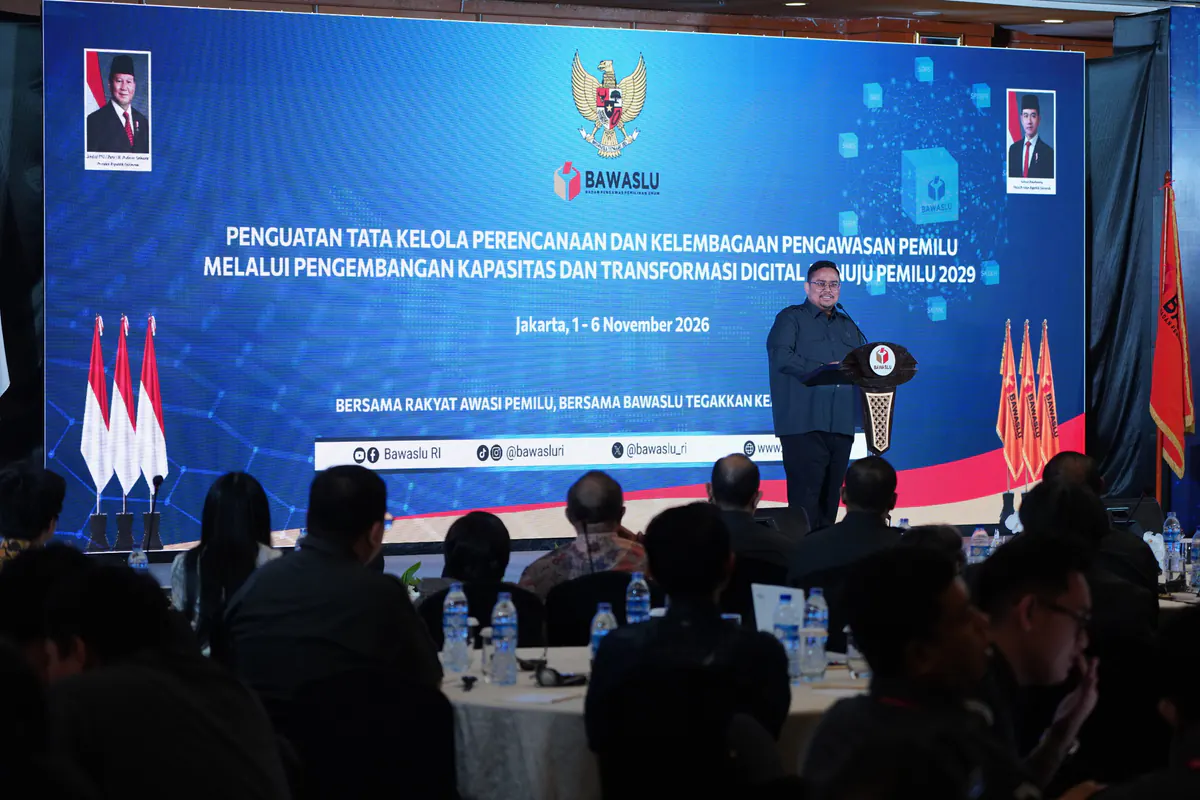
Indonesia’s General Elections Supervisory Agency (Bawaslu) Chairman Rahmat Bagja has called for faster digital transformation to strengthen the governance of the country’s election watchdog, at an event in Jakarta on Monday, 2 November 2026, according to a Bawaslu report.
Bagja said Bawaslu needed to move away from manual work and physical documents. Digitalisation should cover administration, documentation and oversight so that institutional information is easier to access and fully recorded.
He stressed that violation enforcement must improve on the previous period. “Issues related to the enforcement functions of the election supervisory agency must be better than before,” he said.
Bawaslu Deputy for Technical Support Yusti Erlina said digital transformation should not stop at building applications or procuring devices. She also flagged the risks posed by artificial intelligence (AI) for deepfakes, automated accounts and disinformation ahead of the 2029 general election.
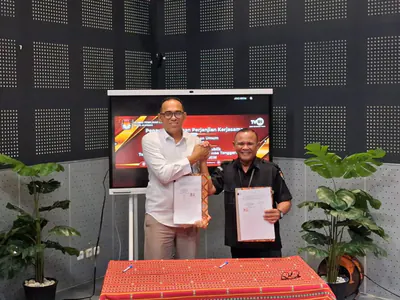
The event, titled “Penguatan Tata Kelola Perencanaan dan Kelembagaan Pengawas Pemilu Melalui Pengembangan Kapasitas dan Transformasi Digital Menuju Pemilu 2029”, or “Strengthening the planning and institutional governance of election supervisors through capacity building and digital transformation toward the 2029 elections”, was held as part of capacity building for Bawaslu civil servants.
Safeguarding oversight evidence in the digital era
Bawaslu is a state institution that oversees elections, prevents violations, handles breaches and resolves disputes over the election process. That framework is set out in Law No. 7 of 2017 on Elections. In practice, the watchdog’s work covers every stage, from updating voter data and setting election participants to campaigning, voting and the recapitulation of results. Each stage produces documents, reports and decisions that must be preserved as part of the record of how the election was run.
Neat records are a key part of oversight accountability. When the public reports suspected violations, supervisors must be able to show when the report was received, who examined it, what evidence was gathered and why a case was continued or closed. If files are kept only in physical documents or local copies, that process can be slow, inconsistent across regions and hard to audit. In areas with difficult terrain, reliance on paper files also increases the risk of delays in reporting to the central agency.
In the context of bureaucracy, digital transformation is not simply moving paper into PDF format. What matters more is data governance: file naming, metadata, access rights, integration between units, and the ability to track changes over time. Artificial intelligence can help sort reports, detect patterns or summarise documents, but its output depends on the quality of the data entered. Without such standards, a barcode, application or dashboard becomes only administrative decoration.
The main actors in the election oversight ecosystem include Bawaslu, the General Elections Commission (KPU), the Election Organizers Honor Council (DKPP), political parties, candidates, digital platforms and voters. Each has different interests and roles. Therefore, the watchdog’s digital systems must be designed not as a black box, but as a tool that strengthens transparency, interagency coordination and public trust in election results. Election dispute experience also shows that differing interpretations often arise from unsynchronised data across regions. The public is entitled to clear information about the oversight process, not just final results.
Impact on voters and campaign information
For voters, digitalising Bawaslu’s governance can mean faster and more accountable oversight. If public reports are recorded properly, citizens can follow the progress of cases, while supervisors across regions work to the same standard. This matters because elections are no longer held only at polling stations, but also in social media timelines. In this way, citizens do not merely receive information; they can also assess the process.
Another area of relevance is the risk of false information. AI-generated campaign content, including synthetic video or audio, can appear within minutes and spread across platforms. Without adequate identification and coordination, voters may be misled by narratives that seem convincing. Bawaslu’s readiness for the 2029 election should therefore be measured not by the number of applications it has, but by the speed of its analysis and the clarity of its explanations to the public.
What must be watched going forward is budget continuity, personal data protection, and digital literacy among election organisers and voters. Technological transformation can improve efficiency, but it also creates new risks if oversight data is not safeguarded. For Indonesian readers, the most tangible impact is the quality of election information: whether every suspected violation can be traced, verified and explained openly without ignoring the presumption of innocence.
Related coverage
Hanura strengthens structure down to village level in Papua ahead of 2029 elections