Indonesia's Coordinating Minister Urges Mass Organizations to Strengthen Unity and Food Security
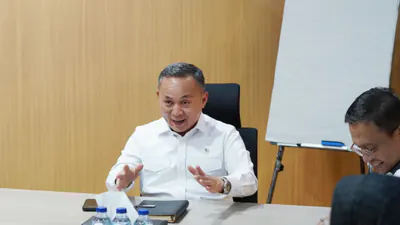
Coordinating Minister for Political Affairs and Security Dudung Abdurachman called on mass organizations and young people to strengthen Pancasila and support national food security programs.
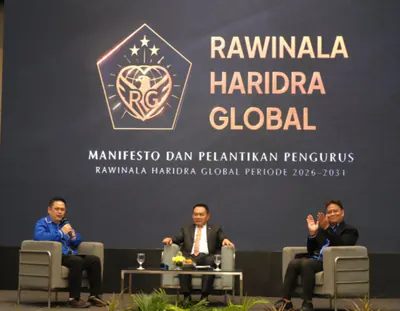
Coordinating Minister for Political Affairs and Security (Menko Polkam) Dudung Abdurachman has called on mass organizations (ormas), young people and all segments of society to strengthen national unity by making Pancasila, Indonesia's state philosophy, the foundation of national and state life. He made the remarks on Saturday, 21 November 2026, as reported by TVRI News.
Dudung said Indonesia's diversity of ethnicities, religions, languages and cultures was both a national wealth and a source of strength that must be protected. He described Pancasila as the main foundation binding all elements of the nation together amid differences.
According to Dudung, preserving unity is not only the responsibility of the government and state institutions, but also requires active participation from society, including mass organizations. He said ormas have a strategic role in building social solidarity and acting as a glue for national unity.
He also linked unity with concrete efforts to improve people's welfare. The government is promoting the Makan Bergizi Gratis (Free Nutritious Meals) program, the Koperasi Desa/Kelurahan Merah Putih (Red and White Village/Subdistrict Cooperatives), Kampung Nelayan (Fishermen Villages), Sekolah Garuda (Garuda Schools), Sekolah Rakyat (People's Schools), school revitalization and stronger food security.
Dudung emphasized that food security is a foundation of national resilience amid global conflicts and uncertainty. He said efforts include expanding planted areas, opening new rice fields, building agricultural infrastructure and providing subsidized fertilizer that is affordable for farmers.
Role of Mass Organizations in Safeguarding National Stability
Mass organizations in Indonesia have a long history as bridges between the state and society. Since the independence era, many organizations based on religion, profession and ethnicity grew before modern bureaucratic structures, making them social spaces close to citizens. In political terms, ormas often serve as channels for aspirations, drivers of social activity and partners of the government in community empowerment programs.
Pancasila was designed to accommodate Indonesia's diversity. Its values of belief in God, humanity, unity, popular sovereignty and social justice provide a meeting point for groups with different identities. When the government calls on mass organizations to revive those values, the message is that national stability cannot be upheld by law enforcement or security alone, but also by social cohesion at the grassroots.
Programs mentioned by Dudung, including Makan Bergizi Gratis, Koperasi Desa Merah Putih and Sekolah Rakyat, are part of a development agenda focused on more equitable basic services. Such programs usually target vulnerable groups, including poor families, children and rural communities that have long struggled to access adequate education or nutrition services.
Food security is a strategic issue because Indonesia still depends on imports for some food commodities. Disruptions to global supply chains, climate change and conflicts in various regions can affect prices of rice, sugar and other staples. Globally, food security is also a measure of national sovereignty because food availability influences social and political stability. Without adequate food reserves, price pressures in world markets can more easily spill over to domestic consumers. Strengthening domestic production through subsidized fertilizer and expanded farmland is one way to reduce those risks.
Impact on Daily Life
For readers in Indonesia, the coordinating minister's call touches issues that are felt directly in everyday life. Makan Bergizi Gratis, for example, relates to household spending on food for schoolchildren. If implemented effectively, the program can ease family food budgets while supporting better nutrition.
Koperasi Desa dan Kelurahan Merah Putih are also relevant for residents who depend on local economies. Cooperatives can serve as distribution channels for basic needs, financing for small businesses and buyers of farm produce. However, the success of such programs depends heavily on transparent management and oversight at the village level.
Strengthening food security and fertilizer subsidies affects prices of rice and other staples in the market. When domestic production rises and fertilizer costs become more affordable, farmers have a better chance of maintaining business margins without significantly raising selling prices. Conversely, if fertilizer distribution is not targeted properly, small farmers will still face difficulties.
The call for young people to move to villages and take part in agriculture also has social implications. Continued urbanization has left many villages short of productive labor. Involving youth, especially those with technology and management skills, can help modernize local agriculture. But real incentives such as access to capital, land and market guarantees are still needed so the appeal does not remain just words.