Prabowo Witnesses 35 Indonesia-China Business Deals Worth Rp274 Trillion
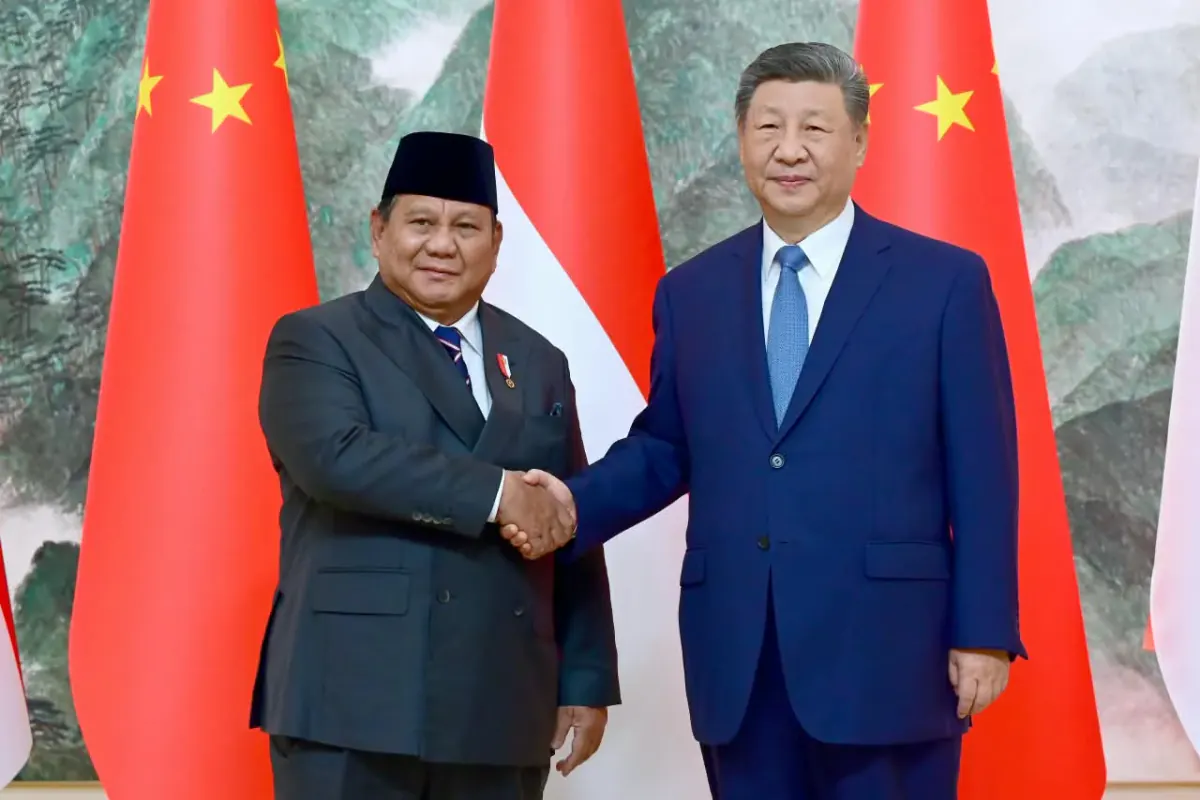
President Prabowo Subianto witnessed 35 Indonesia-China business agreements in Shenzhen worth about Rp274 trillion (US$15 billion), covering energy, manufacturing and digital projects.
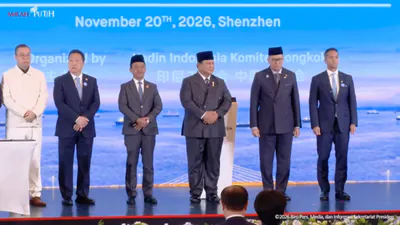
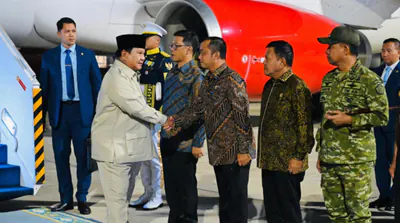
Indonesian President Prabowo Subianto witnessed the signing of 35 Indonesia-China business cooperation agreements at the 2026 Indonesia-China Business Forum (Forum Bisnis Indonesia-Tiongkok 2026) in Shenzhen on Friday, 20 November 2026, with investment value of about Rp274 trillion (US$15 billion).
According to state broadcaster TVRI News, the agreements cover industrial estates, petrochemicals, new and renewable energy, manufacturing, electric vehicles, digital technology, data centers, pharmaceuticals and vaccines, and infrastructure. The projects are projected to create more than 30,000 jobs.
Prabowo said the Shenzhen meeting had produced positive results for Indonesia. He said the series of agreements showed that economic cooperation opportunities between the two countries were broadening, and called on businesses to strengthen concrete cooperation for shared prosperity.
Before the forum, Prabowo met leaders of several major Chinese companies already investing in Indonesia. He also referred to plans for 10 future smart cities, artificial intelligence-based digital education, and a memorandum of understanding (MoU) and investment commitments worth US$71.8 billion the previous day.
Mapping Indonesia-China cooperation
China (Tiongkok) is one of Indonesia's main partners in trade, investment and infrastructure development. The two countries' economic ties operate within a strategic partnership framework spanning cross-sector projects, from processing industries and energy to transport and digital technology. At business forums such as the one in Shenzhen, governments usually sign or witness agreements, while project execution rests with companies from each country. The presence of a head of state signals political priority for the projects, but they still must pass legal and fiscal mechanisms. For regions, foreign investment also requires ready land, workers and supporting facilities.
In international cooperation, a memorandum of understanding (MoU) differs from a binding investment contract. An MoU usually sets out intent, scope and follow-up framework, while large investment figures can change depending on due diligence, permits, financing and project readiness. The values announced at the forum should therefore be read as initial potential, not certainty that will be realized immediately. Without periodic reporting, the public can find it difficult to assess whether the commitments are actually progressing or ending as joint statements. Public oversight of investment realization is also important so commitments are not only recorded in forum news.
The sectors named in the agreements also show the direction of Indonesia's industrial policy. Downstreaming means pushing raw materials to be processed domestically so that added value, jobs and state revenue are larger. New and renewable energy, electric vehicles and data centers are part of the energy transition and digital economy agenda. Both require reliable electricity supply, regulation, human resources and mature supply chains.
The terms future smart cities and artificial intelligence-based digital education should also be understood as long-term projects. Smart cities typically combine sensors, networks, data and public services to manage traffic, energy, water and security. Meanwhile, using artificial intelligence (AI) in schools requires curriculum, devices, teachers and personal data governance. Without such readiness, technology cooperation risks stopping at device purchases.
Real impact for society
For Indonesian readers, announced investment values become good news only if they lead to jobs, products and affordable services. The manufacturing, electric vehicle and downstreaming sectors can absorb local workers if factories or supply chains are built domestically. But promised jobs need to be measured by contracts, absorption of Indonesian workers, technology transfer and contributions to local suppliers. If projects proceed, effects may be visible in component prices, small business opportunities and regional tax receipts.
The impact also touches daily needs. Data centers and digital technology can improve public services, education and connectivity, but bring risks of data leaks and dependence on foreign devices. Schools receiving technology assistance need to ensure trained teachers, curriculum-appropriate content and protected student data. Meanwhile, the energy transition and electric vehicles can reduce pollution, but require clean electricity, charging stations and reasonable prices.
Therefore, what needs to be monitored is not only the trillion-rupiah figures, but their follow-up: whether agreements become contracts, whether environmental and labor permits are met, and whether benefits are felt in the regions where projects operate. For the public, healthy cooperation is cooperation that opens access, not merely adding to a list of projects.