President Prabowo returns to Jakarta after ASEAN and APEC summits
President Prabowo arrived at Halim Perdanakusuma Air Force Base after attending the ASEAN summit in Manila and the APEC leaders' meeting in Shenzhen.
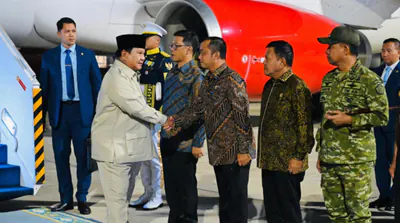
President Prabowo Subianto arrived at Halim Perdanakusuma Air Force Base of the Indonesian Air Force (TNI AU) in Jakarta on Friday night, 20 November 2026, after completing visits to the Philippines and the People's Republic of China.
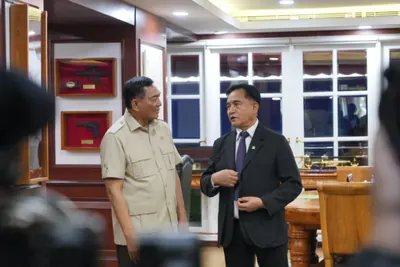
According to TVRI News, Prabowo was greeted by Coordinating Minister for Human Development and Cultural Affairs (Menko PMK) Sugioni, Minister of State Secretariat (Mensesneg) Prasetyo Hadi, Commander of the Indonesian National Armed Forces (TNI) General Agus Subianto, Chief of the Indonesian National Police (Kapolri) General Suyudi Ario Seto, and Head of the State Intelligence Agency (BIN) Muhammad Herindra.
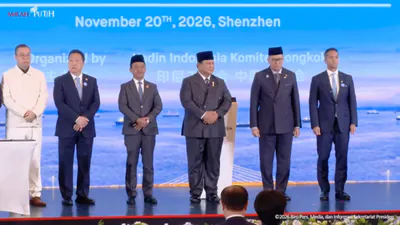
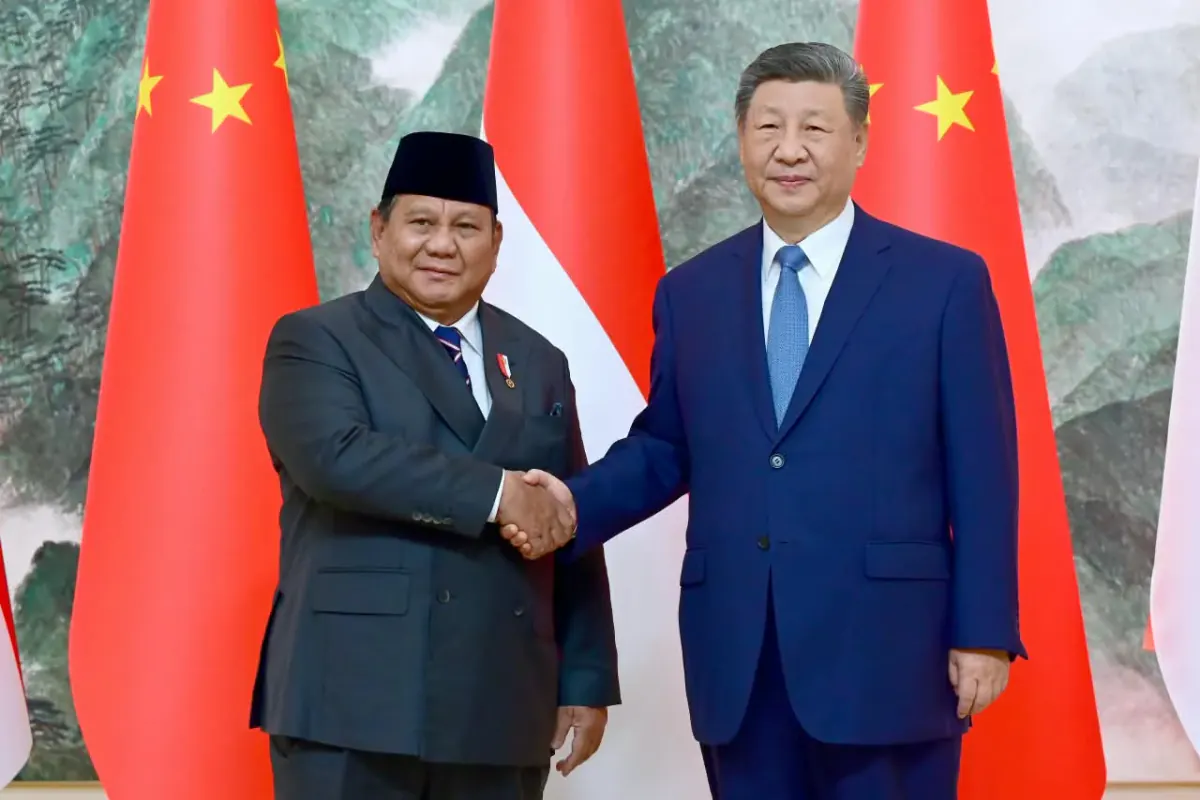
The trip included the 49th summit of the Association of Southeast Asian Nations (ASEAN) in Manila and the 33rd Asia-Pacific Economic Cooperation (APEC) Economic Leaders' Meeting in Shenzhen. Between the two gatherings, Prabowo met Chinese President Xi Jinping and Russian President Vladimir Putin, then attended the Indonesia-China Business Forum 2026.
In Shenzhen, he witnessed the signing of memoranda of understanding (MoUs) worth US$86.8 billion, or nearly Rp1,600 trillion. On the return flight, Prabowo was accompanied by Coordinating Minister for Downstreaming and Energy Transition Bahlil Lahadalia, Minister of Investment and Downstreaming Rosan Roeslani, who also heads the state investment management agency BPI Danantara, and Cabinet Secretary Teddy Indra Wijaya.
The agenda closed a series of multilateral and bilateral diplomacy aimed at strengthening Indonesia's position in the region and opening opportunities for economic cooperation with partner countries. The participation showed Indonesia's desire to maintain mutually beneficial relations with foreign partners.
The role of ASEAN and APEC in diplomacy
ASEAN is a forum for Southeast Asian countries to discuss regional stability, connectivity, economic cooperation and a common stance toward external partners. For Indonesia, the forum is a space to preserve regional centrality so that Southeast Asian interests are not swallowed by great-power competition. Summits at head-of-state level usually produce joint statements, action plans or political agreements that ministries and agencies must follow up. Issues that typically come up include maritime stability, trade, food security and worker mobility.
APEC is broader, covering economies across the Asia-Pacific. Unlike the World Trade Organization (WTO), it does not produce binding trade agreements; instead, it promotes trade facilitation, investment, the digital economy, energy transition and supply chains. Indonesia's presence matters because many of its main trade partners are in the Asia-Pacific, including China, Japan, South Korea, the United States and fellow ASEAN members. APEC discussions often also touch product standards, customs, logistics and cooperation with micro, small and medium enterprises (UMKM).
The MoUs witnessed by the president should also be read as an initial stage. Memoranda of understanding generally set out cooperation frameworks, investment interest or political commitments, but they do not automatically mean money has reached project accounts. After signing, due diligence, permits, contracts, financing and oversight are usually needed before plans become real. Large MoU figures are therefore often a signal of opportunity rather than a guarantee. The public is also entitled to wait for a clearer list of projects, locations, sectors and deadlines.
For the government, such trips are also a tool to promote domestic priorities, especially downstreaming and the energy transition. Downstreaming means processing raw materials inside Indonesia to create more added value, generate jobs and reduce dependence on raw commodity exports. That direction requires capital, technology and markets, so cooperation with partner countries is part of a broader economic strategy. Success should therefore be measured by follow-up, not ceremony. Foreign partners can bring technology, but the government still needs to ensure the benefits are spread rather than concentrated in a few companies.
Impact on workers and prices
For readers in Indonesia, the results of foreign trips are rarely felt immediately in rice prices or electricity tariffs. The influence is more gradual, moving through policy, investment contracts and trade flows. If the MoUs become real projects, the impact may appear as jobs, demand for local raw materials or export opportunities. If they are not followed up, the public will see only political ceremony without economic change.
What the public should watch is transparency in implementation. Large investment values need to be reported regularly, including projects that are operating, still in the permitting stage or cancelled. Economic cooperation also requires environmental protection, occupational safety and knowledge transfer so local communities are not left as spectators.
For consumers, trade and investment deals can affect the prices of imported goods, energy availability and the competitiveness of domestic products. But those effects cannot be tied to a single trip. The most immediate measure of success is whether workers, small businesses and households feel more manageable costs and more tangible business opportunities. Local governments also need to ensure new projects benefit nearby residents.
Related news
- Jakarta criminal cases: from theft to 11.675 kg of methamphetamine
- Coordinating Minister for Political, Legal and Security Affairs urges police to get closer to the public and safeguard presidential priority programs
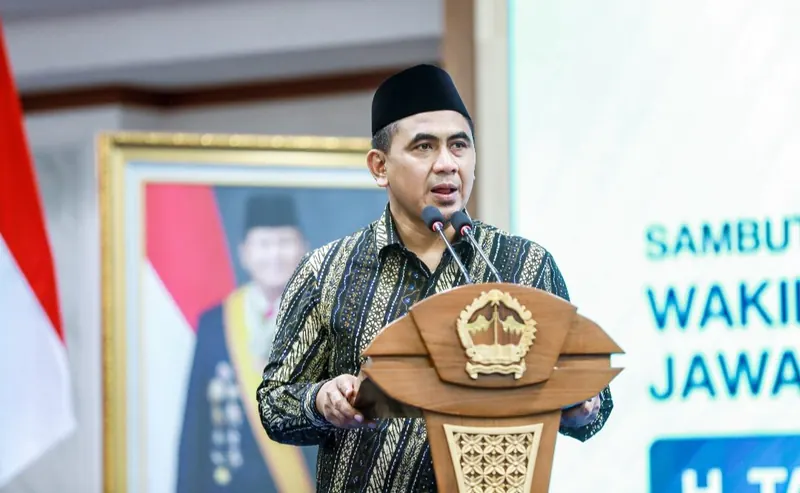
- Taj Yasin asks government programs to drive Central Java's local economy