Indonesia ratifies WAICO membership to deepen global AI cooperation
President Prabowo Subianto said Indonesia has completed its ratification of WAICO membership, opening access to global AI research and cooperation.
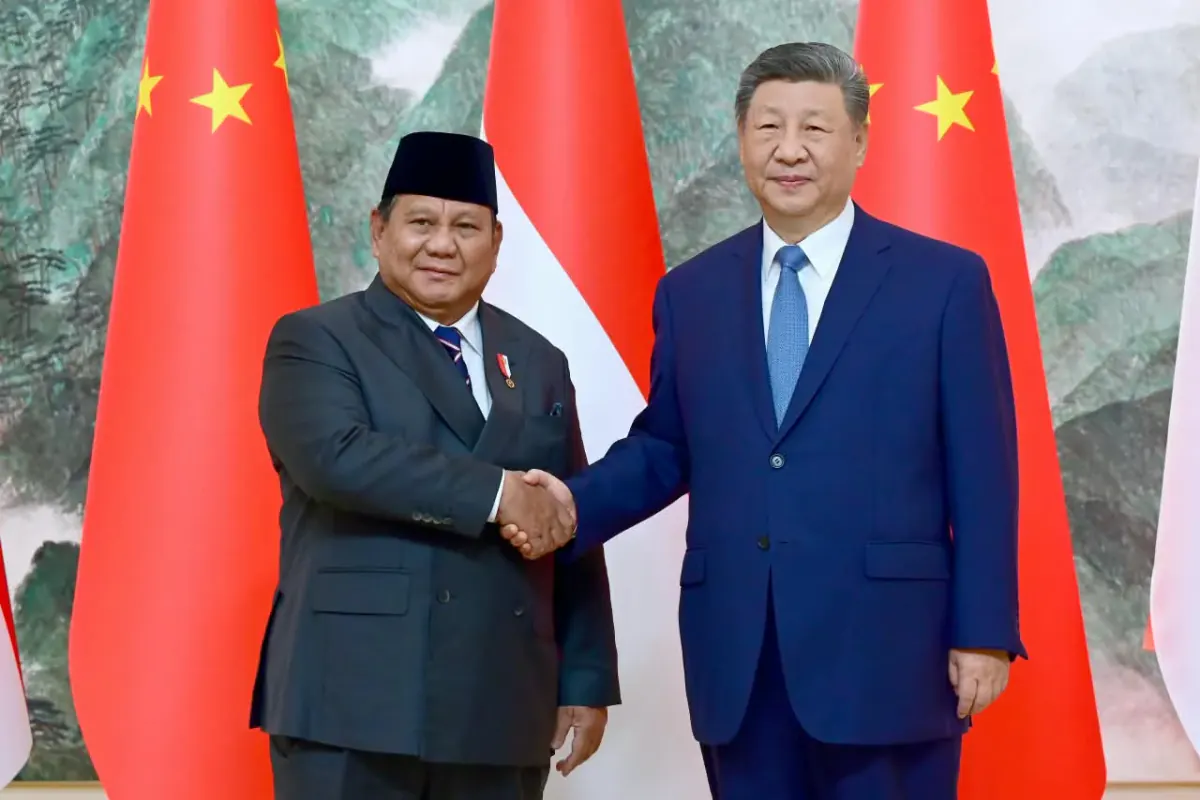
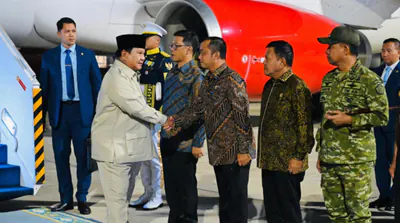
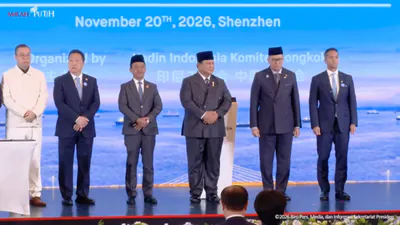
President Prabowo Subianto confirmed that Indonesia has completed its ratification of membership of the World Artificial Intelligence Cooperation Organization (WAICO), Radio Republik Indonesia (RRI) reported on Friday, 20 November 2026.
Prabowo made the statement during a meeting with Chinese President Xi Jinping at Kylin Villa in Shenzhen, China. “We are very pleased,” Prabowo said. He said Indonesia had been invited to join WAICO in a key position.
WAICO is an intergovernmental organization focused on civilian artificial intelligence cooperation and is headquartered in Shanghai. Indonesia is among the founding members, alongside 29 other countries.
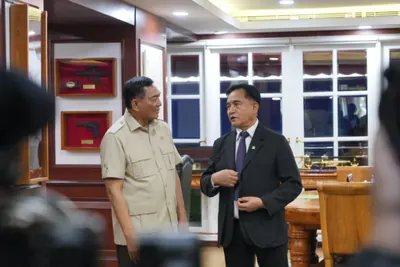
Earlier, Coordinating Minister for Economic Affairs Airlangga Hartarto said Indonesia had officially signed WAICO’s founding document. He said AI could support modern agriculture, renewable energy, and digital health services.
WAICO and AI governance
Ratification completes a process that normally begins with signing a founding document. Signing signals initial willingness, while ratification legally binds a state to carry out its commitments at home. On emerging technology issues, ratification also signals that a government is preparing a policy framework, budget, and inter-agency coordination. Such steps are usually accompanied by regulatory adjustments and coordination across agencies.
WAICO is described as an independent intergovernmental organization focused on civilian AI cooperation. The civilian focus separates such cooperation from military, security, and export-control issues, which are often sensitive in international relations. In global practice, civilian AI cooperation often touches public services, education, agriculture, and health, bringing it closer to everyday life than weapons programmes or tightly controlled cyber-surveillance systems.
Founding membership gives Indonesia a role in shaping norms, research priorities, and pathways to skills access. For a country with a large population and a growing digital market, that position can provide leverage to push for more affordable AI development suited to local needs. It does not automatically produce homegrown technology. It opens a space for dialogue, but the benefits depend on Indonesia’s ability to turn access into curricula, laboratories, pilot projects, and industries that can absorb workers. In the short term, forums such as WAICO can be used to exchange technical standards, ethics protocols, and good practices; economic impact will depend on projects that are actually funded and implemented.
The list of 30 founding countries cited by RRI includes countries from Asia, Africa, Europe, Latin America, and other regions. That composition suggests WAICO is presenting itself as a cross-hemisphere forum, not just a technology club for advanced economies. For Indonesia, participation in WAICO can be read as an effort to widen its network beyond the big technology companies and advanced countries that have dominated AI research and the computing supply chain.
Impact on workers and public services
For readers in Indonesia, the direct impact of the ratification has not yet been felt in prices or monthly bills. Its practical value lies in policy direction: whether the cooperation is translated into AI projects that lower public-service costs, improve harvests, expand telemedicine, and create new jobs. At the household level, such changes usually arrive gradually. Before the benefits are felt, people may first notice changes in government service apps, education systems, or health tools used by professionals. Because the effects can be slow, monitoring matters.
The digital economy figures cited by Airlangga show how large the contested space is. Indonesia’s digital economy is described as moving from US$130 billion (Rp2,400 trillion) toward a target of US$300 billion (Rp5,472 trillion). AI can be a tool for efficiency, but it can also become a source of risk if adoption benefits only large companies. Efficiency may show up in logistics, energy, and administration, but it can also cut routine jobs. If AI adoption is not matched by skills development, the gap between cities and regions may widen.
What the public should watch is transparency: the commitments Indonesia has taken in WAICO, how citizens’ data are protected, whether there is training for teachers, doctors, farmers, and digital workers, and how the state budget is allocated. Parliamentary and civil society oversight will be important. Ratification should also be tested against auditable indicators, not merely statements made at international forums. Public scrutiny is needed so that the benefits are tangible. The public can also trace whether the commitments bring investment and training, or are merely document exchanges that are binding on the ground.
Related news
- Indonesia and United Arab Emirates develop AI-based mangrove restoration
- Taj Yasin asks government programmes to drive local economy in Central Java
- Bangladesh hopes International Court of Justice ruling accelerates Rohingya repatriation