Indonesia's 100 GW Solar Target Opens Door to Clean Energy Cooperation with South Korea
Indonesia's 100-gigawatt solar target could open clean energy cooperation with South Korea in investment, technology and supporting industries.
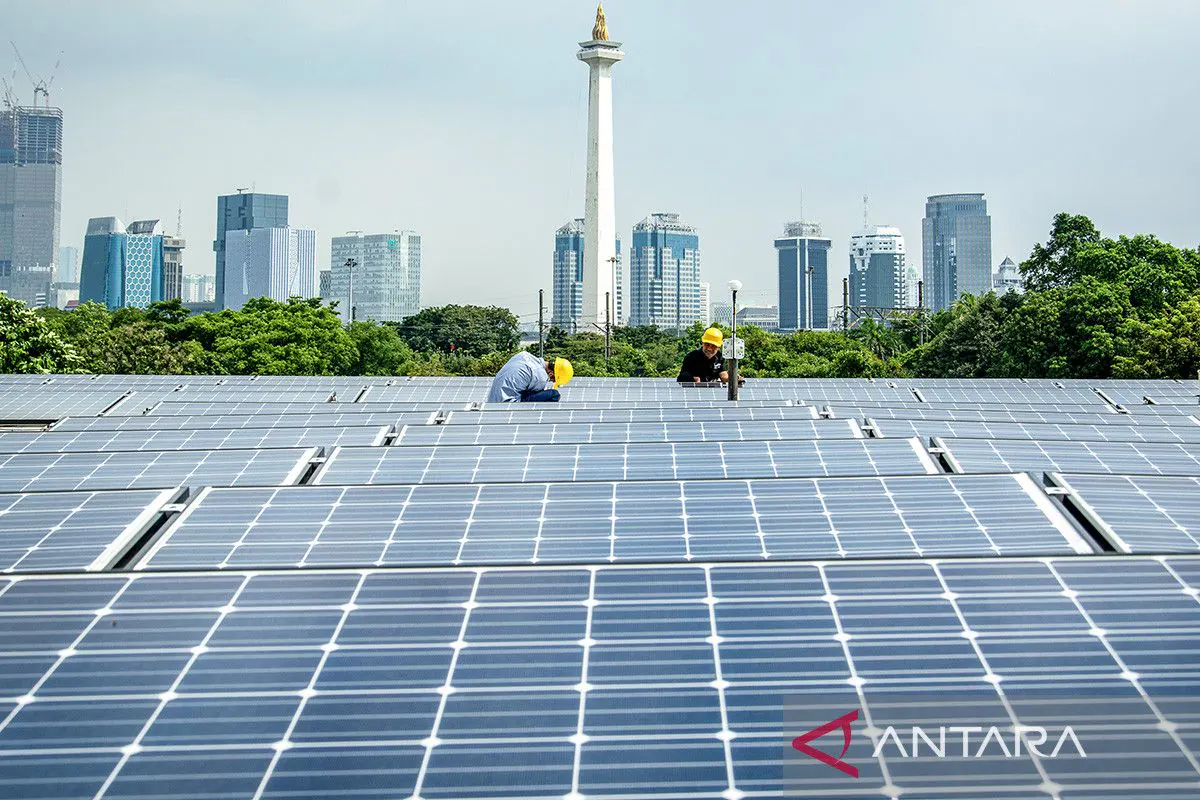
Indonesia is framing its 100-gigawatt solar power target as an entry point for clean energy cooperation with South Korea, according to a report by ANTARA, Indonesia's state news agency, after President Prabowo Subianto launched the program on 25 August 2026.
“Our target is 100 gigawatts in three years,” Prabowo said.
The program opened with 14 solar power plants in six provinces with a combined capacity of 5.3 GW. Energy and Mineral Resources Minister Bahlil Lahadalia said total investment reached US$73 billion (about Rp1,140 trillion), with potential annual subsidy savings of Rp73.9 trillion.
Meeting the target will require capital, storage technology, reliable grids and supporting industries. South Korea is seen as relevant because a partnership could extend beyond solar power to batteries, nuclear energy, hydrogen and carbon capture and storage.
Deon Arinaldo, program director at the Institute for Essential Services Reform (IESR), proposed five cooperation agendas to support the program during a workshop organized by the Foreign Policy Community of Indonesia (FPCI) and the Korea Foundation.
Why 100 GW Is Not a Routine Number
A target of 100 GW in three years would mark a major leap for Indonesia's electricity system. The figure is far above the initial 5.3 GW stage just launched, so policymakers must prove the plan is more than a slogan. Large-scale solar plants need land, transmission lines, permits and certainty that electricity can be sold to PT PLN, Indonesia's state electricity company. Without those conditions, newly built capacity risks sitting idle or being unable to absorb demand.
Indonesia has large year-round sunlight potential, but the resource does not automatically become electricity. Solar panels generate power when the sun shines, while electricity demand can peak at night. That makes batteries and energy storage a key part of the program. The grid also needs reinforcement so plants spread across islands do not merely add installed capacity but actually supply households, industry and public facilities.
South Korea enters this conversation because of its experience in energy technology industries, including batteries and electronic equipment relevant to clean energy supply chains. Cooperation of this kind is not only about buying panels or building plants; it also involves knowledge transfer, quality standards and opportunities for local industry. If the program proceeds, Indonesia can position itself as a large market for solar technology, energy storage and decarbonization projects.
The agendas proposed by IESR show that cooperation needs to be detailed. The five agendas provide an initial roadmap so that Indonesia and South Korea do not stop at memorandums of understanding or political statements. The main challenge is turning agreements into projects with schedules, financing, capacity targets and oversight mechanisms. In an energy transition, planning documents are easier to produce than power plants that operate reliably.
Tangible Impact on Electricity and Industry
For Indonesian readers, the program's success will be felt most clearly in electricity reliability and medium-term prices. If solar power adds supply, dependence on fossil-fuel plants can fall. In ideal conditions, electricity production costs become more stable because sunlight, unlike coal, oil or gas, does not need to be purchased. But those benefits will emerge only after initial investment, grid upgrades and storage are in place. A more everyday impact is employment. Solar power needs planning, installation, maintenance teams and local supply chains. If supporting industries grow, jobs can appear not only in large projects but also in electrical workshops, installation services, component distribution and technical training. This matters because the energy transition is often seen as an environmental issue, even though its effects touch household incomes.
The quality of agreements with South Korea also needs scrutiny. Good cooperation should open space for domestic industry rather than simply turning Indonesia into a market for finished products. Contracts need to address local content, technology transfer, safety standards and consumer protection. If those aspects are ignored, the 100 GW target could produce power plants without producing energy independence.
For the public, the clearest signal will be whether the program reduces blackout risks, improves electricity reliability in regions and makes tariffs more competitive. That makes regular reporting important: how many gigawatts are actually generating, how much investment has arrived, how many jobs have been created and how emissions have fallen. A large target is meaningful only if those numbers can be verified.