Herman Inaugurates Jemari Clean Water Well in Sungai Luar Village
Indragiri Hilir Regent Herman has inaugurated a clean water well under the Jejak Mata Air Riau (Jemari) program in Sungai Luar village, a collaboration between the National Amil Zakat Agency (Baznas) of Riau and Yayasan Energi Kebaikan Rokan.
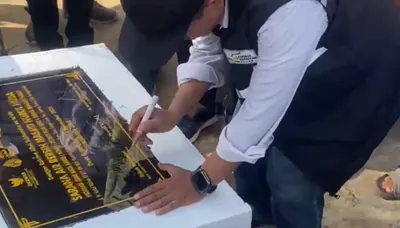
Indragiri Hilir Regent Herman has inaugurated a clean water well under the Jejak Mata Air Riau (Jemari) program in Sungai Luar village, Batang Tuaka district, according to TVRI News.
The Jemari program is a collaboration between the National Amil Zakat Agency (Baznas) of Riau Province and Yayasan Energi Kebaikan Rokan. Baznas Riau Deputy Chair II Jamaluddin, as reported by TVRI News, said the program has reached five sites in Indragiri Hilir Regency: Tembilahan Hulu, Sungai Raya, Batang Tuaka, Enok and Pekan Arba in Tembilahan.
Herman asked residents to maintain the facility, with management through water meters and monthly contributions to cover operating costs, including electricity.
Access to Clean Water in Rural Areas
Clean water is not only about the availability of a source but also its quality, distance and the sustainability of its management. In rural areas, communities often rely on shallow wells, rainwater or river flows that can be polluted by household waste, agricultural waste and industrial activity. Access to clean water is also linked to environmental health, because contaminated sources can trigger waterborne diseases and undermine household cleanliness. Programs such as clean water wells are therefore judged by whether the source is suitable, easy to reach and can be maintained after construction.
In Riau, clean water challenges can be shaped by the province's wide geography, scattered settlements and swampy peatland areas. During the dry season, water sources may shrink or change color and taste. During the rainy season, floods and surface runoff can carry sediment and organic matter into wells. Site selection, well depth and pump quality therefore need to be considered from the outset. Facilities built once are not enough without a maintenance plan and regular funding.
Collaboration between Baznas, local government and social foundations is one way to expand basic services. Baznas is Indonesia's official zakat management agency, which channels funds collected from the Muslim community for social needs, including assistance for groups in need. When a program such as Jemari is run together with a local government, zakat or social funds can be directed toward building facilities that meet residents' daily needs rather than only providing consumptive aid. In this way, social funds can produce more visible benefits, such as reducing queues for water or cutting transport costs for buying water.
Community-based management is also relevant because water facilities require operating costs, such as electricity for pumps, pipe repairs and well cleaning. Without a clear dues system or management mechanism, similar infrastructure risks falling into disuse after its inauguration. Water meters and monthly contributions are therefore important to keep the service running. This kind of management also trains residents to set priorities, record income and expenditure transparently, and repair small damage before it becomes larger. The involvement of farmer groups, housewives and village youth can make oversight faster.
Impact on Households in Indragiri Hilir
For households in Indragiri Hilir, a clean water well can reduce the time usually spent drawing water, buying water or searching for alternative sources. If water quality is better maintained, the need to boil or filter water may decrease, although those habits still need to be adjusted to the condition of the source. Time and labor savings are felt especially by women and children, who often take on the role of fetching water.
From an economic perspective, a collectively managed water service can reduce daily spending if tariffs are reasonable and usage is measured by meters. However, monthly contributions must be set so they do not burden low-income families. Residents therefore need to know where operating funds are spent, who manages the facility and how to lodge complaints when a pump or pipe is damaged. Such transparency is important to maintain residents' trust and prevent the facility from being abandoned.
For readers in other regions, programs like this show that basic infrastructure does not always have to wait for a large budget from a single source. Cooperation between government, zakat institutions and social foundations can provide a path when residents' needs are spread across many locations. The key is to ensure that facilities actually work, remain affordable and are maintained in the long term. If governance is well organized, similar programs can be replicated in other villages with comparable needs.
Related coverage
- Women and Child Protection in Central Java Reaches 576 Districts
- Jember Police Help Residents Affected by Tornado
- Marines Harvest Corn on 18-Hectare Land in Pasuruan