Education ministry projects Donggala as Central Sulawesi learning quality hub
The Ministry of Primary and Secondary Education projects Donggala Regency as a centre of learning quality in Central Sulawesi through the Sekolah Nasional Terintegrasi programme.
The Ministry of Primary and Secondary Education (Kemendikdasmen) has projected Donggala Regency as a centre of learning quality in Central Sulawesi and its surrounding areas, according to a report by the state news agency ANTARA on Saturday.
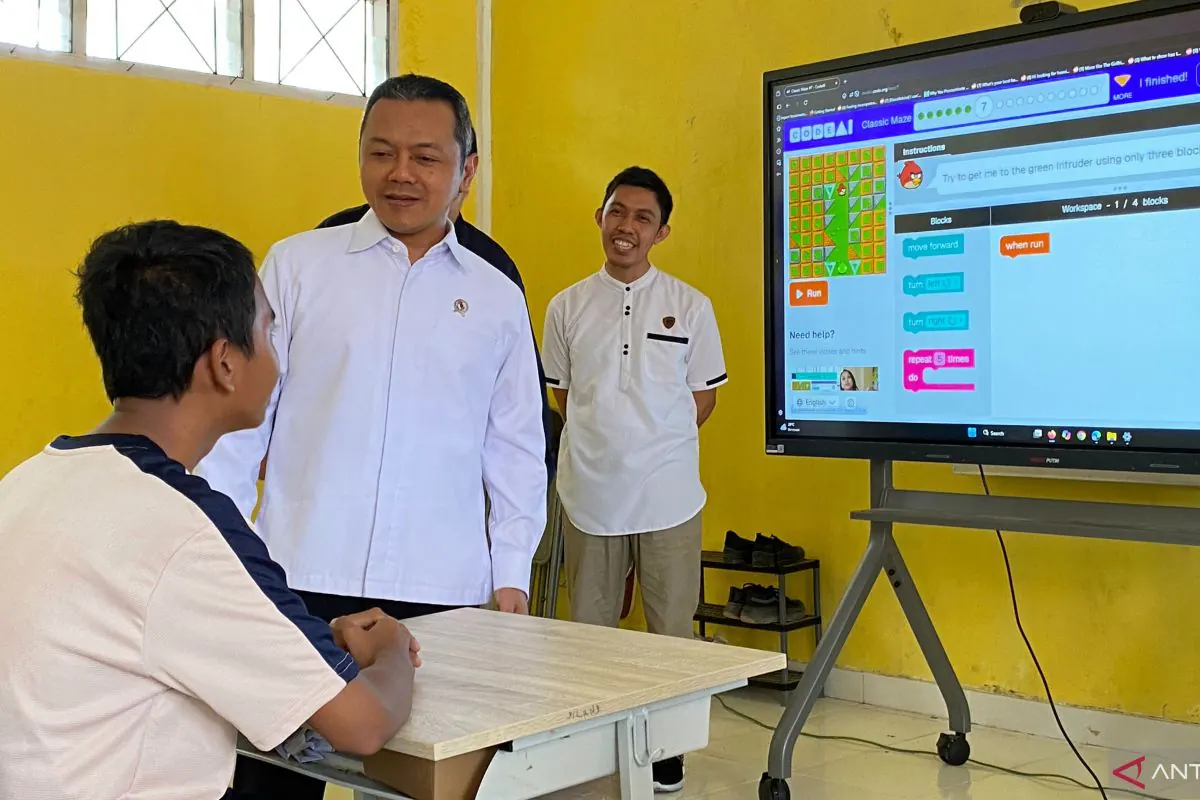
Deputy Minister Fajar Riza Ul Haq, speaking in Banawa, described Sekolah Nasional Terintegrasi (SNT) 12 Donggala, or Integrated National School 12 Donggala, as the driving force for improving education quality in the region.
Donggala was selected in the first wave of a new national pilot programme that covers 17 schools, ANTARA reported. The programme is a priority of President Prabowo Subianto and will add 20 more schools next year.
The government targets completion of the new SNT Donggala building, valued at Rp250 billion, by the end of 2027. Lessons will use digital interactive whiteboards, artificial intelligence and coding materials.
Reference school model and quality challenges
In education policy, a locality described as a quality centre is usually not helped by a new school building alone. The term refers to a reference function: the school becomes a place for good practice, teacher training, material development and service for nearby education units. This model is relevant when learning quality is uneven, because one better-managed school can help others through mentoring, sharing equipment and opening access to activities that were previously limited. In practice, a reference school can host trials of assessment, differentiated learning and strengthening literacy and numeracy. Teachers from other schools can visit to observe classrooms, not merely receive seminar materials.
In many parts of Indonesia, education-quality gaps appear in differences in facilities, teacher competency and parental support. Areas with access to major cities can more easily obtain digital devices, while more distant areas need planned intervention. Pilot programmes are therefore often tested in selected locations before being expanded. Results are assessed by learning processes, teacher readiness and the capacity of local governments to maintain facilities after they are built. Distances between schools, transport costs and the ability of principals to follow up on mentoring also need to be considered.
The use of technology in learning does not stop at procuring devices. Digital devices, learning applications and basic programming materials are useful only if teachers have time to train, the curriculum leaves space for practice, and electricity and internet networks are adequate. Without that, technology risks becoming decoration. Conversely, if used for exercises, assessment and simple projects, digital devices can enrich students' learning experiences. Such technical readiness is usually tested through classroom simulations, staged training and periodic maintenance.
Synergy between the central and local governments will determine success. The central government can set standards, prepare budgets and monitor quality, but local governments manage schools, ensure teachers attend and adjust programmes to local needs. That coordination is important so that reference schools do not stand as projects separate from the regional education system. If a reference school relies only on central funding, its sustainability is vulnerable when priorities change. Public oversight also helps ensure facilities are actually used. Conversely, if local governments also provide mentoring, programmes can last longer.
What the flagship school programme means for the public
For readers in Indonesia, policies like this are felt most when reference schools actually raise education service standards in the region. Parents can expect more structured learning processes, better-prepared teachers and facilities that are not only available at inauguration. But those benefits are real only if other schools also receive mentoring, not just one standout location. Nearby schools can also benefit when teachers receive relevant training.
The indirect impact also touches the labour market and local industry. School construction and maintenance can absorb builders, furniture suppliers, network providers and cleaning services. When the programme expands, demand for teacher training, learning devices and digital content increases. The public therefore needs to watch whether budgets are used for repeated learning activities, not just one-off asset purchases.
What matters going forward are indicators that residents can see: teacher attendance, use of laboratories or digital classrooms, student learning outcomes and access for nearby schools. Without open data, claims of being a “quality centre” become only a name. Conversely, if a reference school functions as a place for sharing practices, the programme can become an example of education improvement in other regions.
Related news
- Ministry of Primary and Secondary Education pushes integration of education and health for human capital index
- Prabowo calls for controlled food inflation, farmers to enjoy prices
- Indonesia accelerates methane emission reductions in waste, agriculture and energy sectors