Dozens of Indonesian Lawmakers Sign Motion to Express Opinion Against Vice President Gibran
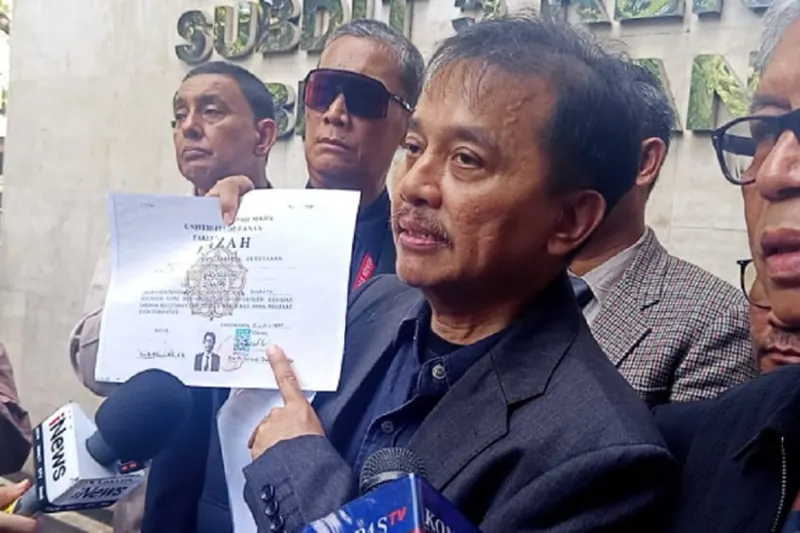
Dozens of Indonesian lawmakers have signed a motion to express opinion against Vice President Gibran Rakabuming Raka, continuing the controversy over his education requirements for the 2024 presidential election.
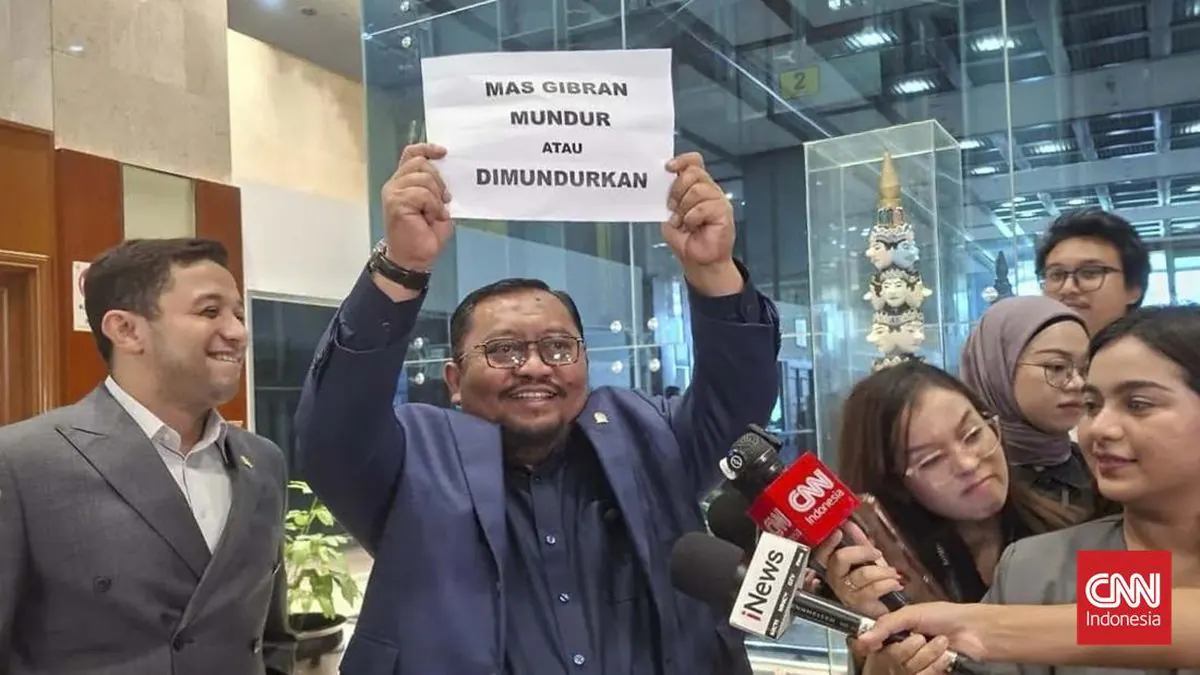
Dozens of members of Indonesia’s House of Representatives (DPR RI) signed a proposal to exercise the chamber’s constitutional right to express opinion, or Hak Menyatakan Pendapat, against Vice President Gibran Rakabuming Raka from Monday evening to Tuesday, 10 November, continuing the controversy over the education requirements for his candidacy in the 2024 presidential election, as reported by CNN Indonesia.
The proposal was claimed to have been signed by around 30 members from different parliamentary factions. Commission II member Mardani Ali Sera said his name appeared first on the document titled “Pengusul Hak Menyatakan Pendapat” (Proposers of the Right to Express Opinion). According to CNN Indonesia, the signatories were acting as individuals, not as factions.
The right to express opinion is a constitutional power of the DPR to issue a formal position on major state issues. It is based on Article 20A(2) of the 1945 Constitution and Article 79 of the MD3 Law, which governs the People’s Consultative Assembly (MPR), the DPR, the Regional Representative Council (DPD) and regional legislatures. A motion can be proposed by at least 25 members and must be approved by a plenary session of the DPR attended by at least two-thirds of its members.
If approved, the DPR forms a special committee drawn from all factions. The committee reports back to a plenary session. If the report is accepted and concludes that there are allegations of legal violations, disgraceful acts, or failure to meet the requirements for office, the DPR brings its opinion to the Constitutional Court (MK). The court then decides whether the opinion is proven.
Political procedure toward impeachment
The right to express opinion differs from the right to interpellation and the right to investigate. Interpellation is used mainly to seek explanations of government policy, while an investigation probes the implementation of a policy or a particular event. Under the MD3 Law, the right to express opinion can also follow up on interpellation or investigation proceedings. It is a heavier step because it can produce a formal DPR position that the president or vice president is suspected of legal violations, disgraceful acts, or no longer meeting the requirements for office.
In Indonesia’s constitutional system, removal does not begin with a single lawmaker’s signature. A motion by at least 25 members is only a political entry point. Support must then be institutionalised through a plenary session and a special committee. If the plenary session rejects the committee’s report, the motion ends and cannot be resubmitted. That process means the cross-faction individual motion still faces tests: whether personal signatories become official faction positions, whether a plenary quorum is reached, and whether the special committee’s report is accepted.
The Constitutional Court’s role is a key difference from past political practice. The MK does not try individuals as a criminal court would; it assesses whether the DPR’s opinion on alleged legal violations, disgraceful acts or unmet office requirements is constitutionally proven. If the MK finds the opinion unproven, the proposed removal cannot continue. If it is proven, the DPR merely forwards the proposed removal to the MPR; the final decision rests with the state institution authorised to make it.
Since the 1945 Constitution was amended, the mechanism for removing a president or vice president has been designed to prevent it from becoming a tool for exchanging power in parliament. The requirements of “allegation” and “proof” protect the presumption of innocence. Therefore, references to impeachment in reporting should be read as a possible constitutional process, not a verdict against Gibran Rakabuming Raka. He remains vice president until a court ruling or constitutional decision changes the status of the office. This is a reminder that the DPR’s right is not a substitute for a court.
What the public should watch
For Indonesian readers, the development matters because the vice presidency is linked to government stability and national succession. While the motion remains individual signatures and has not been institutionalised as the DPR’s official position, its impact is larger in political discourse than in executive policy. But if the process reaches a special committee and the Constitutional Court, the public will scrutinize the credibility of state institutions and the government’s ability to keep its work programme on track.
The next three checkpoints are whether the motion meets the minimum of 25 members and gains cross-faction support, whether a plenary session reaches a two-thirds quorum, and whether the special committee’s report is taken to the Constitutional Court. Without those gates, the right to express opinion does not automatically open the way to removal. In other words, this news marks the start of a possible process, not the certainty of impeachment. The public also needs to watch whether the issue affects budget discussions, policy coordination or legislative agendas involving the vice president.
The issue of diplomas and education requirements can also affect public trust in the electoral process. Readers therefore need to distinguish between political criticism, legal allegations and official rulings. Until there is a decision by the Constitutional Court or the MPR, Gibran’s status as vice president remains in effect, and reporting should be grounded in constitutional procedure.