Creative Economy Ministry strengthens regional music ecosystem through AKTIF Musik
The Creative Economy Ministry's AKTIF Musik program in South Tangerang pushes regional musicians to understand business, copyright and markets
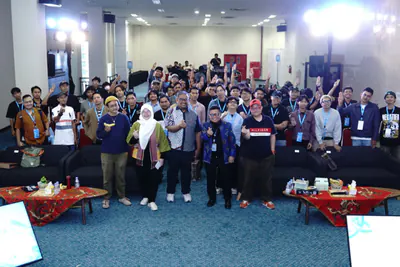
The Ministry of Creative Economy/Creative Economy Agency (Ekraf) held the AKTIF Musik program, a music industry discussion and local musicians showcase, at the Micro, Small and Medium Enterprises (UMKM) Gallery building in South Tangerang, Banten, on Sunday, 15 November 2026, as reported by TVRI News, the state television network's news service.
The program treats regional musicians as subjects who need business skills, copyright protection and career pathways, not just creative talent. Creative Economy Minister Teuku Riefky Harsya said regional talent must be able to manage intellectual property, expand their businesses and reach wider markets. “Music has the potential to create added economic value,” Riefky said.
Cecep Rukendi, deputy for media creativity at the ministry, said AKTIF Musik was designed to connect regional musicians with industry knowledge.
In the discussion session, 50 participants received training in creative business management and legal aspects of music. Dewi Kartika Sari discussed musicians as creative business operators, while Prayudi Setiadharma from Wahana Musik Indonesia (WAMI), a music copyright collective management organization, explained copyright protection and the steps to take after a song is created. Mohammad Amin said business and legal knowledge was important for running the profession professionally.
The AKTIF Musik program also featured five South Tangerang musicians spanning genres from alternative to jazz: Raster, Palm Trees, Santasantap, Babaloman and Gabriella Fernaldi. Head of the South Tangerang Tourism Office Mohammad Ervin Ardani said providing performance spaces could open economic opportunities for the public.
Creative spaces and local music
Regional music ecosystems usually rest on three nodes: songwriters, performers and venue operators. In many cities, local musicians grow out of cafes, campuses, communities or small festivals. When performance spaces are available, they can test audience response, build a listener base and network with producers, labels and event organizers. Without regular stages, work often remains private recordings or social media posts.
Local governments and central institutions can widen those opportunities by connecting musicians with training, promotion and public facilities. Using the UMKM building, cultural parks or galleries for showcases means creative activity does not depend only on commercial venues. The approach also encourages cross-sector collaboration: tourism brings audiences, cooperatives and UMKM provide space and logistics, while ministries supply capacity-building material.
Copyright matters have become more important as music circulates across platforms. Musicians can earn income from performances, record sales, licensing, synchronization for advertisements or films, and digital royalties. But without understanding contracts, registering works and collective management, rights over songs can easily be neglected. Collective management organizations such as WAMI represent songwriters and rights holders, although every musician still needs basic knowledge.
At a broader level, strengthening regional music is also linked to city identity. Genres that develop in one area can become cultural markers, tourism attractions and sources of income for event organizers, catering, transport and hotels. A showcase is therefore not only a performance but an entry point into a longer value chain. Its sustainability depends on consistent schedules, curation, access to public funding and promotion. In large cities, that chain is longer; in regions, a single stage often becomes a meeting point for many actors.
What it means for audiences and musicians
For Indonesian readers, programs like this are felt most in two ways: more local stages and greater awareness of music rights. Musicians who understand business and copyright are better placed to make their work more valuable, while audiences can enjoy more organized performances. The impact on jobs around events is also real, from technicians, documentation, promotion and transport to food businesses. That matters for freelancers.
For everyday music users, copyright awareness matters when uploading songs, making content or using recordings for small businesses. Simple practices such as choosing licensed music, crediting sources and avoiding piracy can help protect creators’ income. If regional ecosystems strengthen, local entertainment choices increase without always depending on major events in metropolitan cities.
What needs to be watched is follow-up after the event ends. Training and showcases only have an impact if works are documented, access to performance spaces is regular and promotion channels reach platforms and event organizers. Without that, regional programs risk stopping at ceremonial events.
Related coverage
- Ministry of Creative Economy strengthens access to Sharia financing for regional creative economy actors
- Gibran returns to social media to discuss education in eastern regions and artificial intelligence
- Ministry of P2MI strengthens workforce readiness to enter Japan’s labor market