Coordinating Minister Muhaimin to Follow Up Fishermen's Engine Proposal in Jatimalang
Coordinating Minister for Community Empowerment Muhaimin Iskandar said he would follow up a proposal by fishermen in Jatimalang, Purworejo, to raise boat engine capacity from 15 to 30 horsepower.
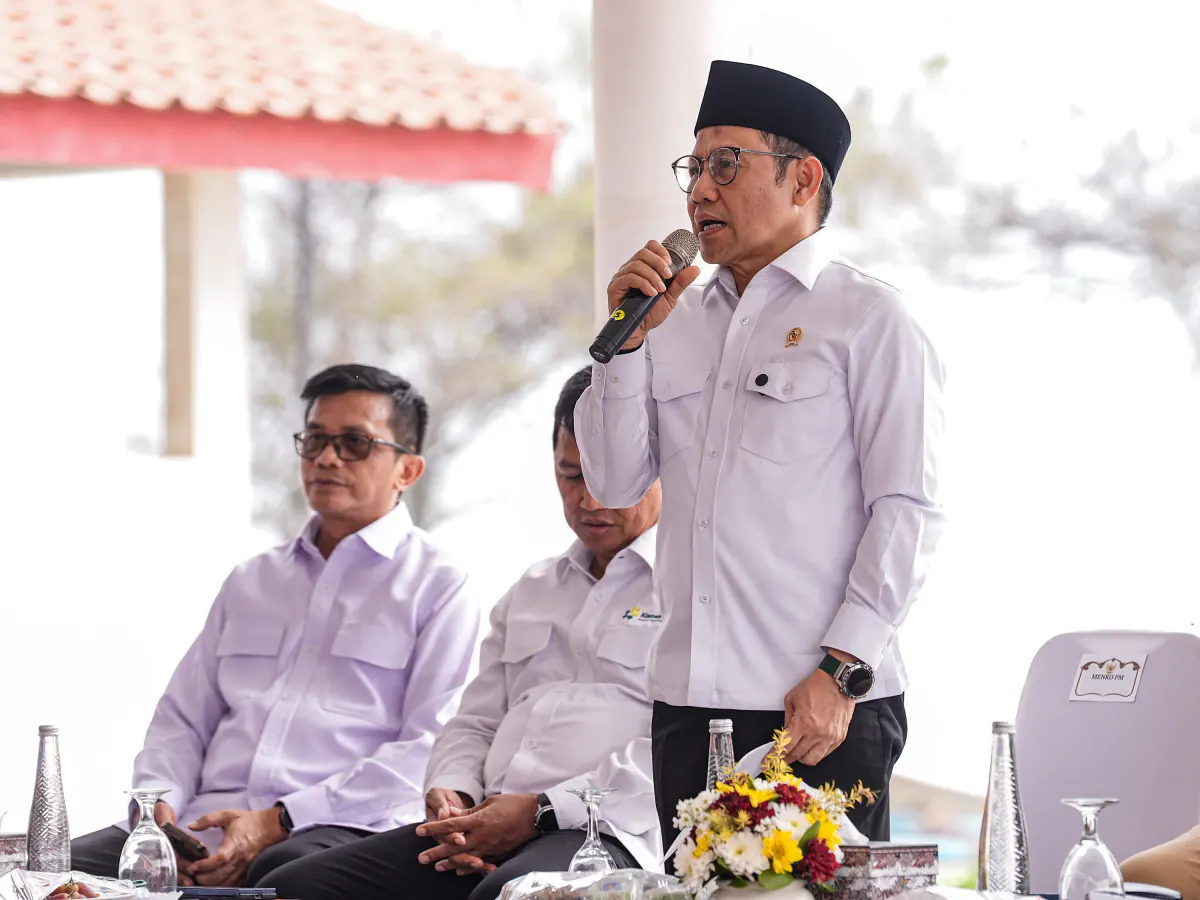
Fishermen at Kampung Nelayan Merah Putih (Red and White Fishermen Village) in Jatimalang, Purworejo, have proposed increasing boat engine capacity from 15 PK to 30 PK, where PK is the Indonesian abbreviation for horsepower. Coordinating Minister for Community Empowerment Muhaimin Iskandar said he would follow up the proposal in Purworejo, Central Java, on Monday, 16 November 2026.
According to a report by state broadcaster Radio Republik Indonesia (RRI), Muhaimin stressed that coordination with relevant ministries and agencies was needed so fishing equipment needs could be met in line with coastal communities' aspirations.
The proposal aims to extend how far fishermen can go to sea, boost productivity and improve local fishermen's welfare.
Engine Power and Fishermen's Cold Chains
For small-scale fishermen in Indonesia, boat engines are not merely means of propulsion; they determine how far fishermen can go to sea, what fishing gear they can carry and how quickly they can return to shore. Low-powered boats usually operate in nearshore waters, so catches depend on seasonal conditions, weather and distance to fish grounds. When engine power is increased, fishermen can reach wider areas, but fuel consumption, maintenance and safety risks also rise. The change needs to be calculated as a business decision, not just a technical request.
The PK unit, or horsepower, measures general engine power, not exact distance travelled or speed. Two boats with the same PK rating can perform differently because of hull shape, load, propeller condition, fuel and operator experience. Therefore, changes in engine capacity must be considered alongside safety training plans, vessel inspections and compliance with navigation and fisheries regulations. Without those foundations, added power could create new cost burdens for fishing households.
Cold chains are another factor that determines fish's market value. Ice, storage facilities and cooling equipment help maintain freshness, reduce losses and allow catches to be sold in wider markets. Without a reliable cold chain, high-value fish can spoil quickly, so efforts to raise catch capacity do not automatically raise income. The challenge is that cold chains require electricity, water, regular maintenance and clear governance to keep functioning after construction ends.
Effective coastal development usually combines production facilities, institutions and skills. Fishermen need access to financing, market information, appropriate fishing gear and organisations that can manage distribution and quality. In this context, boat engine policy should be viewed as part of a fisheries business ecosystem, not as a stand-alone improvement. The sustainability of fish resources must also be protected, because a fleet with greater sea-going capability can add pressure on stocks if it is not accompanied by fishing zone rules, selective gear and joint monitoring.
Impact on Fish Markets and Fishermen
The proposal to increase boat engine capacity touches matters felt directly by readers in coastal areas and fish consumers: operating costs, supply and the quality of sea produce. If added power genuinely lets fishermen go farther to sea without increasing risk, potential catches may rise. But the benefits will be felt only when fuel, maintenance and safety equipment are available at prices fishing households can afford. At the household level, engine changes also affect the division of labour, capital and exposure to bad weather.
For consumers, better cold chains can help keep fish prices from becoming too volatile due to supply disruptions. Fresher fish usually fetches a higher selling value, but this can also push prices up in markets if demand is strong and stocks are limited. Therefore, policies that favour fishermen need to be balanced with oversight so that they do not benefit boat owners alone, while crew members and small traders are squeezed by extra costs. Local governments and market managers can provide loading and unloading facilities, ice and price information.
What needs to be watched going forward is the clarity of inter-agency follow-up coordination, the size of budget support, and mechanisms for safety and environmental oversight. The public also needs to see whether the proposal is accompanied by training, vessel data collection and realistic access to financing. Without these, higher engine capacity would remain a technical promise that is unlikely to materially change fishermen's welfare. The program's success should be measured by net income, workplace safety and the sustainability of fish stocks.
Related news
- Coordinating Minister for Infrastructure Says Strategic Accountants Must Safeguard Infrastructure Development
- Maruarar Says Free Land Certificates Give Residents Legal Certainty
- The National Civil Service Agency (BKN) Says Talent Management Speeds Up Filling of Civil Service Posts