Commission IV Visits Mandiangin Aquaculture Center, Urges Endemic Fish Conservation
Commission IV of the House of Representatives has urged stronger aquaculture technology and conservation of endemic fish in South Kalimantan during a visit to the Mandiangin Freshwater Aquaculture Center (BPBAT).
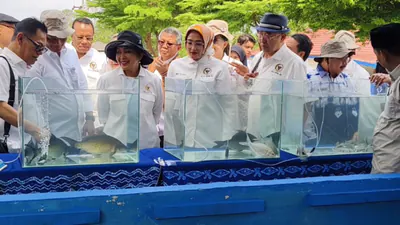
During a specific working visit to the Mandiangin Freshwater Aquaculture Center (BPBAT) in Banjar Regency on Friday 13 November 2026, Commission IV of Indonesia's House of Representatives (Komisi IV DPR) pushed for stronger aquaculture technology and the conservation of endemic fish in South Kalimantan.
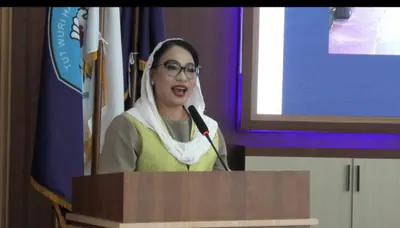
The visit, led by Komisi IV chair Siti Hediati Soeharto, highlighted successful spawning of snakehead (gabus) and belida, a featherback fish, according to TVRI News.
Titiek Soeharto said the center's ability to spawn belida was important because the species had become rare in the wild and was long known as a raw material for pempek, a fish cake associated with Palembang. The delegation also listened to concerns raised by fish farmers, extension workers and local government, and handed over fish seed aid to five local farmer groups.
Role of Aquaculture Centers in Protecting Local Species
Freshwater aquaculture centers usually develop spawning techniques, produce seed and transfer technology to farmers. Their role is especially important in South Kalimantan, where ponds, swamps and rivers provide habitat for many local fish. When a species becomes difficult to find in the wild, the center's function shifts from supplying seed to safeguarding genetic resources for the community.
Snakehead, belida and kelabau carry economic value and are embedded in local eating habits. Snakehead is widely sought as a food fish, while belida is known as the base ingredient for pempek in Palembang. Kelabau is often raised in ponds and swamps, but its population can be squeezed by habitat change. For that reason, local species are not only commodities and cultural staples; they are also part of freshwater biodiversity.
Modern spawning and seed production are key to keeping fish production from depending on wild capture. Spawning is the reproductive process that produces eggs and larvae, whether naturally or with technological assistance. Once larvae grow into seed, controlled seed production can make output more uniform and easier to plan for market demand. The method also allows stocks to be increased without taking too many broodstock from nature.
Legislative visits to centers such as BPBAT can provide new context for policy. Field data on production costs, water quality, feed access and market demand help separate technical problems from budget constraints and regulatory needs. If follow-up programs are well targeted, the center can become a practical link between simple research, seed production and the needs of small farmers in the region.
Economic Opportunity from Raising Rare Fish
For communities in South Kalimantan, conserving endemic fish is not only an environmental issue but also a livelihood issue. Farmers who receive quality seed have a better chance of sustaining production, reducing harvest failure and meeting local market demand. When commodities such as snakehead and belida can be raised through aquaculture, communities do not need to keep relying on shrinking wild catches. That matters because overfishing, land conversion and water degradation can reduce fish stocks in rivers, swamps and natural ponds. Conservation therefore also supports regional food security.
For consumers, successful aquaculture of local fish can help maintain supply and stabilize prices. Freshwater fish is a widely consumed protein source in Indonesian households, especially in areas with traditions of ponds, swamps and local fish markets. If seed production and grow-out are well managed, farmers can supply food fish to markets more regularly. Conversely, when a species becomes rare, prices may rise and small farmers find it harder to enter profitable supply chains.
Seed aid and stronger spawning technology also need follow-up mentoring. Farmers typically need guidance on feed, water quality, disease prevention, harvest size and market access. Without that support, initial aid may produce only short-term results. The specific working visit by Komisi IV DPR can therefore serve as an entry point to ensure that budget support, extension services and cooperation with local governments are better directed. If aquatic ecosystems are protected and endemic fish farming develops, South Kalimantan can gain a double benefit: conservation can continue while the local economy grows more evenly and sustainably.