Central Bengkulu prosecutors name suspect in Renah Semanek market corruption case
A contractor has been named a suspect in the 2019 construction of Renah Semanek village market in Central Bengkulu, with state losses still under calculation.
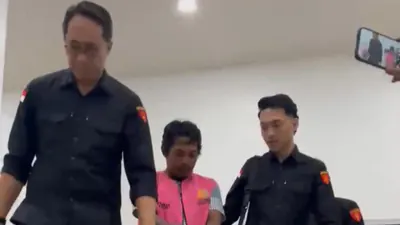
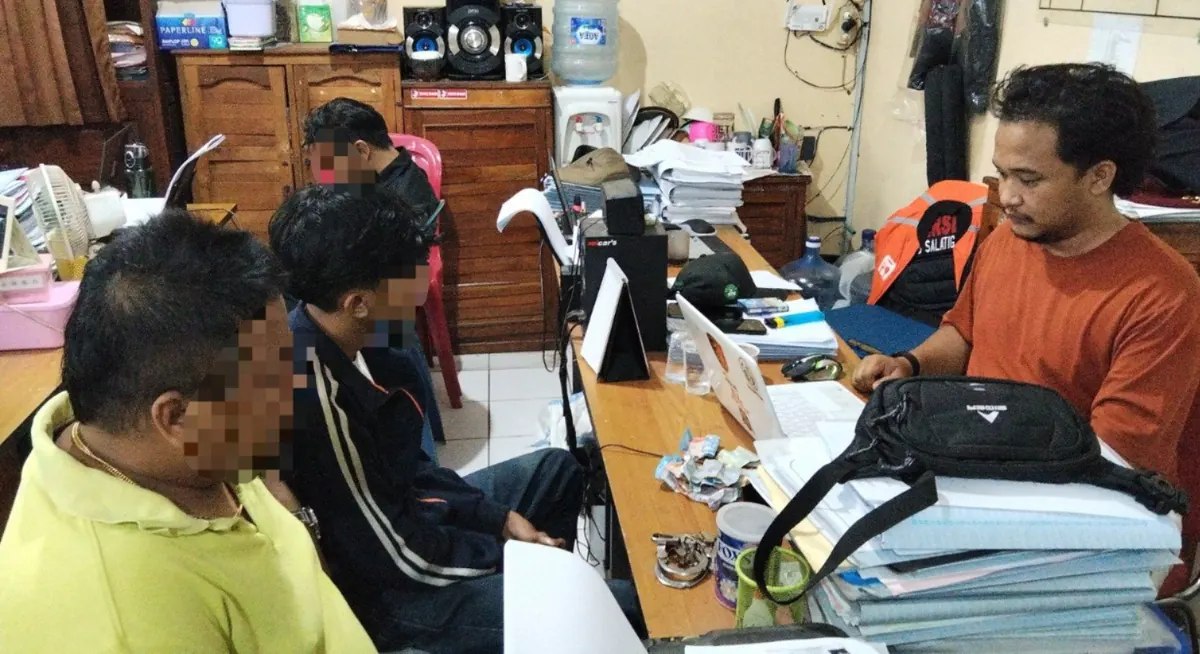
The District Attorney's Office (Kejari) in Central Bengkulu Regency has named Edy Purnomo, the contractor implementing the work, as a suspect in an alleged corruption case involving the construction of the Renah Semanek village market in Karang Tinggi District for the 2019 fiscal year. The designation was made on Tuesday, 17 November 2026, at the Kejari office, as reported by TVRI News, Indonesia's state television news service.
According to TVRI News, the investigation began in May 2026 and investigators have secured at least two valid pieces of evidence, including witness statements, documents and expert examination results. The project was carried out by the Central Bengkulu Trade, Industry, Cooperatives and Small and Medium Enterprises Office with a budget ceiling of Rp702,614,000 (about US$43,900) from the 2019 Special Allocation Fund (Dana Alokasi Khusus, or DAK). The tender contract value was Rp694,333,000 (about US$43,400); the work was declared 100 percent complete on 8 November 2019 and paid in full in two installments.
The head of the intelligence division at the Central Bengkulu Kejari, Bayu Nusantara Palwa, said the actual value of the market building allegedly did not match the budget realization that had been paid. He added that the market could not be used since the first handover. The amount of state losses is still being calculated by the Government Financial and Development Supervisory Agency (BPKP). The suspect has been detained for 20 days, from 17 November to 6 December 2026, at the Class IIB Detention House in Bengkulu.
Prosecutors suspect Edy of violating Article 603 in conjunction with Article 20 letters a and c of Law No. 1 of 2023 in conjunction with Article 18 of Law No. 31 of 1999 as amended by Law No. 20 of 2001, subsidiarily Article 604. The Kejari said the investigation was being conducted professionally and in accordance with the presumption of innocence, and did not rule out the possibility of other parties being involved.
Role of physical DAK and local project tenders
The Special Allocation Fund (DAK) is a transfer from the central government to regional governments to finance specific activities whose priorities have been set. In regional budget practice, physical DAK is often directed to public facilities such as village roads, irrigation, schools, community health centres (puskesmas) and markets. Because its use is specific, the success of a project is measured not only by budget absorption but also by the benefits residents can directly feel.
DAK-funded projects usually go through a construction services procurement mechanism. The technical agency prepares the budget ceiling, the tender committee selects the provider, and the contract is signed at a value that may be lower than the ceiling. After the work is completed, a physical inspection is conducted, a handover minute is prepared and payment is made. It is at this stage that oversight becomes important: documents may state that work is 100 percent complete, but the condition of the building in the field must still match the planned specifications, volume and function.
In alleged construction corruption cases, investigators usually trace the gap between the value paid and the real value of the work, material quality, volume and the parties who receive the benefits. Construction expert examinations, witness statements and contract documents are common pieces of evidence. When state losses are not final, agencies such as BPKP calculate potential losses based on field findings. That figure is important for charges, but it does not by itself determine a person's guilt.
The status of a suspect should also be read as an early stage of law enforcement. Under the Criminal Procedure Code (KUHAP), a suspect is a person who, because of their acts or circumstances, is reasonably suspected of being the perpetrator based on at least two pieces of evidence. A person is not proven guilty until a court issues a final and binding decision. Therefore, the prosecutors' explanation about the presumption of innocence is not a formality, but a sign that the process is still ongoing and that other parties may be questioned.
Impact on traders and village oversight
For readers in the regions, cases like this touch something close to daily economic routine: the village market. A market is not only a building, but also a place of transactions, distribution of agricultural produce and a source of income for small traders. When facilities funded by state money cannot be used, the loss does not stop at budget figures; residents lose business space, while the regional government must account for its previous spending.
What the public should watch going forward is the continuation of the loss audit, the possibility of other parties being examined, and whether the market can be used again after legal certainty is reached. For communities, simple oversight can begin with project information boards, reports to the local government inspectorate, and requests for explanation from the village government and the technical agency. Transparency of this kind helps ensure that central transfer funds become useful assets, not just handover documents.
The handling of this case is linked to public trust in law enforcement in the regions. The public has the right to know whether the investigation is proceeding according to procedure, whether the suspect's rights are respected, and whether potential state losses can be recovered. As long as no final and binding court decision has been issued, the correct term to use is alleged corruption, not a verdict against anyone.
Related news
- Papua Regional Immigration Office supports formation of Central Papua Regional Immigration Office
- Semarang mayor targets city as Central Java coffee business centre
- National Cyber and Data Security Agency (BSSN) inducts Central Java Cyber and Data Security Communication Forum (Forkomsanda) to counter cyber threats