Karimun prosecutors destroy 1,730 bales of confiscated secondhand clothing in power plant boiler
The Karimun District Attorney's Office in the Riau Islands destroyed 1,730 bales of confiscated secondhand clothing using the boiler of the Tanjungbalai Karimun steam power plant on Wednesday, 18 November 2026.
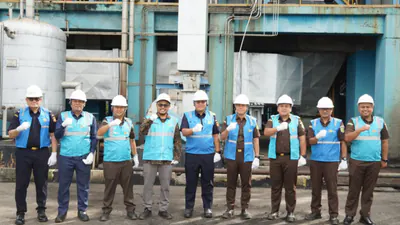
The Karimun District Attorney's Office (Kejaksaan Negeri Karimun) in the Riau Islands province (Kepulauan Riau) destroyed 1,730 bales of confiscated secondhand clothing on Wednesday, 18 November 2026, using the boiler of the Tanjungbalai Karimun steam power plant (PLTU).
As reported by TVRI News, the Asset Recovery Agency (Badan Pemulihan Aset) of the Karimun District Attorney's Office destroyed the secondhand clothing, which had obtained a final and binding court decision. The activity involved PT PLN Indonesia Power Unit Bisnis Pembangkitan Kepulauan Riau, the company's Riau Islands power generation business unit.
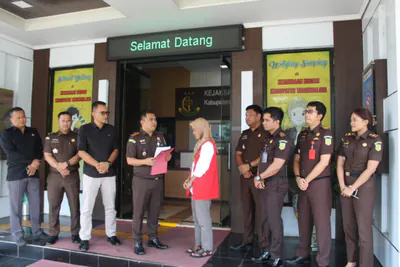
The destruction was witnessed by the head of the Riau Islands High Prosecutor's Office (Kejaksaan Tinggi Kepulauan Riau), the head of the Directorate General of Customs and Excise's Special Riau Islands Regional Office (Direktorat Jenderal Bea dan Cukai), and a representative of the chief judge of the district court (Pengadilan Negeri).
Herowico Thama Nurahman, manager of the Riau Islands power generation business unit, said, "This can also serve as additional fuel for our boiler."
The prosecutor's office described the move as the first collaborative activity between the Karimun District Attorney's Office and the Tanjungbalai Karimun steam power plant.
Confiscated goods and the role of the Asset Recovery Agency
In law enforcement, evidence or confiscated goods do not stop being tools of proof. After a case has obtained a final and binding court decision, the state must determine the fate of the goods: to be confiscated, returned, used for the public interest, or destroyed. That decision is part of the execution of a court ruling and is usually coordinated by the prosecutor's office as the executor.
The Asset Recovery Agency in the prosecutor's office handles assets arising from criminal cases, including goods that are no longer needed as evidence. Destruction is carried out when the goods are not suitable for storage, have the potential to be misused, or may disturb markets and environmental health. In the case of secondhand clothing, a frequent risk is the re-circulation of goods already declared confiscated, creating legal uncertainty and losses for compliant businesses.
A steam power plant boiler can serve as a place of destruction because it is designed to burn materials at high temperatures. In principle, combustible materials can be converted into heat to support the combustion process, while unburned residue is retained in emission control and ash management systems. Such use is commonly discussed in the context of co-firing, or the use of additional fuel, subject to testing for quality, moisture content, and potential hazardous substances.
The collaborative step between law enforcers and plant operators also shows that the disposal of confiscated goods does not always have to use conventional methods, such as open burning or burial. When carried out with safety protocols, such methods can cut storage costs, reduce environmental footprint, and add value to facilities that already have controlled combustion systems. In that sense, the activity can serve as an example that assets with no economic value can be processed in a more orderly, measurable, and publicly accountable way. On the other hand, the success of the method depends on environmental audits, records of the volume of goods brought in, and reporting of combustion results so that supervisory agencies can verify them. Without such records, budget efficiency could instead raise new questions about accountability.
Impact on law enforcement and the environment
For readers, the destruction of 1,730 bales of secondhand clothing is not merely a legal ceremony. The figure shows the volume of goods that the state has had to store, supervise, and account for. The longer confiscated goods pile up, the greater the warehouse costs, the risk of loss, and the temptation of misuse. Therefore, a measured destruction method is part of more economical and accountable state asset governance. For taxpayers, the method also touches on the use of state budget, because long-term storage and maintenance of confiscated goods require non-trivial costs.
The environmental aspect also needs scrutiny. Secondhand clothing may contain a mix of synthetic fibers, dyes, and other materials that must not be burned carelessly. When destruction is carried out in a steam power plant boiler, the public has the right to demand emission monitoring, residue records, and compliance with environmental quality standards. Such transparency is important so that budget efficiency does not sacrifice the health of communities around the plant. This oversight matters because communities around the power plant have the right to know whether the process is truly safe and in line with applicable permits.
Going forward, similar practices could become a reference for other regions with large volumes of confiscated goods. However, their implementation must adapt to the type of goods, plant capacity, and environmental permits. For consumers, this development is a reminder that circulating secondhand goods must have clear origins, especially if they are related to confiscated items. If this practice is expanded, standard operating procedures, officer training, and public reporting mechanisms need to be prepared first.