BAZNAS East Java and Surabaya Religious High Court Explore Zakat Synergy
BAZNAS East Java and the Surabaya Religious High Court are discussing cooperation on zakat collection, unclaimed assets and digital services HaloBAZ and SAMARA.
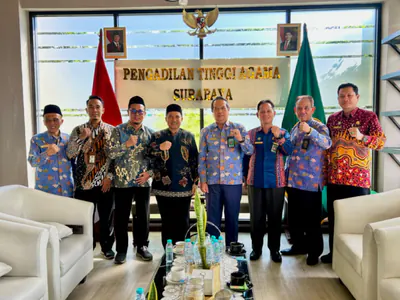
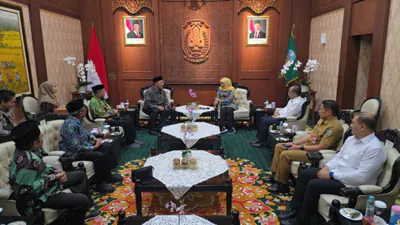
The National Zakat Management Agency (BAZNAS) in East Java and the Surabaya Religious High Court (Pengadilan Tinggi Agama Surabaya, or PTA Surabaya) began discussing cooperation on collecting zakat, infak and sedekah (Islamic charitable funds) at a meeting at the PTA Surabaya office on Monday, 9 November 2026, according to TVRI News.
The meeting involved BAZNAS East Java chairman Mohammad Ghofirin, first vice chairman Imam Hambali, and PTA Surabaya chief judge Zulkarnain. The discussion focused on expanding community funds and managing assets without clear ownership and assets of foundations that are no longer active, while observing legal requirements. The plan is still in an early discussion stage.
BAZNAS East Java also raised the integration of its digital services HaloBAZ and SAMARA. “BAZNAS cannot work alone,” Ghofirin said.
The role of regional BAZNAS offices in zakat governance
In Indonesia, zakat management is not only a religious matter but also part of state-regulated social governance. The Zakat Management Law places BAZNAS as the official agency authorised to collect, distribute and use zakat. Regional BAZNAS offices, including provincial branches, work according to geographic areas and specific groups, such as civil servants, formal-sector workers and residents who pay zakat directly.
The involvement of the Religious High Court in the proposed cooperation can be read as a gateway between legal services and social services. The Religious High Court is part of the religious court system under the Supreme Court (Mahkamah Agung) and hears appeal cases from religious courts. In daily practice, religious courts are also where people seek legal certainty on family, inheritance, waqf and sharia economic disputes, while zakat is largely managed by zakat agencies. The high court’s participation in the meeting does not automatically change its judicial authority, but it opens a referral channel for cases or assets that require legal determination before they are distributed.
The issue of assets without clear ownership and inactive foundation assets adds complexity. Under Islamic law, such property should not be left idle without management, but the transfer of rights and use must still go through legal mechanisms to avoid disputes. This makes cooperation between zakat agencies and courts interesting: BAZNAS can act as a manager of community funds, while courts can provide legal certainty when the status of property, foundations or other parties’ rights needs to be confirmed.
At the national level, zakat agencies are also being encouraged to expand digital services. Payment applications, zakat calculators and assistance application channels are becoming ways for regional BAZNAS offices to reach muzaki (zakat payers), especially younger generations and urban workers who are used to transacting through mobile devices. However, digitalisation does not stop at payment convenience. The public also demands clear reporting on how funds are used, from distribution to mustahik (zakat recipients), education aid and health support to economic empowerment.
What it could mean for zakat payers and recipients
For people in East Java, the proposed cooperation matters most in terms of access. If the integration of HaloBAZ and SAMARA is realised, muzaki could give zakat, infak and sedekah through one digital channel, while beneficiaries could apply for services or join empowerment programmes without visiting multiple offices. For residents who have paid zakat in cash, official channels could help with recording and reporting.
For beneficiaries, the cooperation could reach groups that need legal and social assistance. People dealing with inheritance, waqf or neglected family assets could be referred to religious courts, while economic needs could be directed to BAZNAS programmes. However, because the discussion is still at the meeting stage, readers need to wait for the form of cooperation: whether it will be a memorandum of understanding, joint services or only case referrals. Until a joint programme is announced, the public should continue to channel zakat through official BAZNAS channels and keep transaction records. This is important for reporting and certainty of benefit. For residents who rarely use apps, the programme will also require assistance at local village offices, mosques or social institutions so digital services do not leave vulnerable groups behind.
The most visible impact for the public will be trust and service speed. Zakat is a sensitive fund; people are willing to give only through institutions they consider trustworthy. Cooperation with the religious high court could therefore signal that managing community funds is not only about distribution, but also legal compliance and governance.
Related news
Kabupaten Asahan earned the special category in the Ber-Aksi assessment by the Corruption Eradication Commission (KPK).