Bali tests 11 electric Trans Sarbagita buses on Denpasar-GWK route
Bali's provincial government is testing 11 electric Trans Sarbagita buses between GOR Ngurah Rai and the Garuda Wisnu Kencana area to evaluate public transport services.
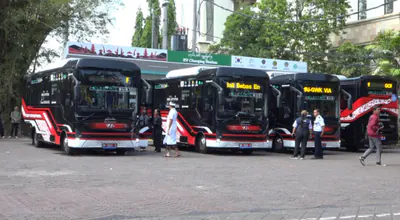
The Bali provincial government is testing 11 Trans Sarbagita electric buses on a route from GOR Ngurah Rai (Ngurah Rai Sports Hall) in Denpasar to the Garuda Wisnu Kencana (GWK) area in Badung Regency, as reported by state broadcaster TVRI News on Tuesday, 10 November 2026.
Of the 11 units, 10 buses are operated daily and one is kept as a spare to anticipate technical problems. I Kadek Mudarta, head of Bali's provincial Transportation Agency (Dishub), said the trial was being carried out to assess the readiness of the fleet, operating patterns and service effectiveness before further development.
According to TVRI News, the electric bus service begins at 06:15 and runs alongside regular Sarbagita bus services. The outbound route passes Jalan Melati, Jalan Hayam Wuruk, Bundaran Renon, Jalan Raya Puputan and Jalan Sudirman; the return route goes through Jalan Cok Agung Tresna, Jalan Moh. Yamin, Jalan Raya Puputan, Jalan Hayam Wuruk, Jalan Kamboja, Jalan Angsoka, Jalan Melati and Jalan Pattimura.
Role of the trial in Bali's public transport
Trans Sarbagita is a bus service developed to meet daily mobility needs in southern Bali, especially in Denpasar and Badung, which are linked by work, schooling, shopping and tourism. In that context, the electric bus trial is not only a vehicle project, but part of an effort to make public transport more attractive to commuters who have long relied on motorcycles and private cars.
Electric buses are generally chosen because they produce no tailpipe emissions at the point of operation, which can improve air quality in busy corridors. Their environmental benefit still depends on the electricity used for charging, the readiness of charging infrastructure and fleet maintenance practices. The trial phase therefore matters: local authorities can see whether the vehicles can sustain the same route every day, whether operating hours match passenger demand, and whether technical problems disrupt the service.
The route from GOR Ngurah Rai to the GWK area is also notable because it links sports facilities and public spaces in Denpasar with one of Badung's cultural tourism destinations. If the service runs consistently, the electric buses could become an option for workers, students, domestic tourists and residents who want to avoid parking and congestion. The inclusion of one spare vehicle shows that the operators understand the risks of running public transport: a single faulty vehicle should not immediately stop a route.
In many cities, trials of new public transport services face similar challenges: passenger demand has not yet built up, schedules are seen as unreliable, and buses must share the road with private vehicles. Success is therefore measured not only by the number of buses available, but also by punctuality, waiting comfort, ease of boarding and alighting, and communication with prospective users. Clear public information, such as schedules and pick-up points, is as important as vehicle availability. The evaluation by Dishub Bali needs to assess whether the electric buses can operate steadily during busy morning-to-afternoon hours, not only during a short trial.
What road users should watch
For readers in Indonesia, especially residents of Denpasar and Badung, the trial is relevant because it touches everyday travel habits. If the electric buses run routinely, users may have an alternative to private motorcycles, particularly for short and medium distances. However, TVRI News has not detailed fares, target passenger numbers or route expansion after the trial period, so the direct impact on travel costs remains unclear.
Safety and traffic flow are also worth watching. Electric buses tend to be quieter than conventional buses, so pedestrians, motorcyclists and terminal staff need to get used to large vehicles that may not always be heard from a distance. On the other hand, if the service attracts passengers, the number of private vehicles in certain corridors could fall, which may improve travel times and reduce noise pollution.
Going forward, the key things to monitor are operational consistency, responses to passenger complaints and the local government's decision after the evaluation is complete. A trial on one route is an early step, not a guarantee of service expansion. For the public, the most tangible change will come when electric buses offer a reliable schedule, clear pick-up points and integration with other transport modes in Bali. Local authorities also need to make waiting points safe, shaded and easy to find, especially for passengers travelling with children or at night.
Related news
- Asahan Regency receives special category in Corruption Eradication Commission (KPK) Ber-Aksi assessment