Bawaslu stresses accurate civil servant data to support talent management mapping
Deputy for Administration at the General Elections Supervisory Agency (Bawaslu) La Bayoni stressed the accuracy of civil servant data for talent management mapping within the election supervisory agency.
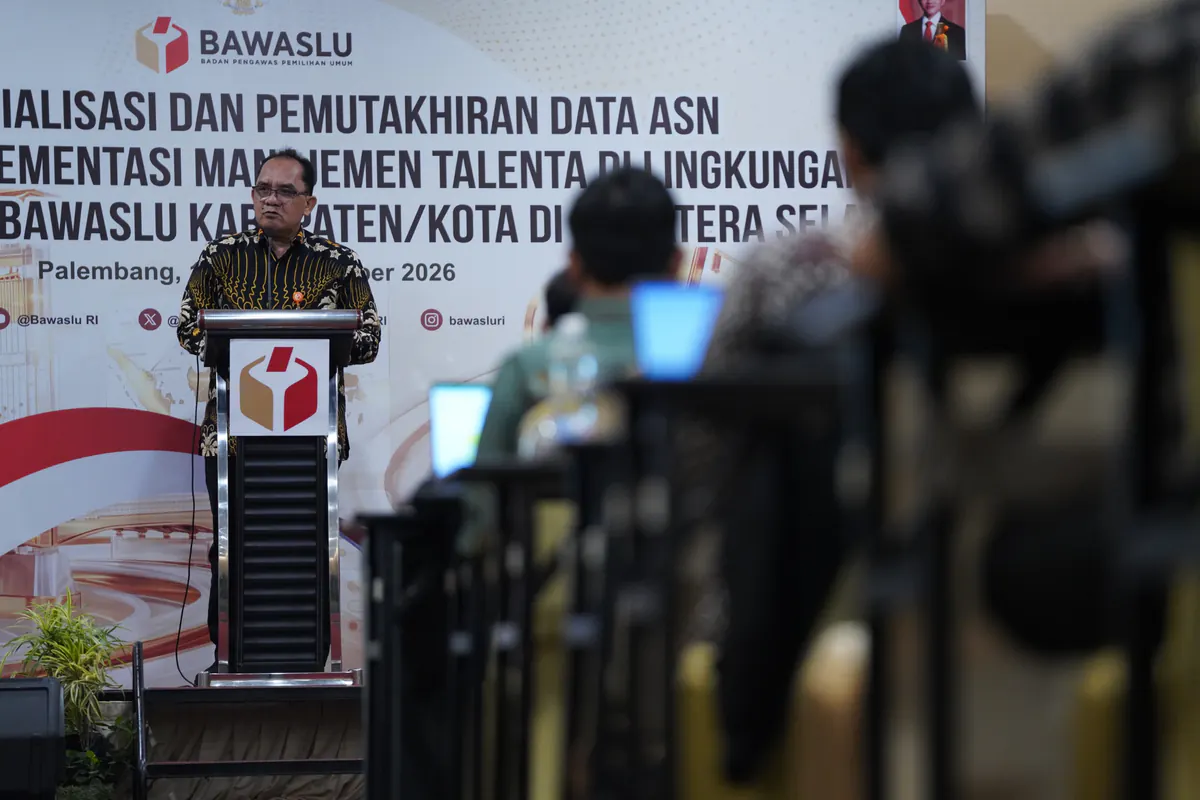
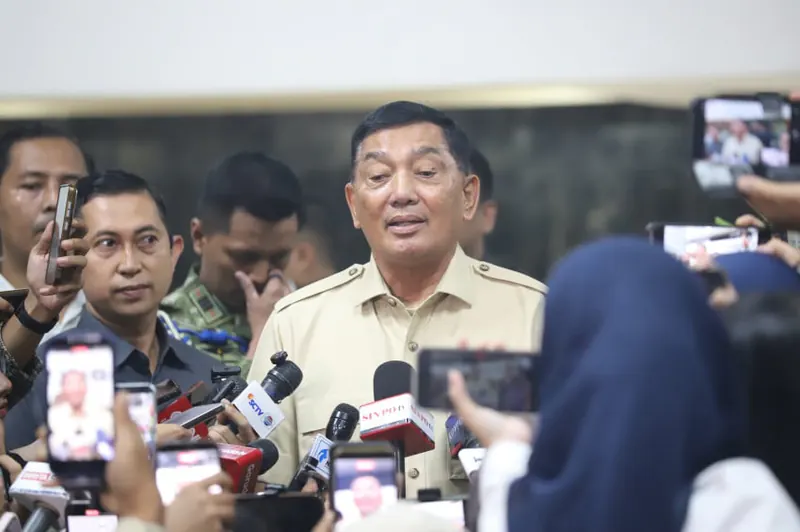
La Bayoni, Deputy for Administration at the General Elections Supervisory Agency (Bawaslu), stressed the importance of accurate data on civil servants (aparatur sipil negara, ASN) to support talent management mapping within the election supervisory agency. He made the remarks while opening a pilot socialization and data update for ASN in Palembang, Sumatera Selatan, on Thursday, 12 November 2026.
According to a Bawaslu report, La Bayoni asked secretariats at provincial and regency/city levels to accelerate the filling of staff data. He said some ASN had not yet been included in the mapping because their data had not been entered or because of technical obstacles. He urged staff not to fill in data carelessly or manipulate information.
In his directions, La Bayoni said appointments to positions should prioritize organic Bawaslu staff. If staffing needs in an area cannot be met locally, fulfillment may be sought from the nearest area up to the provincial level. Recruitment of staff from outside the agency will be carried out selectively in accordance with regulations.
“Data is important, so it must not be fabricated,” La Bayoni stressed.
Merit system and competency mapping for civil servants
Talent management in Indonesian bureaucracy is not a new concept, but its implementation is still proceeding gradually across agencies. Since the enactment of Law No. 20 of 2023 on Civil Servants, the government has stated that civil service management must be based on a merit system, meaning human resources policies and management that prioritize qualification, competency and performance fairly and reasonably without discrimination. Within that framework, talent mapping is used to identify who is ready to hold a particular position, who needs further development, and where competency gaps must be closed.
Bawaslu, a permanent election supervisory agency, faces particular challenges in human resources management. It has a tiered structure from the central, provincial and regency/city levels, with staff spread across Indonesia. Accurate staff data is a prerequisite for planning supervisory workforce needs so they are not uneven. Without consistent updating, the agency could face shortages in one area while having excess personnel in another, or place staff whose competencies do not match supervisory duties that demand high precision.
The term “organic staff” used by La Bayoni refers to ASN who were appointed and built their careers within Bawaslu’s own structure, rather than staff seconded from ministries or other institutions. In Indonesian bureaucratic practice, inter-agency staff borrowing is fairly common, especially to fill vacancies in regions. However, reliance on staff from outside can hinder internal regeneration and make it difficult for an agency to build its own work culture. The emphasis on prioritizing organic staff therefore aligns with meritocratic principles that favor career development based on track record within the organization.
National updating of ASN data is also a focus of the central government. The Ministry of Administrative and Bureaucratic Reform (KemenPAN-RB) and the National Civil Service Agency (BKN) continue to push for staff data to be integrated into the Civil Service Information System (SIASN). But for sectoral agencies such as Bawaslu, internal data updating remains necessary because the national system does not always capture specific competency details needed for election oversight tasks, such as understanding procedural law or experience in handling disputes.
Impact of human resources arrangements on election oversight quality
For the public, the arrangement of human resources within Bawaslu may sound like an internal bureaucratic matter. But the effectiveness of election oversight agencies at the local level depends heavily on the competence and integrity of their staff. When talent mapping is accurate, Bawaslu can place the right people in the right positions, from provincial secretariats to subdistrict-level election supervisory committees (panwaslu kecamatan). Conversely, outdated data or fabricated track records risk placing less competent staff in crucial tasks such as verifying violation reports or handling disputes over election results.
In the context of simultaneous regional head elections, which remain a national agenda, the need for trained supervisory personnel spread evenly across hundreds of regencies and cities has become more urgent. If carried out consistently, updating ASN data within Bawaslu can help the agency forecast supervisory workforce needs for the coming years and design more targeted competency development programs. For ASN in the regions, the step also means more transparent career opportunities, in which promotion and assignments are based on documented competency rather than personal closeness.
What requires attention going forward is the sustainability of the updating process. The pilot activity in Sumatera Selatan is only an initial stage. If it is not followed by periodic supervision and clear sanctions for breaches of data integrity, the talent mapping effort risks remaining an administrative formality without a tangible impact on the quality of election oversight on the ground.
Related news
- Bawaslu warns of risks in data from ongoing voter data updating (PDPB) for the 2029 elections
- Bawaslu pushes digitalization of 2029 election oversight
- Bawaslu and Universitas Indonesia (UI) collaborate to improve election oversight human resources