50 Indonesian MPs Reportedly Sign Proposal to Invoke Right to State Opinion Over Gibran Diploma Row
50 members of the House of Representatives (DPR) from six parliamentary factions have reportedly signed a proposal to invoke the chamber's Right to State Opinion over Vice President Gibran Rakabuming Raka's diploma controversy.
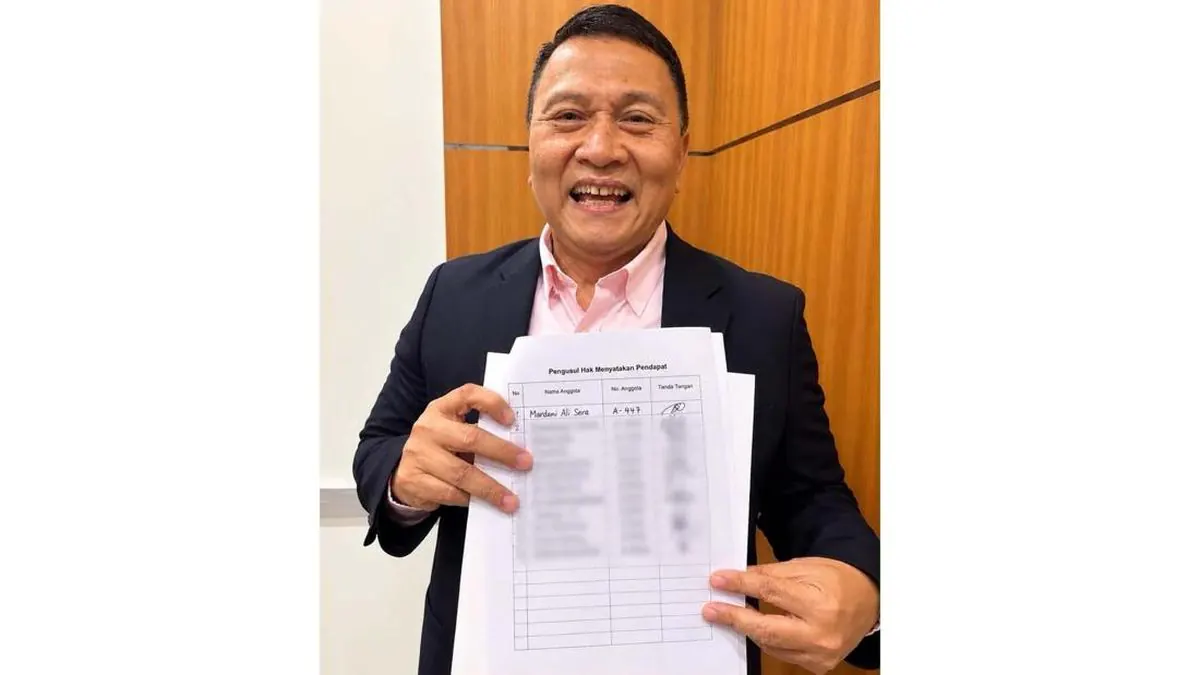
The diploma controversy involving Vice President Gibran Rakabuming Raka has dragged the Right to State Opinion (Hak Menyatakan Pendapat, HMP) mechanism in the House of Representatives (DPR) in Senayan, Jakarta, after 50 members from six factions were reported to have signed the proposal, according to Prosperous Justice Party (PKS) faction member Mardani Ali Sera, who spoke to CNN Indonesia on Monday, 10 November.
Mardani said the proposal had also been submitted to DPR leadership. The number of signatories reportedly rose from about 25 members to 50, with backing from six factions.
DPR Speaker Puan Maharani confirmed that leadership had received a report on the proposal. She said follow-up action would be taken after the parliamentary session opens, in line with applicable mechanisms and rules.
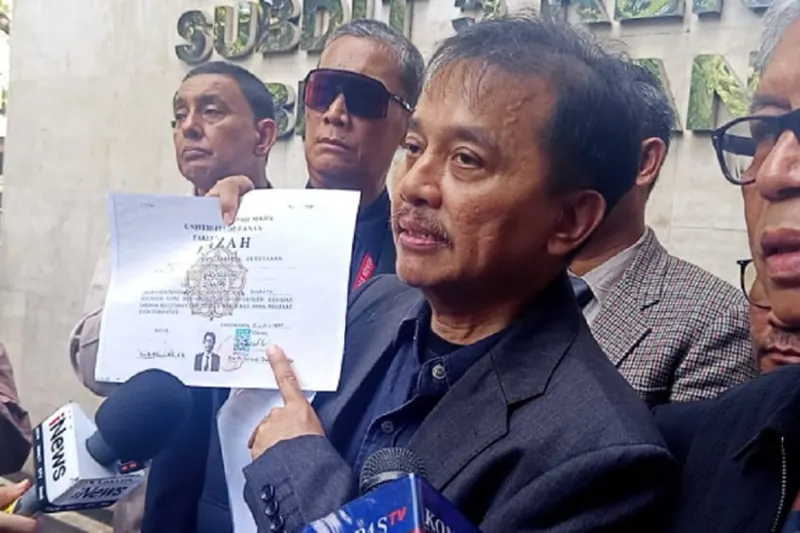
The proposal emerged after the Supreme Court revoked Gibran's high school diploma equivalence certificate as a requirement for the 2024 presidential election. Meanwhile, the Constitutional Court said it found no convincing evidence that Gibran held a foreign diploma, certificate, or degree that could be recognized as equivalent, but rejected the petition because the applicant lacked legal standing.
Right to State Opinion mechanism in the DPR
In the DPR, the Right to State Opinion is one of the chamber's constitutional instruments alongside the right to interpellation and the right to conduct an inquiry. It is used to express a political or legal position on issues considered important, including alleged violations by state officials. In constitutional practice, the right does not itself constitute a verdict, but rather an entry point to further processes that must be examined by judicial institutions and decided by constitutional forums.
For the removal of a president or vice president, the steps are layered. The DPR must approve a proposal in a plenary meeting with a high quorum and a large number of supporting votes. If the proposal is forwarded, the Constitutional Court assesses whether there are alleged violations of law that meet constitutional requirements. After that, the People's Consultative Assembly (MPR) can decide on removal, not the DPR alone. Therefore, the number of initial proposers only marks the start of political consolidation, not the final outcome.
The diploma issue also touches the basic eligibility requirement for presidential candidates. Election law sets the minimum education level as completion of senior high school or equivalent. However, interpretation of diplomas, equivalence certificates, or foreign documents often becomes an administrative and legal dispute. Such controversies usually involve three domains at once: the validity of education documents, the authority of judicial institutions, and political processes in parliament. Because the domains are different, one court ruling does not automatically change a person's status as officeholder.
Since the reform era, the Right to State Opinion has rarely been used as a direct path to remove officials, but has often been a tool of political pressure. When a proposal comes from several factions, it indicates an effort to build a cross-party voting bloc. This matters because removal is not only about legal evidence, but also about majority support in the DPR and the MPR. In a presidential system, parliament can prolong a legitimacy crisis even when legal proceedings are not final. Factions in the DPR function as party working groups. A cross-faction proposal shows the issue is not carried by one party alone, but has become an arena for political bargaining. For readers, the term Right to State Opinion should be understood as a formal mechanism, not a public petition. This means the document signed by DPR members still must pass meetings, committees, and plenary sessions before becoming an institutional position.
What the public should watch
For Indonesian readers, this development is relevant because it concerns the vice president's position, which helps shape national policy direction and is part of leadership succession. If the political process continues without legal clarity, the public may face uncertainty: the diploma issue could shift into political identity polarization, while the government's unfinished tasks remain waiting to be resolved.
The direct impact may not necessarily be on prices, jobs, or public services. But indirect effects can emerge through market confidence, political stability, and the legislative agenda. When parliament is busy handling a controversial proposal, space for dialogue on economic, health, or education issues can narrow. Readers therefore need to monitor whether the mechanism being used truly follows the rules, rather than being merely an electoral maneuver.
For citizens, the most important thing is to uphold the presumption of innocence. As long as there is no final and binding court ruling or final constitutional decision, all parties remain officials facing public questions. Scrutinizing this process helps ensure that the diploma dispute is resolved through law, not through mass pressure or hate narratives. Readers can also distinguish between social media controversy and formal proceedings. The diploma controversy spreads easily because it touches the reputation of a public official, but tangible effects on public services will be felt only if the constitutional process changes the composition of government. Therefore, focusing on session schedules, institutional rulings, and succession mechanisms will be more useful than speculation.
Related news
President Prabowo affirms economic fundamentals remain strong.
Prabowo's limited meeting discusses inflation, purchasing managers' index (PMI), and state budget (APBN) efficiency.
Prabowo concerned over alleged eavesdropping on head of state.