South Sumatra police uncover 45 vehicle theft cases, detain 57 suspects
South Sumatra Regional Police and 17 district police stations uncovered 45 vehicle theft cases and detained 57 suspects during an operation from 27 October to 7 November 2026.

The South Sumatra Regional Police (Polda Sumsel) and 17 subordinate district police stations (Polres) uncovered 45 vehicle theft cases (curanmor) and detained 57 suspects during an operation from 27 October to 7 November 2026, according to TVRI News.
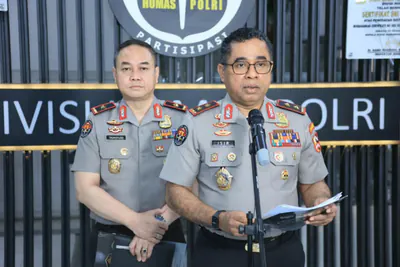
The disclosures were described as part of support for the 100-day program of the national police chief (Kapolri) to eradicate conventional crime. At a press conference at the South Sumatra Regional Police headquarters (Mapolda) in Palembang on Monday, 9 November 2026, investigators said 38 vehicles had been seized as evidence, comprising 36 motorcycles and two cars.
Kombes Pol. Johannes Bangun, head of the Criminal Investigation Directorate at the South Sumatra Regional Police, noted that the operation involved the directorate, the Palembang city police (Polrestabes Palembang) and 16 district police stations across South Sumatra. The OKU Selatan district police station reported the most cases, with seven.
Kombes Pol. Nandang Mu’min Wijaya, head of public relations at the South Sumatra Regional Police, stressed the commitment to eradicate street crime. “We are committed to eradicating street crime that disturbs the public,” he said. The suspects are charged under Article 477 of the Criminal Code (KUHP) for aggravated theft, carrying a maximum sentence of seven years.
Vehicle theft and pressure on residents' sense of safety
Vehicle theft is often seen as conventional crime because its motive is practical: taking vehicles that can be sold quickly, dismantled for parts, or moved between regions. For owners, the loss is not only material. A vehicle is often the main tool for work, for taking children to school, or for accessing public services, so the loss of one motorcycle can disrupt a family routine within days. The crime also tends to trigger unease because it recurs in the same places. For that reason, cases like this often draw attention from residents at the neighborhood-unit (RT) level, in offices and in public parking areas.
In the police context, the term kamtibmas refers to public security and order. Vehicle theft is considered disruptive to kamtibmas because victims are spread across homes, workplaces and public spaces. For that reason, handling such cases usually does not stop at arresting suspects; it also includes restoring residents' sense of safety and returning evidence if vehicles can be traced. Cross-regional coordination is also important because vehicles can move quickly from one district to another.
Early priority programs of the Indonesian National Police (Polri) often provide a framework that pushes regional units to organize their duties. Within that framework, street crime, including vehicle theft, is usually measured by the number of police reports, cases uncovered, suspects detained and evidence seized. Those figures are early indicators, though they do not yet describe the whole legal process still under way. For that reason, the public usually waits for developments in the investigation, not just the initial press conference.
Enhanced routine activities (KRYD) are one way for police to increase officer presence at vulnerable points without forming a special operation. At the same time, preventing vehicle theft also depends on residents' habits, such as parking in well-lit places, using double locks, and recording the vehicle's chassis and engine numbers. These simple practices can speed tracing when a vehicle is lost. Residents' vigilance also helps police narrow the space for crime. Neat vehicle records can help when processing insurance claims or transferring ownership.
What vehicle owners should watch
For vehicle owners in Indonesia, the uncovering of dozens of vehicle theft cases in a short time is a reminder that the risk of theft remains real, especially for motorcycles parked without supervision. If a vehicle is lost, the loss is not only the cost of buying another one, but also time spent filing reports, blocking documents, and potential disruption to work or school. For that reason, prevention is cheaper than bearing losses after a vehicle is lost. The risk can also affect residents' trust in neighborhood security.
For readers in South Sumatra, steps they can take include following police appeals on double locks and reporting immediately to the nearest district police station. Residents should also keep proof of ownership, such as the vehicle ownership certificate (BPKB) and invoices, and record the chassis and engine numbers. If they notice suspicious activity, they should report it rather than take justice into their own hands.
On the policy side, Polri's early priority programs can indicate the direction of priorities in the region. For the public, what needs to be monitored is not only the number of suspects, but also whether seized vehicles can be returned, whether residents' reports are followed up, and whether vulnerable points receive more routine supervision. If supervision declines, residents may again feel unease even when enforcement figures look high.