Indonesian National Police transfers five brigadier generals to Baharkam
Indonesian National Police transferred five brigadier generals to the Security Management Agency (Baharkam) in early November 2026, including two deputy regional police chiefs.
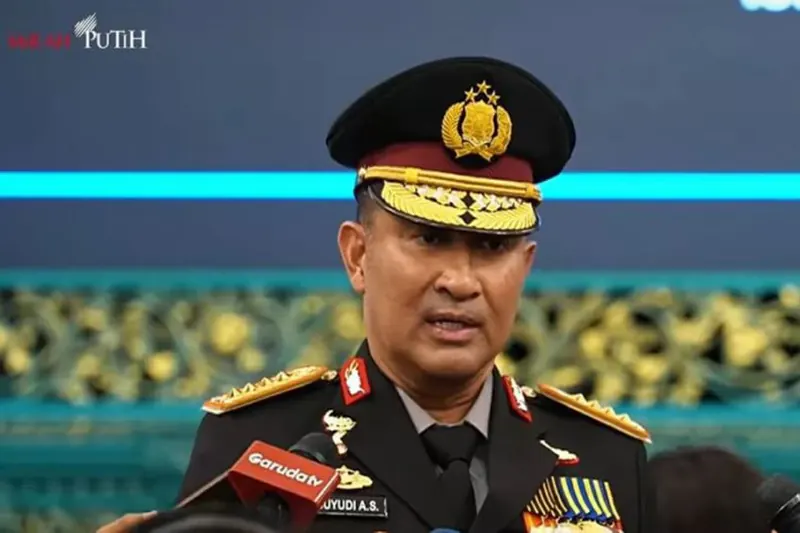
The Indonesian National Police (Polri) has transferred five brigadier generals to its Security Management Agency (Baharkam) in a personnel reshuffle in early November 2026, according to Indonesian news outlet SINDOnews in Jakarta. Two of them are deputy regional police chiefs: the deputy chief of the West Sumatra regional police and the deputy chief of the Gorontalo regional police. The transfers were part of a package moving 264 senior and middle-ranking officers, as set out in Chief of Police Telegram No. ST/2467/XI/KEP./2026, dated 2 November 2026.
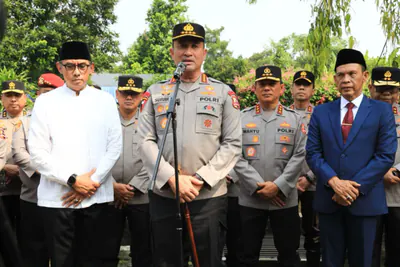
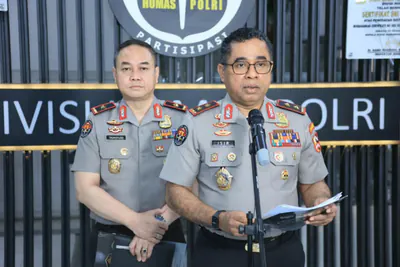
Chief of the Indonesian National Police (Kapolri) General of Police Suyudi Ario Seto has reshuffled the general officer formation at Polri headquarters and in regional commands after his inauguration in early October 2026 to replace General of Police Listyo Sigit Prabowo. Head of Polri's Public Relations Division Inspector General of Police Johnny Eddizon Isir described the transfers as routine, aimed at maintaining organizational continuity and improving the effectiveness of police work.
What the reshuffle means for Polri's structure
Rotation of senior officers is a routine mechanism in police organizations to fill vacancies, refresh leadership and align command structures with regional needs. Within Polri, posts such as regional police chief (Kapolda), deputy regional police chief (Wakapolda) and senior officers at headquarters carry different workloads. A Kapolda focuses on security control in one province, while a Wakapolda assists with operational duties and personnel development at the regional level. Transfers to Baharkam usually place officers in broader security-maintenance functions, ranging from operational development to support tasks that affect public services.
The chief's telegram is the administrative basis for the transfers. The internal document lists officers' names, previous positions, new positions and the effective date of the decision. For the organization, the telegram is not merely a bureaucratic record but also a signal of the leadership's policy direction. Large reshuffles at the start of a chief's tenure are typically used to adjust the organizational structure, advance the chief's programs and assign officers according to operational needs. They can also form part of career management, including promotions, refreshment and preparation for future posts.
In the context of politics and public oversight, changes to police positions are not a closed matter. The House of Representatives (DPR), particularly its committee handling law and security, can question the transfer policy during a working meeting with the chief of police. Such oversight is important to ensure the rotation is not perceived as a transactional decision, but as part of strengthening professionalism. The public can also assess whether the new arrangement produces better performance on the ground. Transparency helps maintain public trust and accountability.
The terms senior officer and middle-ranking officer also need explanation. Senior officers (Pati) include brigadier generals, inspector generals, commissioner generals and police generals, while middle-ranking officers (Pamen) sit below them. The Wakapolda post is usually held by a one-star or two-star senior officer, depending on the structure and organizational needs. A reshuffle involving many Pati and Pamen at once shows that the adjustment is not limited to the top of the institution, but also extends to the middle layer that carries out technical functions.
Impact on regional police services
For the public, the transfer of five brigadier generals to Baharkam may sound like an internal affair. But changes in regional leadership can affect daily services, such as handling citizen reports, managing traffic, securing social activities and responding to local conflicts. The movement of the deputy chiefs from West Sumatra and Gorontalo means two provinces lose deputy regional police chiefs who had helped the Kapolda carry out day-to-day duties. If replacements are not placed effectively and promptly, coordination at provincial level could be disrupted in the short term.
The political relevance lies in accountability. Indonesian readers should watch whether the reshuffle is followed by open explanations of position criteria, assessment processes and performance targets. Parliament can press Polri to report how the transfers affect public services, rather than simply announcing names and positions. What matters most to citizens is not who is moved, but whether the new arrangement makes the police faster, more transparent and closer to the community.
For readers in the regions, practical steps include monitoring official Polri announcements and asking about changes in public services. Residents can also use internal complaint channels or oversight through local legislative councils (DPRD) if they believe the transfers have affected police performance in their area. That way, the reshuffle is not treated only as a change of posts, but as material for joint evaluation of the quality of security and state services. Active oversight keeps personnel rotation measurable and service-oriented.