Polri reschedules ethics hearing for senior officer EHS on Tuesday
Polri has rescheduled the Professional Ethics Code Commission hearing for senior officer EHS to Tuesday, 17 November 2026, at its Jakarta headquarters.
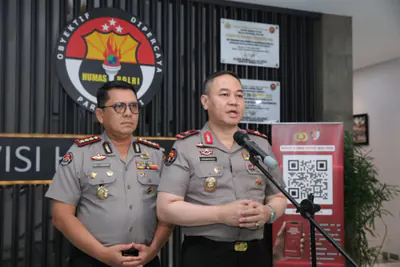
The Indonesian National Police (Polri) has rescheduled the hearing of the Professional Ethics Code Commission (KKEP) for senior officer identified by the initials EHS on Tuesday, 17 November 2026, at Polri headquarters in Jakarta, according to TVRI News.
Polri's Police Professions and Security Division (Divpropam) is handling the hearing. Brigadier General of Police Trunoyudo Wisnu Andiko, head of the Public Information Bureau of the Polri Public Relations Division (Divhumas), said the hearing was part of the mechanism for enforcing the professional code of ethics within Polri.
The alleged violations include abuse of authority, unprofessionalism, conduct not in accordance with procedures, and conspiracy to carry out illegal access. The case relates to the use of access at the Monitoring Section of the Operations and Operational Control Bureau of the Criminal Investigation Agency (Bareskrim Polri) while EHS served as head of the Monitoring Section (Kabagmon) and acting head of the Monitoring Section (Plt Kabagmon).
The hearing will be led by Inspector General of Police Hendro Pandowo as the commission's chairman. EHS is suspected of violating Article 13 paragraph (1) of Government Regulation No. 1 of 2003 on the Dismissal of Polri Members, in conjunction with Polri Regulation No. 7 of 2022.
Ethics hearing mechanism within Polri
The Professional Ethics Code Commission, or KKEP, is an internal forum for examining Polri members suspected of violating professional norms, not a forum for declaring someone criminally guilty. The process assesses whether a member's conduct is consistent with ethical values, discipline, and responsibility for office. Therefore, the term 'dipersangkakan' in an ethics hearing refers to an alleged violation of professional rules, not a verdict. An ethics hearing also differs from ordinary disciplinary examination because it concerns professional honor, the institution's image, and public trust in law enforcement officers.
Government Regulation No. 1 of 2003 is one of the legal bases for dismissing Polri members, while Polri Regulation No. 7 of 2022 governs the Professional Ethics Code and the Polri Ethics Commission. Under this framework, an ethics hearing can result in administrative-professional sanctions, such as a reprimand, delay in promotion, transfer, or a recommendation for dismissal, depending on the outcome of the examination. An ethics sanction does not automatically close criminal proceedings if there are elements of a criminal offense handled by authorized authorities.
The Police Professions and Security Division (Divpropam) plays a role in preparing and organizing ethics hearings. The Public Information Bureau of the Public Relations Division (Divhumas) provides public information. The existence of a commission composed of senior officers also confirms that internal ethics cases can be tried by officials at the same level as, or more senior than, the person being examined. The commission's leadership by senior officers shows that this case is considered serious because it involves positions in the operations and control structure. The Monitoring Section of the Operations and Operational Control Bureau of the Criminal Investigation Agency (Bareskrim Polri), or Bagmon Robinopsnal, is a unit concerned with monitoring operational information. The term 'illegal access' generally means the use of access rights to a system or data without legitimate authority.
The presumption of innocence remains in effect. As long as the hearing has not concluded and there is no decision with permanent legal force, the person being examined cannot yet be called a perpetrator. The public is entitled only to information that an internal mechanism is underway, not a final conclusion.
Impact on public trust
For Indonesian readers, this ethics hearing is relevant because it touches two issues close to everyday life: the integrity of law enforcement officers and the security of internal institutional data. Society depends on Polri for public services, investigations, and legal protection. When a senior officer is suspected of abusing authority or accessing systems without authorization, the question that arises is not only about individual sanctions, but also whether internal oversight mechanisms are truly working.
The KKEP process can serve as a marker of whether the institution acts on violations from within without waiting for public scrutiny. If the hearing is open to the public only to the extent of official, objective, and accountable information, citizens' trust in discipline enforcement can increase. Conversely, if the outcome is unclear or considered merely a formality, space for rumor and suspicion will widen. Therefore, developments after 17 November 2026 need to be watched: whether there is an ethics decision, whether the case continues to criminal proceedings, and whether there are measures to prevent abuse of access in operational units. Transparency about the schedule, agenda, and official results is key so that the process is not judged as closed.
For users of Polri services, the practical point to note is to safeguard the right to accurate information. The public can wait for official statements from Divpropam or Divhumas, rather than spreading allegations before the hearing concludes. For Polri members, this case is a reminder that position, authority, and system access are mandates that can be tested ethically.