Nusa Tenggara Barat prosecutors review file on five-kilogram smuggled gold bar
Prosecutors in Nusa Tenggara Barat are reviewing a case file on a five-kilogram smuggled gold bar transferred by Mataram Customs civil servant investigators, while suspect CGS remains detained.

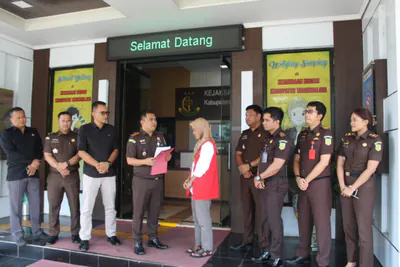
A team from the Special Crimes Division (Bidang Pidana Khusus) of the Kejaksaan Tinggi Nusa Tenggara Barat (Kejati NTB), the provincial high prosecutor's office, reviewed the case file for a five-kilogram smuggled gold bar without a mould on Wednesday in Mataram. The file was transferred by civil servant investigators (PPNS) at the Mataram Customs Office (Bea Cukai Mataram).
According to a report by ANTARA, Indonesia's state news agency, the file under review belongs to suspect CGS, a resident of Manado, Sulawesi Utara, who is suspected of playing a role in the smuggling at the Bandara Internasional Zainuddin Abdul Madjid (Zainuddin Abdul Madjid International Airport) area in Lombok Tengah. Assistant for Special Crimes at Kejati NTB Zulkifli Said said, "The file is still being examined and reviewed; it is still in process."
Kejati NTB spokesperson Harun Al Rasyid had previously affirmed that the office had received only one file, related to customs matters, so no other suspect was included in the transfer. CGS is being held at Lapas Kelas II A Lombok Barat, a Class IIA correctional facility in Lombok Barat, and is suspected of violating Article 102A(a) of Law No. 17 of 2006 on Customs (Undang-Undang Nomor 17 Tahun 2006 tentang Kepabeanan), which carries a maximum prison sentence of 10 years and a fine of up to Rp2 billion (about US$125,000). In the same enforcement action, a Chinese national with the initials ZY was briefly detained with gold jewellery, but has not yet been named a suspect because investigators assessed that the evidence was insufficient.
The role of Customs civil servant investigators in gold enforcement
Civil servant investigators at Customs have special authority in cases involving goods entering and leaving the customs area. That authority comes from Customs' role as the gatekeeper of trade: every item carried by passengers, cargo or couriers must pass through reporting, inspection and the fulfilment of fiscal obligations. When the goods are precious metals, the issue becomes more sensitive because their value can be moved easily, their form is compact and global market demand can change quickly.
Unmoulded gold bars are generally understood as metal that has not yet been shaped into a finished form or given a neat stamped identity. In oversight practice, such items are often considered harder to trace than labelled jewellery because origin, purity and intended use are not always visible on the surface. For that reason, the review of the case file does not stop at whether the goods are gold. It also examines how they were carried, whether customs obligations were met and whether there was intent to conceal their economic value.
Gold cases at international airports also touch a broader issue: balancing smooth passenger travel with strict monitoring of foreign-exchange and high-value goods movements. Officers must distinguish passengers carrying personal jewellery for reasonable use, people carrying precious metals for commercial purposes and those trying to move assets across borders without declaration. The distinction matters because not every valuable item is automatically prohibited; the question is whether it was reported, assessed and processed in accordance with the rules.
The file transferred to prosecutors is also a critical point because investigations by civil servant investigators must meet the stricter demands of prosecution. Prosecutors examine the completeness of evidence, the legal basis and the consistency between the alleged act and the article used. In customs cases, elements such as the type of goods, the manner of carriage, the value and the connection to the customs area must be organised clearly so the legal process can continue without neglecting the suspect's rights.
What the case means for monitoring gold flows
For readers in Indonesia, the file review shows that oversight of high-value goods is not only the concern of airport officers or Customs but also part of a long legal chain. When a file is handed to prosecutors, the public can see that enforcement on the ground must be proven in writing and be accountable in court. Such a process is important to ensure that case handling does not stop at provisional admissions but moves toward legal certainty.
The broader impact is visible in a public habit of treating the carrying of large amounts of gold as a private matter. In fact, precious metals can be treated as goods touching fiscal interests and cross-border trade. Passengers intending to carry jewellery or gold bars therefore need to understand that reporting is not merely a formality but a way to avoid suspicion of concealing valuable goods. With clear rules, oversight can run without disrupting legitimate travel.
Going forward, what needs to be watched is whether the file examined by prosecutors can answer questions about the goods' origin, the purpose of the journey and obligations that have not been met. That clarity will determine whether the case proceeds to prosecution or must first be corrected.