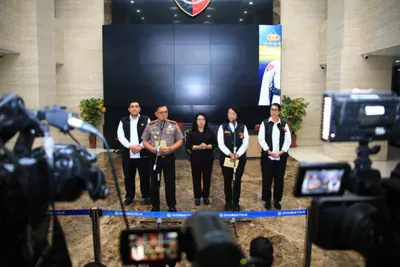
Police inspect Ketapang port to manage Christmas and New Year surge
The Indonesian National Police is setting up a tactical command post and coordinating across agencies at Ketapang port to manage a surge in vehicles during the Christmas and New Year period.
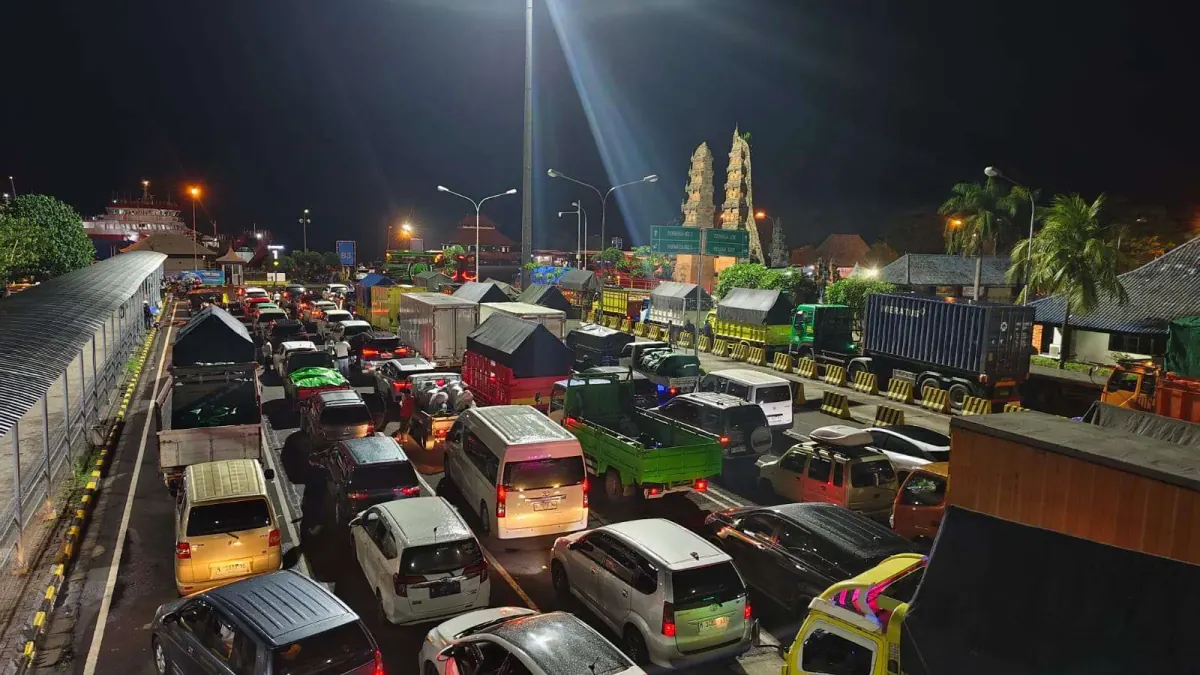
The Indonesian National Police (Polri) and stakeholders checked the readiness of Ketapang port in Banyuwangi, East Java, on Saturday, 21 November, ahead of the Christmas 2026 and New Year 2027 period, known locally as Nataru. According to state radio Radio Republik Indonesia (RRI), the crossing to Bali is a focus because the surge in vehicles must be controlled through an integrated system and cross-sector coordination.
Astamaops Polri, the deputy for operations of the Indonesian National Police, Inspector General Roycke Harry Langie, said one step being prepared was the creation of a Tactical Command Post, or Poskotis, as an integrated control centre. “We have concluded that one Poskotis should be created as an integrated control centre,” Roycke said.
In the RRI report, Roycke also said management of vehicle flows toward the port must be integrated, covering port time scheduling, the arrival, unloading and departure system known as Tiba Bongkar Berangkat, buffer zones, and a vehicle delaying system. Weather was also a concern because it can disrupt ferry schedules.
Kakorlantas Polri, the head of the Indonesian National Police traffic corps, Brigadier General Aries Syahbudin, explained that traffic engineering at a port differs from that on toll roads because ferry capacity is the main factor. Vehicles are moved from holding points to the port only when space is available ahead. The activity was attended by representatives of ASDP, Indonesia’s state ferry operator; the Banyuwangi police headquarters; and the Tanjung Wangi port authority and harbour master office (KSOP).
Ketapang as a choke point on the Java-Bali crossing
Ketapang port at the eastern tip of Java and Gilimanuk port at the western tip of Bali form the ferry pairing that has long been the main artery for the movement of people and goods between the two islands. During long holidays, the route carries a mix of homecoming travellers, tourists, logistics vehicles and bus fleets. Because toll roads and national arterial roads from Surabaya and Malang to Banyuwangi meet at the same node, surges in vehicles quickly become visible in the port entry area. In such situations, the port is not only a place to board and disembark passengers, but also a traffic node that determines whether flows keep moving or turn into long queues.
The technical terms used in preparations for the Christmas and New Year period should be read as part of capacity management. Port time is the window given to vehicles or ferries to enter, berth and leave the port. The Tiba Bongkar Berangkat system sequences vessels to prevent conflicts between ships that have just arrived, ships that are unloading and ships preparing to depart. Buffer zones hold vehicles temporarily before they are allowed into the embarkation area, while a delaying system holds traffic back from outside the port when internal capacity is full.
Experience from Indonesia’s Eid al-Fitr travel season, known locally as Lebaran, and from previous Christmas and New Year periods shows that port congestion is often not only about the number of ferries, but also about synchronisation. Ships arriving in clusters, vehicles entering without gaps and delayed information reaching drivers can create pile-ups at the gate. The Poskotis is important because it brings together data from police, port operators, maritime authorities and local governments in a single control room. Decisions to open or close routes, add ferries or hold vehicles can then be based on the same picture of conditions.
Weather cannot be separated from ferry operations. The Bali Strait can experience strong winds, high waves and heavy rain that affect berthing speed. Readiness for the holiday period therefore involves not only adding personnel, but also preparing alternative plans when ferry schedules are disrupted. Public communication is part of risk management: drivers need to know when to depart, when to wait and where available holding points are located.
What passengers and drivers should watch
For road users, the early check at Ketapang means Christmas and New Year trips should be planned with more discipline. Homecoming travellers and tourists should check ferry schedules, follow official information and avoid arriving during peak hours if other time options remain. When a delaying system or buffer zone is activated, vehicles may be asked to stop temporarily outside the port area. That can lengthen waiting times, but the aim is to prevent access to the port from becoming paralysed.
The practical impact touches travel costs and comfort. Uncontrolled queues can increase fuel consumption, lengthen journey times and disrupt work or family schedules. Conversely, well-coordinated cross-sector management makes vehicle flows more predictable, so ferry operators, drivers and passengers are not working amid uncertainty. For logistics businesses, certainty on the crossing also matters because goods held up at the port can affect prices and supply availability in Bali.
Readers should also monitor weather developments and temporary closure notices. In ferry operations, safety remains a non-negotiable limit. If delays occur, following officers’ directions is safer than seeking unofficial alternative routes. Government and operator readiness must therefore be matched by discipline from road users so the Christmas and New Year surge can be absorbed without compromising safety.
Related news
Coordinating Minister for Political, Legal and Security Affairs pushes Indonesian National Police to be closer to people and guard president’s priority programs
President Prabowo arrives in Jakarta after ASEAN and APEC summits
Revision of the State Defence Law targeted for early 2027