Bareskrim Says Kupang Regent Case Continues at NTT Police
Bareskrim Polri says the case involving the Kupang Regent continues at NTT Police while Almisri's whereabouts are traced after an Interpol Red Notice.
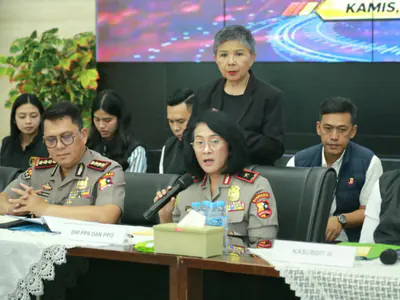
The Criminal Investigation Agency of the Indonesian National Police (Bareskrim Polri) confirmed that the case involving the Regent of Kupang continues at the Nusa Tenggara Timur provincial police command (Polda NTT), while the tracing of Almisri's whereabouts is still under way after Interpol issued a Red Notice, as reported by TVRI News on Friday, 20 November 2026.
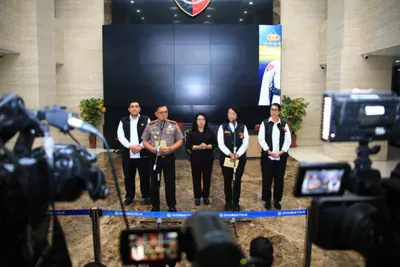
Brigadier General of Police Nurul Azizah, director of Bareskrim Polri's Directorate of Special Crimes against Women, Children and Human Trafficking (Dittipid PPA-PPO), said the search for Almisri was conducted through coordination with the Indonesian National Police's International Relations Division and Interpol. She affirmed that the legal process at Polda NTT was proceeding with Bareskrim's assistance.
Nurul denied reports that the case had been settled through reconciliation. Meanwhile, Deputy Director II of the Dittipid PPA-PPO, Senior Police Commissioner Yolanda Evalyn Sebayang, said the figure of 62 child victims came from a recapitulation of cross-regional human trafficking (TPPO) cases, while their condition was still being checked with Polda.
Polri also reminded residents not to be easily tempted by high-salary job offers without clear information about the company and documents.
What a Red Notice Means for Law Enforcement
A Red Notice is an international cooperation mechanism used to ask member states to help locate a wanted person at the request of authorities in the requesting state. The request does not by itself declare the person guilty. Follow-up still depends on national law, judicial proceedings and evidence held by law enforcement in the country where the person is located. Therefore, the term international search should be read as an administrative step, not a verdict. The presumption of innocence remains in force until a court declares someone guilty with final and binding legal force.
In the Indonesian police system, cases occurring in the regions can be handled by the local provincial police command (Polda). Bareskrim Polri can provide assistance when a case requires cross-regional coordination, investigative resources or supervision so that the process follows procedure. Such assistance also helps consolidate data from several regions, especially when victims are scattered and the modus involves networks. This helps prevent overlapping investigations.
The issue of human trafficking adds complexity to cases that involve residents as victims. Indonesia has a specific legal framework to act against the recruitment, transportation or harboring of people in exploitative ways. In cases that drag in child victims, authorities also need to pay attention to identity protection, recovery and their safety. Therefore, updating victim data cannot rely only on initial figures but requires verification with the regions handling the cases. Verification is also important so that victims are not counted twice in national reports. Cross-regional handling requires one accountable database.
Cases involving regional officials also touch public trust. The public tends to monitor whether the legal process runs equally, whether there is political pressure, and whether victims' rights remain protected. Open explanations about legal status, handling stages and oversight mechanisms are important to maintain accountability. The public needs to distinguish the two clearly. With consistent explanations, the public can assess whether the handling is professional without having to speculate.
What Job Seekers Should Watch For
For readers in Indonesia, developments in this case are a reminder that job promises at home or abroad can turn into exploitation if the process is unclear. High-salary offers, quick placement and document processing by unauthorized parties often become entry points for human trafficking. Therefore, residents need to check company permits, request employment contracts and ensure that the placement destination follows procedure. Checking documents also protects families from debt obligations or unreasonable placement costs.
The impact also touches regional governance. When a case involves a regional head, the public awaits certainty that the law does not stop at political pressure or reports of reconciliation. Transparency about handling status, examination schedules and victim protection becomes a measure of authorities' accountability. For child victims, careful handling determines their recovery and prevents repeated trauma. That certainty is important so that local public services are not disrupted by legal uncertainty.
Going forward, the public needs to watch whether the tracing of a person on an international wanted list yields results, whether victim data are updated accurately, and whether coordination between Polda and Bareskrim produces firm legal steps while still respecting the presumption of innocence. Periodic information updates can prevent misunderstandings from spreading in public discussion. Official clarifications from authorities should be the main reference before conclusions are drawn.